Italian Design Brands Shaping Contemporary Interiors
Italian design has maintained a continuous dialogue between industry, craftsmanship, and architecture since the mid 20th century. The brands represented at GRAYE are not recent lifestyle constructions, but companies shaped by this longer design history. Their work reflects decades of refinement in how furniture is made, scaled, and integrated into living environments.
Rather than following trends, these Italian brands operate through long term design thinking, refining systems of furniture, storage, and surface materials that are intended to integrate into everyday living.
Living Divani
Living Divani is defined by its disciplined approach to upholstered furniture and its long standing collaboration with Piero Lissoni.
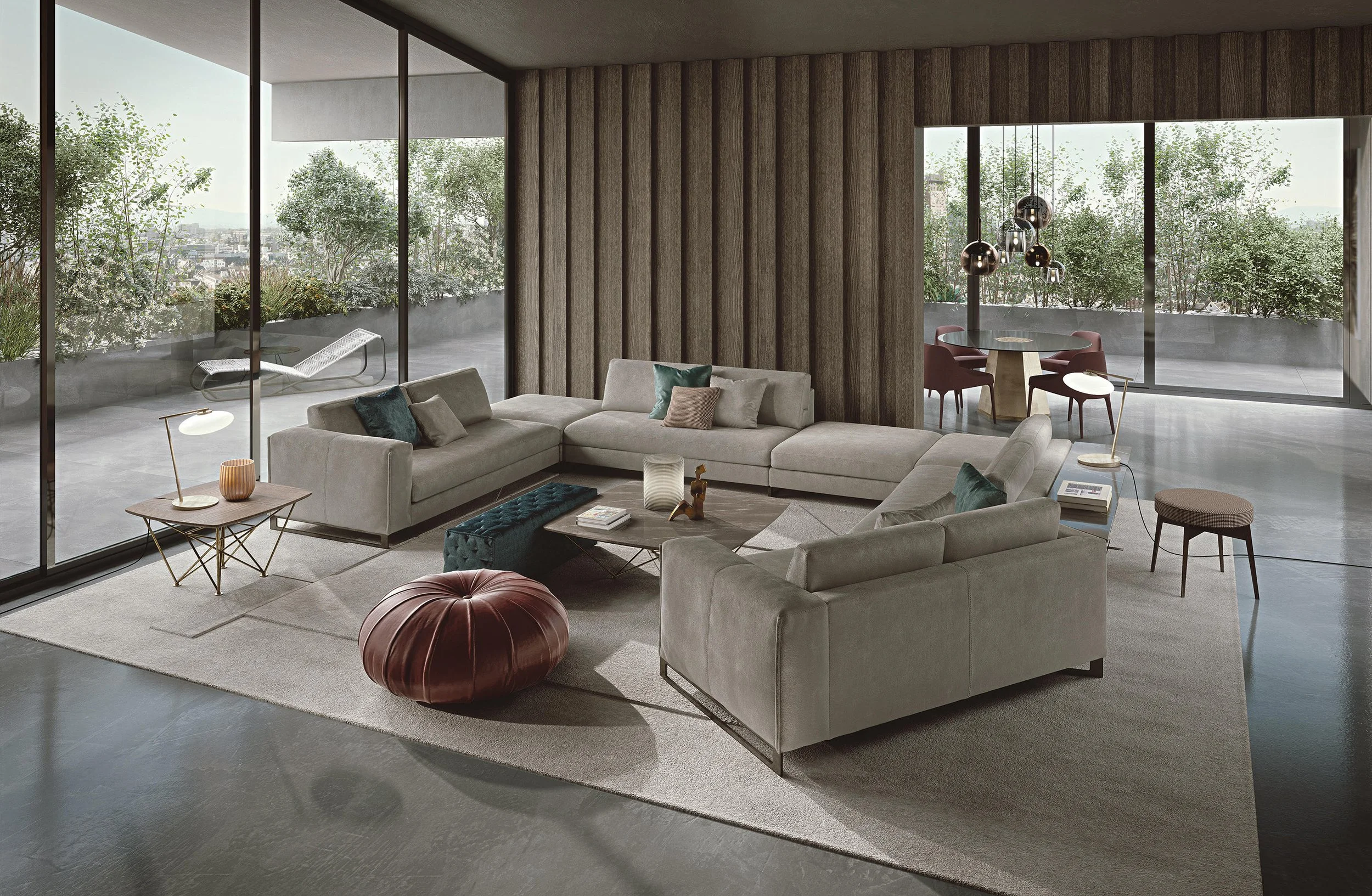
The brand is recognized for modular systems that balance visual lightness, comfort, and structural clarity. Collections such as Extrasoftand Neowallexpress a language where softness is organized through precise geometry, allowing seating to adapt fluidly to different spatial conditions.
Living Divani’s strength lies in its ability to maintain consistency across a wide typology of products while preserving a clear and recognizable design language rooted in restraint and proportion.

Porro
Porro approaches furniture through an architectural lens, where storage, seating, and surface systems are conceived as extensions of space rather than isolated objects.
Seating systems emphasize clean proportion and structural lightness, often combining crisp volumes with slender frames that give pieces a composed, floating presence. The tables and dining systems follow a similar logic, using minimal structural elements and precise junctions and surfaces calibrated for visual balance at scale.
Within storage, this architectural approach becomes most evident. Walk-in closets function as spatial systems that define rooms rather than occupy them.
The result is a unified design language where furniture actively organizes and clarifies space.
Frigerio
Frigerio is an Italian furniture brand rooted in upholstery, extending across sofas, armchairs, beds, and complementary pieces.
Its work is defined by comfort, proportion, and refined material execution. Seating is built through layered cushioning and controlled volumes, where softness is integrated into structure rather than applied superficially.
This approach is clearly expressed in the Davis system, a modular seating collection defined by soft geometry and adaptable configurations that maintain a calm, continuous presence across different spatial layouts.
Across all categories, Frigerio maintains a consistent language of tactile richness and balanced proportion.
De Castelli
De Castelli transforms metal into an architectural material shaped by process, oxidation, and hand-applied finishes.
Working with brass, copper, steel, and iron, the brand treats every surface as something active rather than fixed. Through controlled finishing techniques, each piece develops unique tonal depth and texture, making no two objects identical.
This material approach extends across furniture and architectural elements alike. Tables, storage, and sculptural forms reveal construction rather than concealing it, emphasizing precision and structural clarity.
Over time, surfaces continue to evolve through light, use, and exposure—reinforcing a design language defined by transformation rather than permanence.
Agapecasa
Agapecasa continues the legacy of Angelo Mangiarotti through the reissue of historically significant designs.
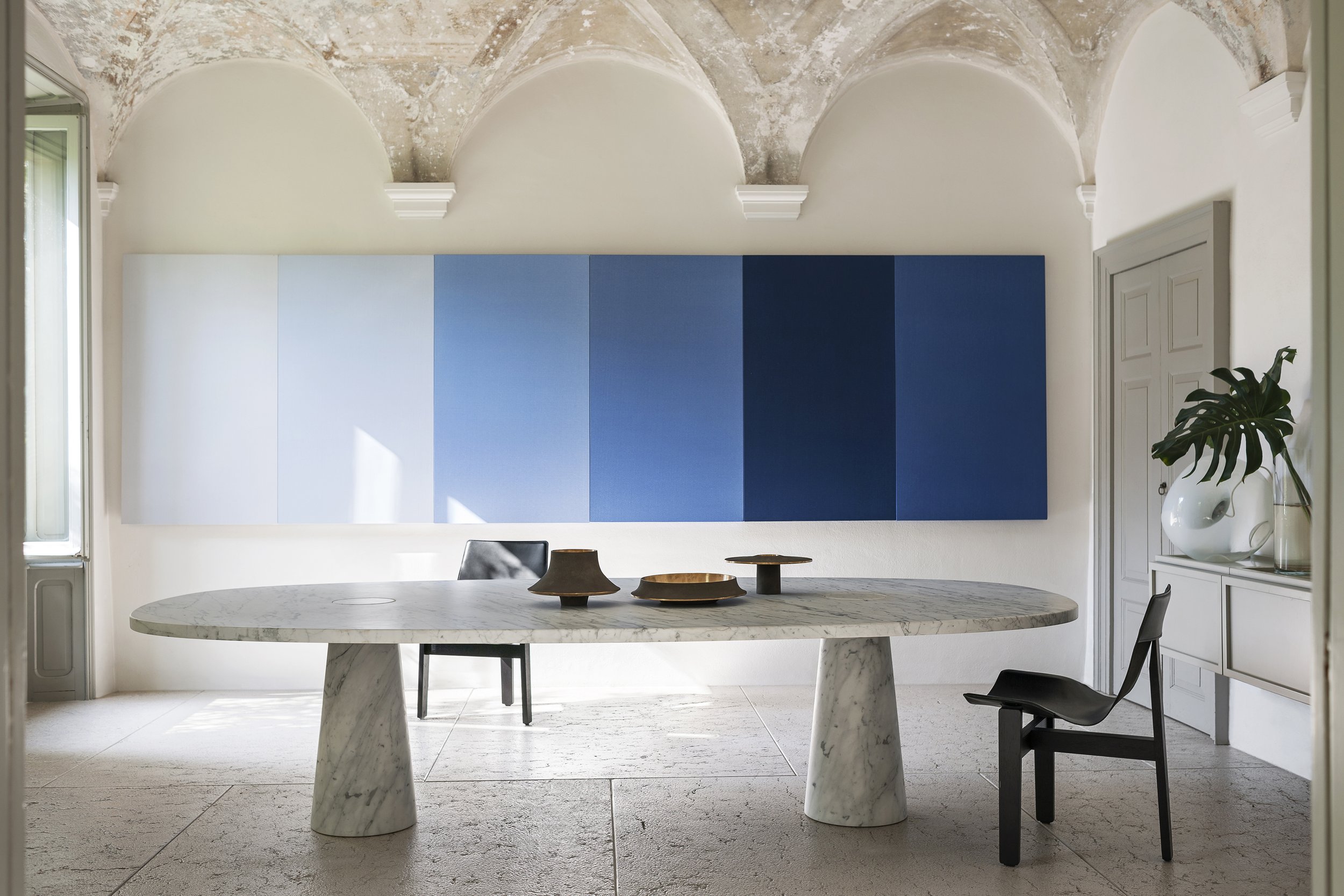
Rooted in architectural logic and material honesty, the collection highlights marble, glass, and structural clarity. Pieces such as the Eccentrico table demonstrate a precise understanding of how gravity and form interact, creating furniture that is both minimal and structurally expressive.
Agapecasa preserves these principles while adapting them for contemporary interiors, maintaining the integrity of Mangiarotti’s approach to structure and material.