
Executive Luxury Office Furniture for the Ultimate Home Workspace
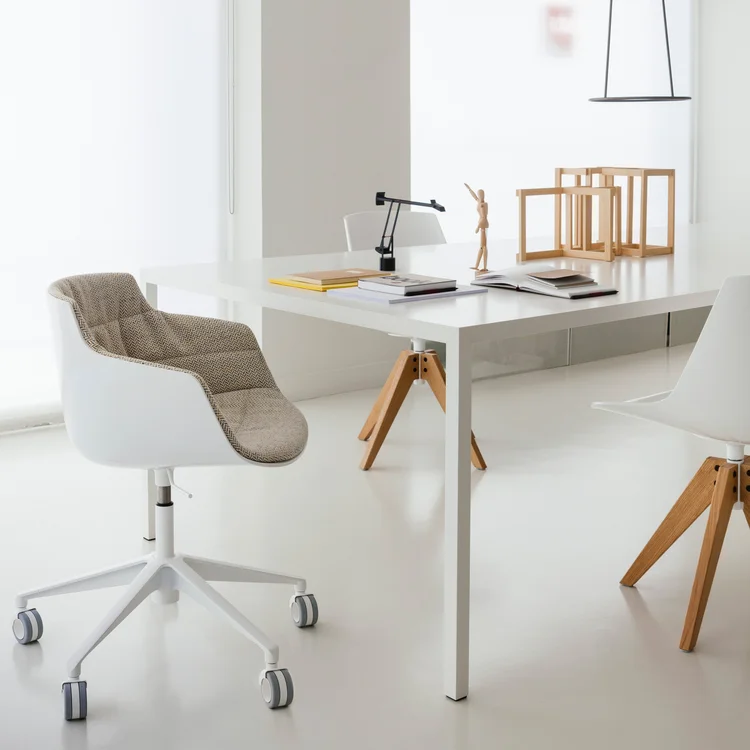
The home office has undergone a fundamental reappraisal in recent years. What was once a supplemental room, a study or library ancillary to the home's primary social spaces, now frequently carries the weight of a full professional environment.
The quality of the workspace, its material seriousness, the organization it makes possible, and the concentration it supports have become primary considerations in residential design. Luxury office furniture, understood at this level, is not just furniture in a room designated for work. It is the architecture of sustained intellectual focus.
The desk, storage systems, seating, and lighting must operate together with the same compositional clarity expected in any well-resolved interior. Material choices influence not only appearance but also the psychological atmosphere of the workspace.
Rich wood grains, leather surfaces, brushed metals, and precisely engineered cabinetry contribute to an environment that feels stable, intentional, and disciplined. In this context, luxury office furniture becomes part of a larger spatial framework designed to support concentration, efficiency, and long-term professional engagement within the home.
The Desk as the Room's Primary Spatial Event
In a home office of considered design, the desk is the room's center of gravity. Its surface area and height determine the posture in which work is conducted; its material gives the room its primary tonal register; its relationship to the window, the wall, and the storage behind or beside it establishes the spatial organization from which everything else follows.
The desk surface material compounds daily. A lacquered surface in a deep, consistent tone establishes quiet authority that supports concentration without the visual noise of natural variation. A timber surface introduces warmth and grain that varies with the light source and rewards the intimacy of close work. Both are legitimate positions; neither is universally correct. What matters is that the decision is made deliberately, in full awareness of how the surface will perform at the hours you work most.
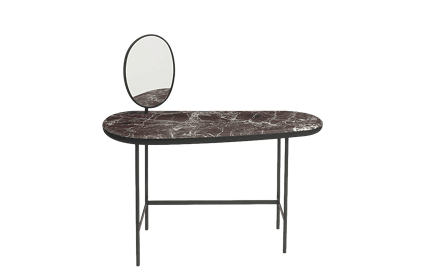
PEBBLE
Inspired by the materiality and the organic form of stones. Available in lacquer, marble, or glass and various finishes.
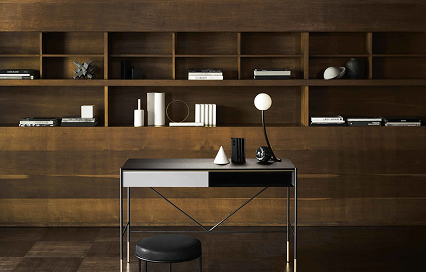
ERA SCRITTOIO
Desk with gunmetal grey legs, matte brass accents, Italian walnut, stone oak, or striped grey top and drawer with coordinating wood or glossy lacquer external parts.
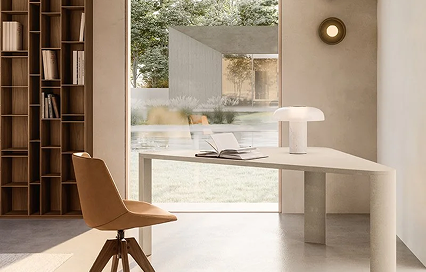
BONNET
Interpret the theme of soft, rational forms with architectural elan, introducing a touch of femininity. With the Coccioperla finish. Available in various colors.
Storage and the Architecture of Organization
Storage in a home office is not merely functional. It is spatial. A well-designed shelving or storage system gives the wall behind a desk its architectural character; it establishes the organizational logic that allows a complex working life to be held without visual clutter. The quality of the storage impacts the quality of the concentration it supports.
Bruno Fattorini's Minima is a hanging or floor-standing storage system with recycled aluminum uprights, shelving, and lacquered or wooden elements. The system is configurable to the wall it occupies, with the aluminum uprights providing a structural module that accepts both open shelving and enclosed elements. The recycled aluminum is a material decision with genuine specificity: the finish quality of the uprights holds its precision over time without the patina development that steel or brass would introduce.
In a home office where the primary material is consistently referenced, a Minima wall gives the storage element of the room an architectural presence that painted shelving cannot achieve.
The Office Chair and the Ergonomics of Sustained Concentration
The chair at a desk is the piece of luxury office furniture that is used for the longest continuous periods in any domestic environment, which makes its ergonomic and formal qualities of equal importance. A chair that supports the body incorrectly over sustained periods produces physical consequences that compound with use. A chair that is formally unresolved introduces visual discomfort into the room that affects the quality of the working environment, even when that discomfort is difficult to articulate.
Jean Marie Massaud's Flow is a family of chairs with a lacquered shell, an upholstered seat, and a metal or wooden base. The lacquered shell holds its formal precision across the entire surface, producing a silhouette that reads as architecture rather than upholstery. The upholstered seat provides the contact comfort required for sustained seating without the visual softness of a fully upholstered chair. The option of a metal or wooden base allows the piece to be calibrated to the material register of the room.
Light and the Working Environment
The home office is the domestic room where light most directly affects performance. A workspace positioned to receive direct morning light on the working surface creates glare conditions that force the eye to work harder than necessary.
Windows facing the north or east in the Northern Hemisphere, or diffused light from a high window, produce the most stable and consistent working light. The quality of artificial light is equally important: a color temperature of 4,000 Kelvin at the desk level, delivered from a source that does not cast shadow on the working surface, supports sustained concentration without visual fatigue.
Graye's office collection approaches the working environment with the same spatial intelligence brought to every other category in the gallery, treating luxury office furniture as the architecture of a specific kind of daily use.
FAQs About Luxury Office Furniture
-
Positioning the desk perpendicular to the window avoids direct glare on the screen while maintaining access to natural light at the periphery of the visual field. Placing the desk directly facing a window is the most common source of screen glare in home offices.
-
A depth of approximately 70 to 80 centimeters allows a monitor to be positioned at arm's length, which is the minimum distance for comfortable extended screen use without eye strain.
-
This is the standard approach in high-quality residential design. The office should not be treated as a separate category requiring different furniture standards, but as a working room with the same material and spatial quality as the living spaces around it.
-
Open shelving suits a library of well-organized books and objects; closed storage better serves working documents and equipment. Most offices benefit from a combination, with closed elements behind or beside the desk and open displays in the wider room.
-
Ergonomics helps reduce physical strain during long work sessions. Proper desk height, supportive seating, and thoughtful workspace layout contribute to both comfort and efficiency.
