
Dining Tables: Material, Structure, and Everyday Use
The dining table is one of the few pieces in a home that consistently holds people in relation to one another. It anchors a room not only through its scale, but through the way it defines distance, orientation, and proximity.
At GRAYE, we see the dining table as part of a larger spatial composition, where material and structure quietly shape how moments of gathering unfold.
Across the collections we work with, the table is never treated as a standalone object. It is always considered in relation to surface, weight, and proportion, becoming part of the architecture of the space it inhabits.
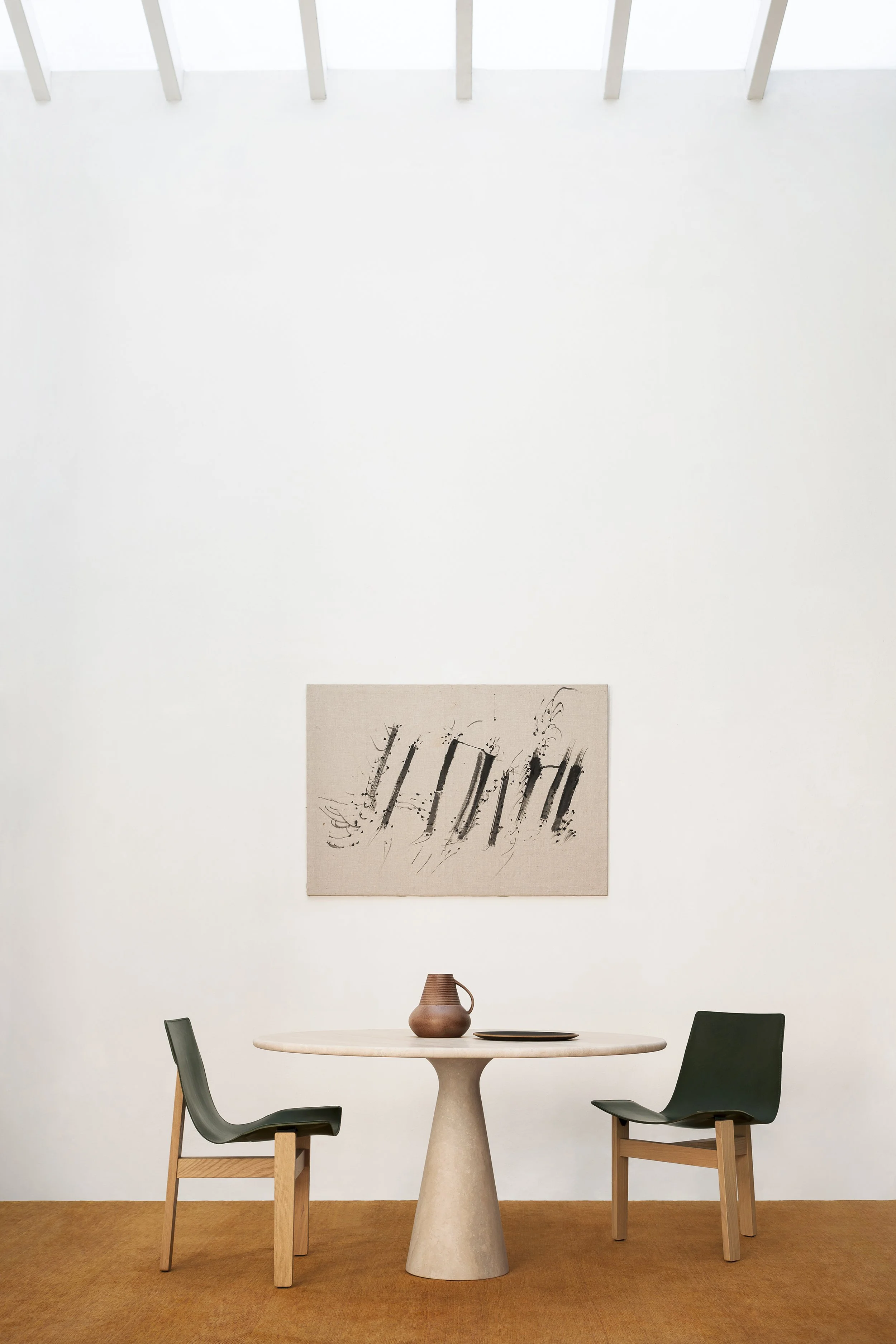
M Table by Agapecasa
Designed by Angelo Mangiarotti for Agapecasa, the M Table marks the first time the designer explored marble as the primary material for a furnishing object intended for the home. Defined by its sculptural geometry and gravity based construction, the table reflects Mangiarotti's enduring interest in structure, proportion, and material integrity.
A single gravity joint connects the tabletop to its base, introducing a structural principle that would later define many of his most celebrated works. More than a dining table, the M Table represents a pivotal moment in Mangiarotti's design practice, where architecture, engineering, and craftsmanship converge in a timeless expression of Italian modernism.
Folio Table by De Castelli
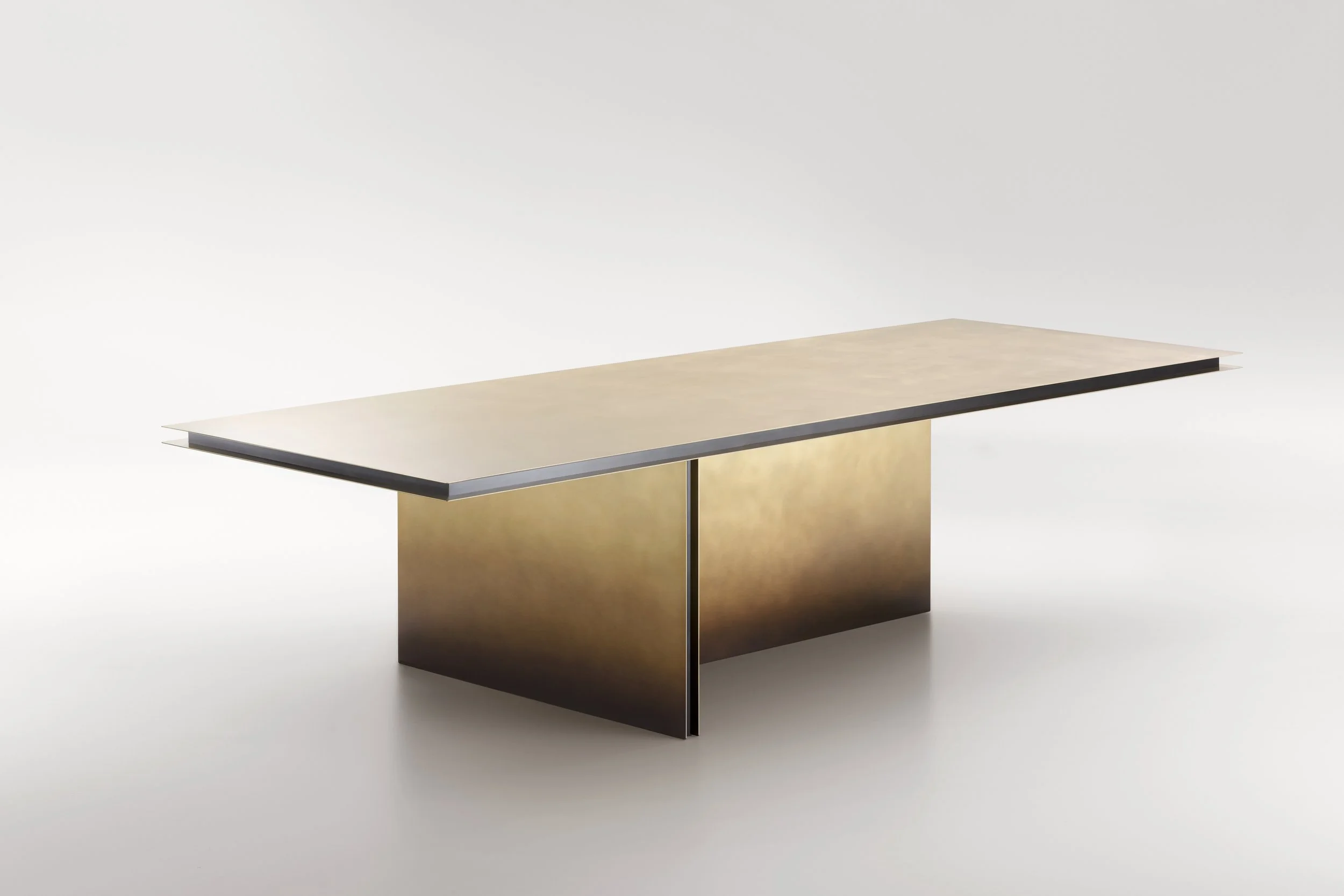
The Folio table by De Castelli explores metal as a surface in transformation.
Brass and steel are left visibly active, developing tonal shifts and reflective variation over time. Rather than a static finish, the surface responds to light, use, and environment, creating subtle variation across its plane.
The table becomes less an object of display and more a surface in dialogue with its surroundings.
Ventiquattro Table by Porro
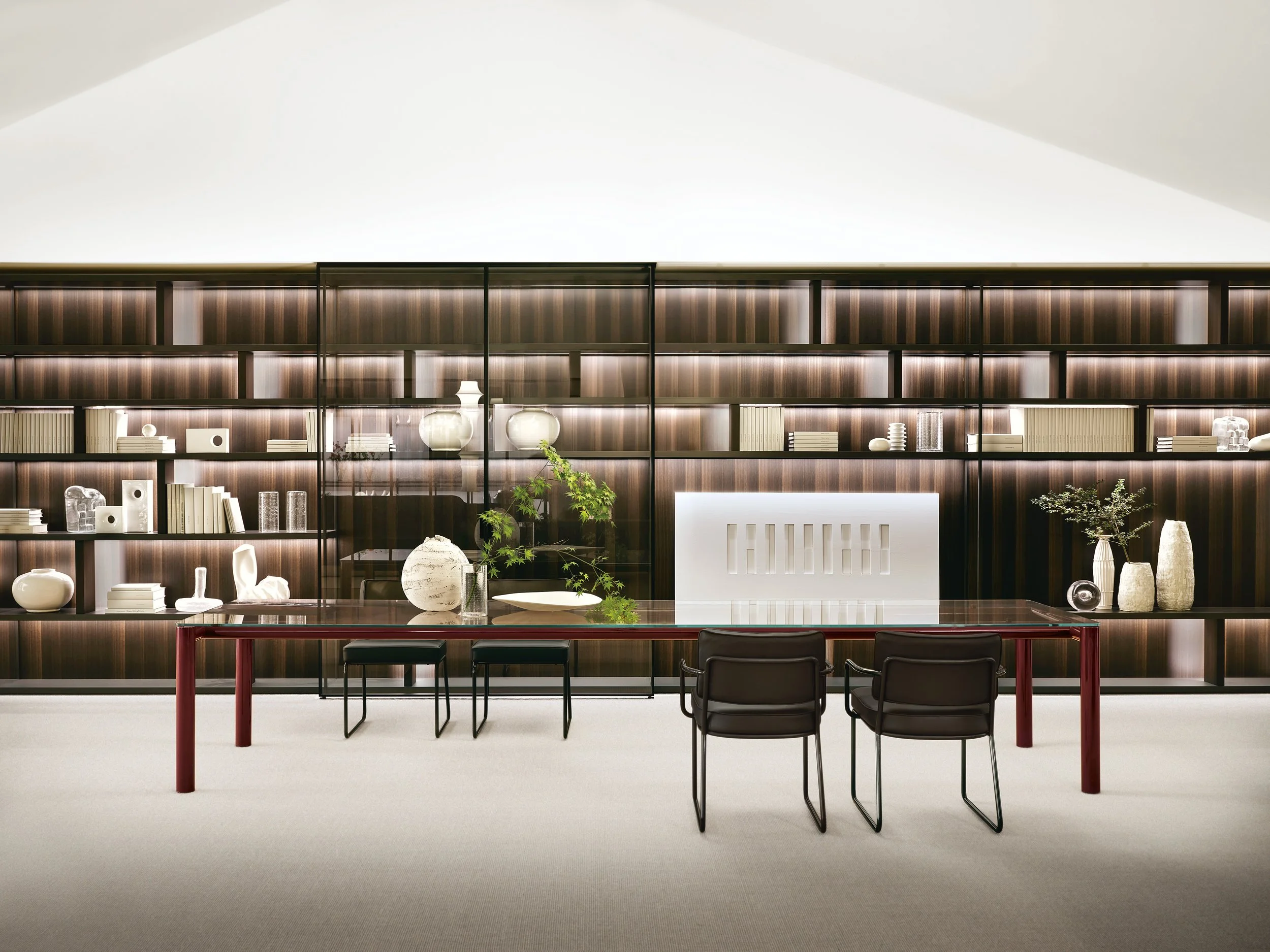
The Ventiquattro table reflects Porro’s architectural approach to furniture systems.
Defined by structural clarity and precise proportion, the table is designed to integrate into both residential and contract environments. Its composition emphasizes balance and restraint, with a focus on how the table relates to surrounding space rather than visual emphasis.
The table functions as part of a broader interior system, where consistency and scale define spatial order.
Tense Table by MDF Italia
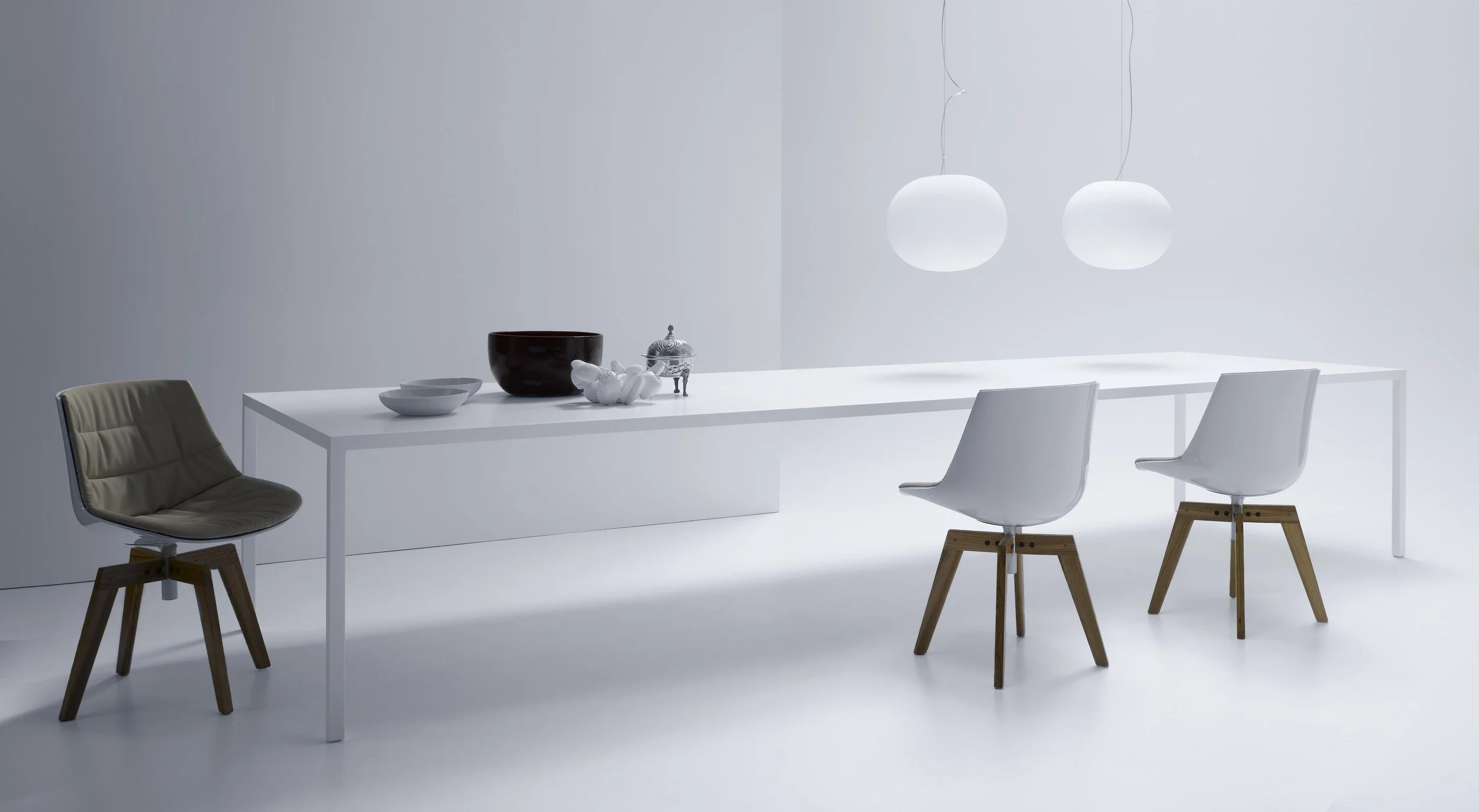
The Tense table by MDF Italia is defined by its engineered lightness and structural precision.
Despite its minimal appearance, the system is built on internal tension that allows for large spans while maintaining a thin and stable surface profile. The result is a table that feels visually light but structurally controlled.
Available in a range of materials, the system adapts to different interiors while maintaining a consistent focus on proportion, simplicity, and technical clarity.
A Spatial Approach to Dining
Across these pieces, different material systems define how space is organized.
Stone introduces weight and permanence. Metal brings reflectivity and surface depth. Architectural systems emphasize proportion and integration. Engineered structures focus on lightness and precision.
At GRAYE, dining tables are selected for their ability to shape space through material and structure rather than ornament. Each one becomes part of the spatial language of the interior, supporting both use and composition in equal measure.