
Accent Chairs for Living Room Spaces That Deserve Attention
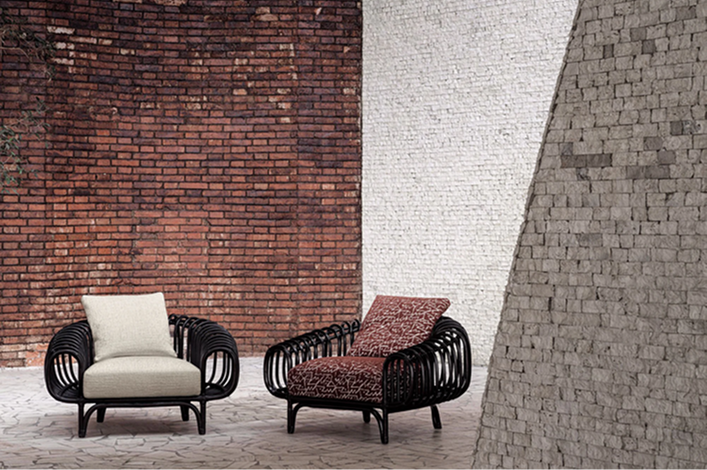
The accent chair is perhaps the most intentional statement within an interior. While a sofa establishes the primary footprint of a space, the chair introduces a concentrated expression of design and character.
Choosing accent chairs for living room layouts is not merely about finding a place to sit; it is a spatial decision that dictates the room's personality. This singular object carries the burden of character, punctuating the floor plan and providing a necessary visual counterpoint to the larger volumes of the home, ensuring the seating area feels resolved rather than simply furnished.
The Chair as Vertical Figure in a Horizontal Room
Most living spaces are defined by horizontal planes: the floor, the coffee table, the rug, and the sofa. An accent chair interrupts this register with its vertical presence. Its back height and profile are three-dimensional qualities that no photograph can fully capture.
The accent chair serves as a visual anchor, providing a stop that keeps the eye from moving through the room without resolution. When formally resolved, it completes a composition that a sofa alone cannot achieve, acting as a sculptural figure that defines the volume and the weight of the space.
The Suspended Seat and the Architecture of Enclosure
The concept of a suspended seat, where the seating surface is held within the frame without visible contact with the floor, creates a specific architectural effect. It changes the act of sitting into a sense of enclosure.
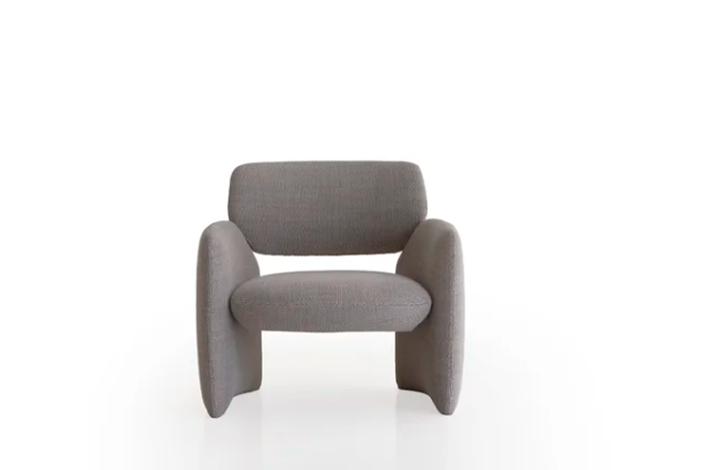
The Arnaldo armchair by Yabu Pushelberg illustrates this with its compact, harmonious silhouette. When selecting accent chairs for living room environments with limited clearance, a chair of such authoritative presence is invaluable. Its enveloping upholstery provides the material warmth required for long-lasting comfort and a refined aesthetic that holds its ground without demanding excessive space.
The Formal Intelligence of the Rounded Corner
Rounded edges suggest a specific generosity in a room. While sharp corners assert a boundary, a curve invites engagement, suggesting a softer relationship between the body and the interior. The Dep chair by Luca Botto begins with a rigorous geometry but reworks every point of contact into a rounded softness.
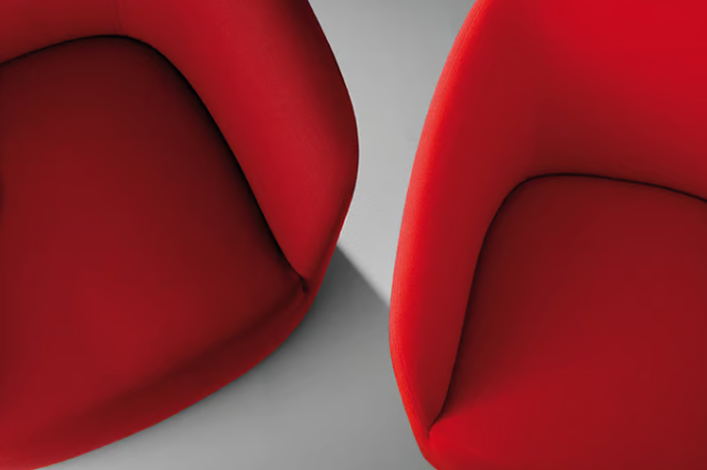
In a home characterized by strong architectural lines, selecting accent chairs for living room use that feature these curves introduces a productive contrast without surrendering formal presence. It is a study in how a solid form can be softened to feel resolved rather than severe.
Upholstery and the Chair's Contribution to Material Depth
Because an accent chair is smaller than a sofa, its material is subject to a quality of close examination. This makes the specification of fabric or leather an opportunity to anchor the room’s palette. A piece upholstered in deep cognac leather or saturated wool gives the space a genuine material weight.
The Confident lounge chair by Piero Lissoni addresses this with an economical design that relies on the upholstery for its presence. Selecting accent chairs for living room settings allows for these precise material moves that enrich the room’s overall sensory experience and provide a focal point of tactile interest.
The Chair's Relationship to the Rest of the Room
The final consideration is how the chair interacts with the surrounding furnishings. It must share enough of the room's material language to feel cohesive, yet maintain enough distinction to justify its place as a singular object.
When accent chairs for living room compositions are chosen with this awareness, they do more than occupy space. They complete the structural argument of the home. By ensuring the chair's scale and silhouette harmonize with the architectural volume, you create a sitting area that feels both curated and comfortable, reflecting a sophisticated approach to modern living that prioritizes both form and function.
FAQs
-
In a room of modest scale, a pair of well-chosen accent chairs can serve as the primary seating without the visual mass of a sofa. In larger rooms, a single accent chair almost always requires a sofa or sectional as its compositional counterpart to provide a sense of balance. The chair acts as the sculptural accent while the larger piece establishes the room's primary boundary.
-
The coffee table surface should ideally sit within five centimeters of the chair's seat height. This placement ensures that the table is within easy reach without requiring the sitter to lean significantly. Visually, this keeps the room's horizontal register consistent, preventing the table from appearing disconnected or awkwardly high in relation to the seating.
-
In open-plan interiors, positioning a chair at a slight angle to the primary circulation path produces a more dynamic spatial arrangement than a strictly linear orientation. This angle opens a sightline through the room while making the chair's back profile visible. This profile is a formal quality worth considering, especially if the chair features a striking architectural back or frame.
-
Most living rooms find their natural balance with two accent chairs of different but related forms. Beyond this, the room risks visual fragmentation, as the eye has too many discrete objects to process. A pair of chairs creates a conversation group that feels intentional, while a third piece can often disrupt the room's established spatial logic.
-
A lounge chair functions perfectly as an accent chair when its silhouette or material introduces a distinctive focal point. In many refined interiors, a well-chosen lounge chair serves dual roles, providing deep, ergonomic comfort for sustained relaxation while acting as a formal statement piece that completes the room's design narrative.
