
Serene and Sculptural Bedroom Furniture Designs
A refined bedroom begins with restraint. The strongest bedroom furniture designs establish a quiet architectural rhythm through proportion, material, and carefully considered forms.
Low-profile beds preserve the visual height of the room, compact nightstands keep the bedside area composed, and sculptural storage introduces character without filling every surface. The result is a private space that feels calm, tactile, and resolved.
Let the Bed Establish a Calm Architectural Foundation
The bed is the room’s primary horizontal element, so its proportions influence everything around it. A low frame can make the ceiling appear higher and allow more of the surrounding architecture to remain visible. An upholstered headboard introduces softness, while a structured frame creates greater definition.
Choose Softness Without Losing Structure
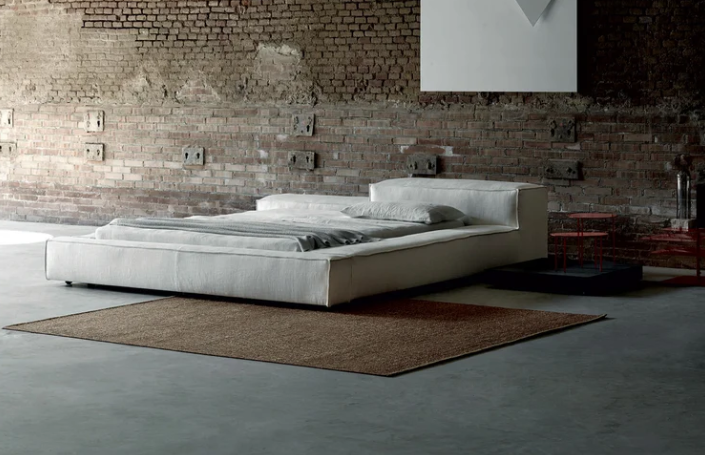
The Extrasoft bed by Piero Lissoni takes a modular approach to comfort. Its different-sized elements are upholstered with fully removable fabric or leather covers, while exposed seams reinforce its relaxed character. The design has enough volume to feel substantial, yet its low horizontal profile keeps the composition grounded.
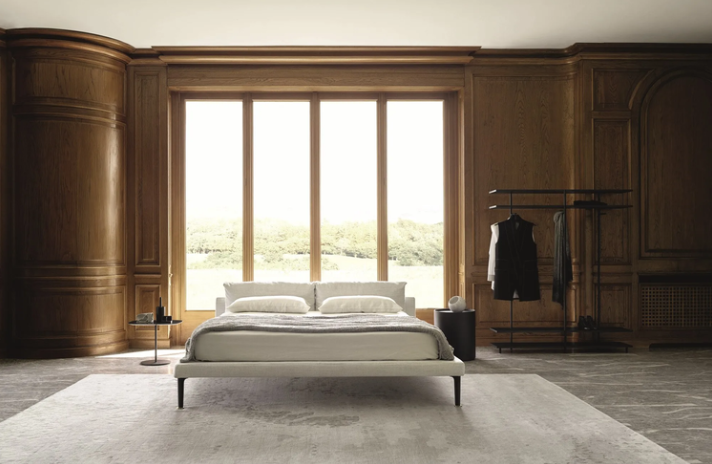
For a more defined silhouette, the Floyd Hi bed by Piero Lissoni combines fully removable fabric or leather covers with gunmetal grey steel legs and brass feet. The exposed metal details create a subtle contrast beneath the upholstered form, allowing the bed to feel lighter within the room.
These choices demonstrate how bedroom furniture designs can shape atmosphere through structure alone, without relying on decorative excess.
Build Balance Around the Bedside Zone
Nightstands are small in relation to the bed, but their placement has an outsized effect on the room. Their height, width, and material should respond to the bed rather than compete with it. A compact design can preserve circulation and leave more visual space around the sleeping area.
Use Bedside Furniture as a Material Transition
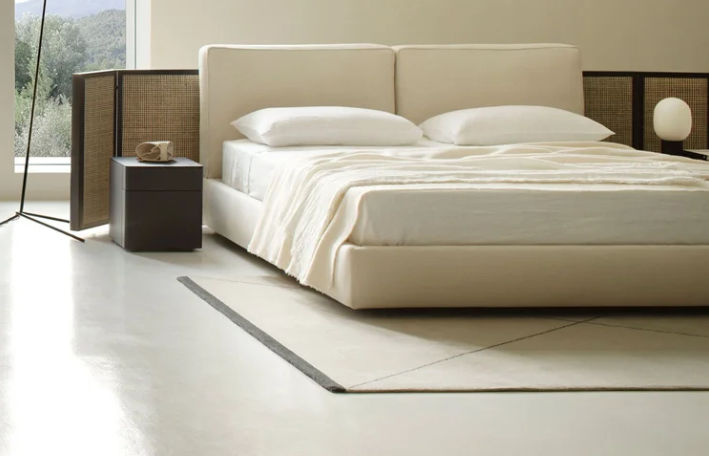
The Comodino Byron by Piero Lissoni has a compact shape with rounded corners, an ash frame, and a Black Sugi melamine interior. Its restrained footprint makes it suitable for bedrooms where the bedside area needs to remain visually quiet.
The relationship between the bed and nightstand is especially important when the headboard extends beyond the mattress. Keeping their upper lines visually aligned can reinforce the horizontal geometry of the composition. A small lamp, book, or single object can then provide function without turning the bedside into a display surface.
Explore modern bed frames to see how their proportions influence the architecture around them.
Introduce Sculptural Storage Through Considered Cabinetry
Storage should support the bedroom’s calm atmosphere while accommodating clothing, linens, and personal belongings. The most successful bedroom furniture designs allow storage to carry visual presence without creating unnecessary density.
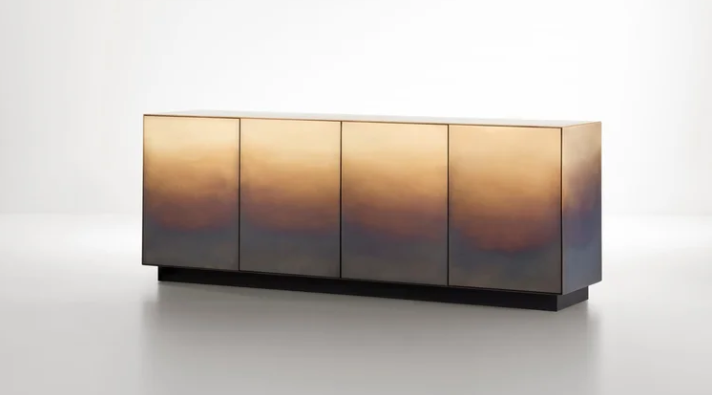
A dresser can provide this balance when its material is strong enough to stand independently as a design element. The Marea collection, designed by Zanellato/Bortotto, includes sideboards and dressers made in copper, stainless steel, or brass, with natural birch interiors. Its metal exterior gives storage a tactile architectural quality, while the interior keeps the practical function clear.
The changing character of these metals can also influence the bedroom’s material palette. Brass introduces warmth, stainless steel provides a cooler architectural note, and copper develops a distinctive patina over time.
Explore Refined Cabinet Pieces
Consider Storage as Part of the Architecture
For bedrooms with larger storage requirements, made-to-measure systems can reduce visual interruption. Graye’s closet collection includes systems designed to integrate into the surrounding architecture, with configurations tailored to individual spaces. This approach allows wardrobes and dressing areas to follow the room’s existing proportions instead of appearing as separate objects.
The principle is straightforward: storage should resolve a practical requirement while preserving the visual clarity of the room.
Layer Natural Materials for a Quieter Atmosphere
Material selection determines how bedroom furniture feels at close range. Wood introduces grain and warmth, metal adds structure, and upholstery absorbs both light and sound. Combining these materials creates depth without requiring a broad color palette.
A wood nightstand beside an upholstered bed creates a softer transition than a room filled entirely with polished surfaces. Conversely, metal cabinetry can provide definition against linen, wool, or other matte textiles.
Modern bedroom ideas consider this approach through material continuity, spatial balance, and the relationship between furniture and the surrounding architecture.
Keep the Palette Disciplined
A restrained palette does not mean every piece needs to match. It means each material has a reason to appear. Two or three related finishes can create greater depth than a room filled with disconnected colors and textures.
Let natural variation do some of the work. Wood grain, stone veining, brushed metal, and woven upholstery each provide subtle changes in surface without disrupting the room’s sense of calm.
Final Word
The most enduring bedroom furniture designs are defined by proportion, material integrity, and spatial restraint. A low-profile bed establishes the room’s foundation, a carefully scaled nightstand completes the bedside composition, and sculptural storage provides practical capacity without visual noise.
At Graye, these elements come together through a curated collection of contemporary furniture designed to support quieter, more considered interiors.
FAQs
-
A sculptural bed usually relies on proportion, silhouette, and material rather than ornament. A strong headboard, low base, or carefully resolved junction can give the piece presence while keeping the overall form restrained.
-
They do not have to be identical, but they should maintain a clear relationship in scale or material. Matching pieces create symmetry, while related but different designs can introduce a more collected character.
-
Choose storage with proportions suited to the wall and avoid unnecessary visual breaks. Integrated systems, recessed solutions, and cabinets with restrained detailing can make substantial storage feel lighter.
-
Natural wood, softly finished metal, linen, wool, leather, and stone can all contribute to a calm material palette. Combining contrasting textures is more effective than relying on several similar finishes.
-
The floor provides the visual foundation for the room. Low furniture can preserve more of it and emphasize spaciousness, while rugs can define the sleeping zone and introduce additional texture beneath the main furniture.