
Modern Bedrooms with a Luxe Twist: Design Ideas for Serene Elegance
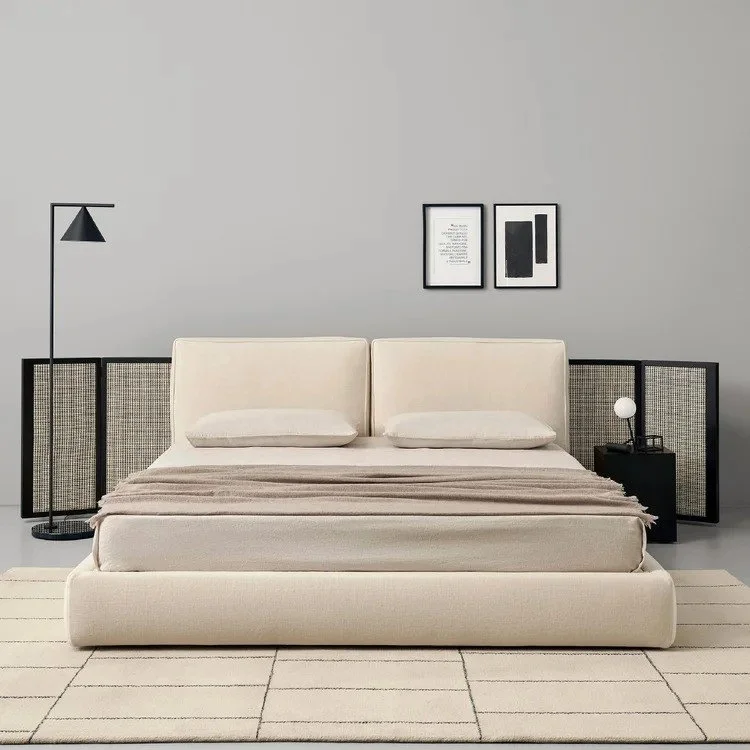
The most refined modern bedroom ideas are less concerned with decoration than with sequence. A bedroom should not be understood as a static composition apprehended from the doorway but as an environment revealed in layers: approach, transition, enclosure, and finally rest.
In this setting, luxury is architectural rather than ornamental. It unfolds gradually through control of proportion, continuity of material, and the careful calibration of light, sound, and texture. Serene elegance emerges when the room feels inevitable, when every junction is resolved, and every surface participates in a larger spatial logic.
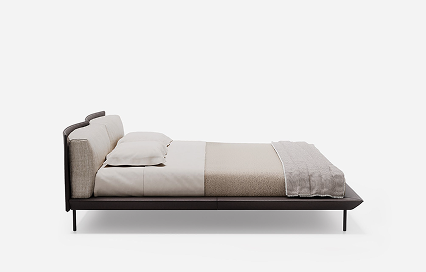
GREENE
Upholstered bed with padded steel-frame headboard, removable goose down cushions, and a two-part bed base with powder-coated steel feet.
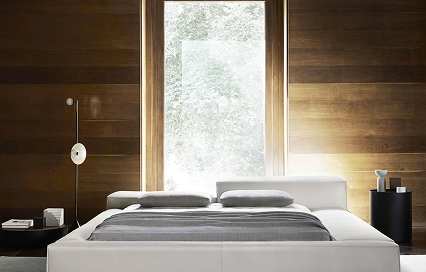
EXTRASOFT
Modular bed comprised of different size elements with fully removable fabric or leather covers and exposed seams.
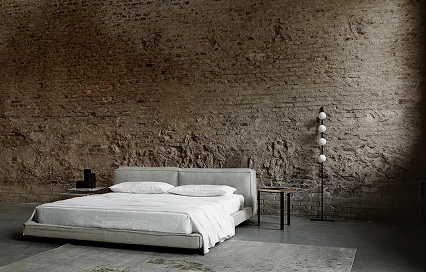
NEOWALL
Bed comprised of soft elements with fully removable fabric or leather covers.
The Processional Entry and the Threshold to Rest
One of the least examined aspects of modern bedroom ideas is the approach to the room itself. The manner in which one enters determines the psychological tone long before the bed comes into view.
A subtle threshold, perhaps marked by a change in flooring material, a framed opening, or a gentle compression of ceiling height, can establish a sense of transition that prepares the mind for retreat. This measured shift from circulation space to private chamber creates a moment of pause.
Furniture placement should reinforce this sense of procession. The bed need not be exposed immediately upon entry. A low bench, a partial millwork partition, or a carefully positioned screen can create an intermediate layer that deepens the sense of privacy. In this choreography of arrival, luxury resides not in spectacle but in restraint. The bedroom becomes a destination rather than a display.
The Headboard Wall as Micro-Architecture
The wall behind the bed deserves treatment as architectural infrastructure, not a decorative backdrop. In the most compelling modern bedroom designs, this surface operates as a composed plane that anchors the room.
Full-width upholstered panels may extend beyond the mattress to integrate shelving, concealed lighting channels, or subtle reveals that articulate proportion. Vertical timber slats introduce rhythm while contributing acoustic softness. Large-format stone slabs convey mass and permanence, allowing material to replace ornament.
Extended headboard systems, found in carefully curated designer collections, blur the boundary between furniture and built-in architecture. The bed appears anchored within a unified wall plane, eliminating the need for excessive artwork. Instead of layering decoration, the architecture itself becomes expressive.
Ceiling Design and the Perception of Enclosure
Ceilings are frequently overlooked in discussions of modern bedroom ideas, yet they play a decisive role in shaping intimacy. A slightly lowered ceiling plane above the bed, articulated through plaster recess or timber framing, can create a sense of containment without reducing actual volume. In rooms with generous height, exposed beams introduce vertical drama while low furniture restores balance.
Integrated linear lighting concealed along ceiling edges produces a subtle halo that softens the boundary between wall and plane. This quiet illumination alters the mood in evening hours without adding visual clutter. Even a modest shift in ceiling color, a tone marginally deeper than the walls, can gently recalibrate perceived height and enhance comfort. A bedroom should feel held within its envelope.
Bed Orientation and Light Behavior
The orientation of the bed in relation to natural light influences the rhythm of daily life. Positioning the bed perpendicular to glazing allows morning light to wash across textiles, revealing texture and depth without harsh intrusion. Side light enhances the tactile qualities of linen, wool, or leather, reinforcing the material narrative of the room.
When the bed must face a window, layered drapery becomes essential. Sheer linen diffuses daylight while heavier panels introduce evening enclosure. Throughout the day, light interacts differently with surfaces. Honed stone bedside tables may glow softly at dawn, while dark timber deepens in tone at dusk. In this way, the bedroom becomes a living environment shaped by shifting light rather than static illumination.
Integrated Nightstands and Continuous Lines
Freestanding furniture can interrupt continuity, whereas integrated nightstands extend from the headboard wall as cantilevered planes, preserving visual flow across the floor. This floating condition introduces a shadow line beneath, adding dimensional subtlety while reinforcing horizontal emphasis. Drawer fronts aligned precisely with wall panel seams maintain order, and hardware remains minimal or recessed.
Symmetry, while often effective, is not obligatory. An extended surface on one side may be balanced by a sculptural side table on the other, provided that proportion and material coherence are maintained. Such precision in alignment communicates quiet authority.
The Bedroom as a Private Salon
In more expansive suites, the bedroom may incorporate a secondary seating zone that reinterprets the logic of the living room at a more intimate scale. Compact upholstered seating positioned near glazing establishes a contemplative corner without disrupting the primary axis of the bed. Upholstery should echo bedding tones, ensuring material cohesion.
A modest side table in stone or metal can introduce measured contrast, provided it aligns with the broader palette. The seating area must feel integrated into the room’s geometry rather than appended. When resolved carefully, this private salon expands the function of the bedroom beyond sleep and transforms it into a personal retreat.
Edge Conditions Between Bedroom and Bath
Where the bedroom transitions into an en suite, continuity becomes critical. Timber flooring that extends toward the bath threshold reinforces flow, while stone surfaces from the bathing area may reappear as bedside accents, creating a visual dialogue. Alignment of door frames and panel seams strengthens coherence.
Sliding doors concealed within wall pockets maintain clean sightlines and preserve spatial calm. In these transitions, luxury reveals itself through continuity and restraint.
FAQs
1. How can modern bedroom ideas create a sense of enclosure in high-ceiling spaces?
Introduce lowered ceiling planes above the bed, darker ceiling tones, or vertical timber detailing to recalibrate perceived height.
2. What is the benefit of integrated nightstands?
They reinforce horizontal continuity, reduce visual clutter, and create soft shadow lines that enhance dimensionality.
3. Should mirrors face the bed in luxury bedrooms?
Position mirrors to reflect light or architectural detail instead. Direct reflection of the bed can disrupt visual calm.
4. How does textile weight affect bedroom comfort?
Heavier fabrics absorb sound and regulate temperature, contributing to both acoustic softness and thermal balance.
5. What distinguishes high-end modern bedroom ideas from standard contemporary design?
Attention to spatial sequencing, alignment of architectural elements, and integration of furniture into built-in frameworks defines elevated execution.
