
High-End Modern Dining Room Ideas for Stylish Entertaining
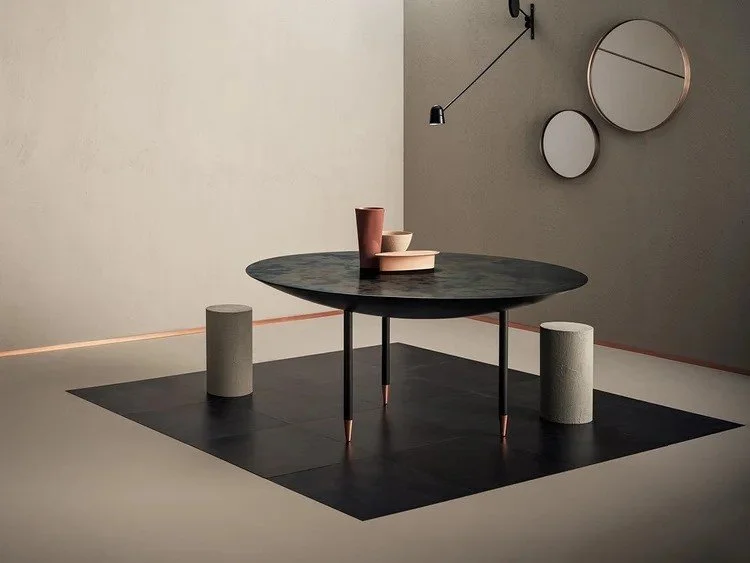
The most compelling modern dining room ideas begin not with decoration, but with ceremony. At its highest expression, dining is an act of gathering shaped by intention, proportion, and atmosphere. The room must frame conversation, heighten anticipation, and honor the ritual of shared meals without resorting to theatrical gestures.
In refined interiors, the dining space carries a quiet gravitas because it has been composed with clarity and material intelligence rather than ornament.
Luxury in the dining room is measured through relationships: between table and architecture, chair and floor plane, and light and shadow. When these relationships are calibrated carefully, the space feels prepared for presence more than performance.
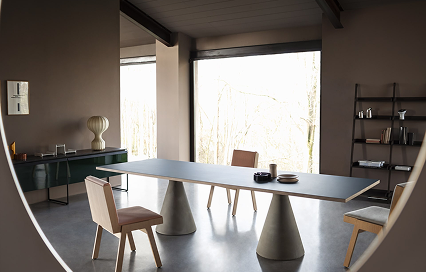
TAVOLO
Features a three-part construction: concrete base, a wooden top and steel connector. Available in various sizes, shapes, and finishes.
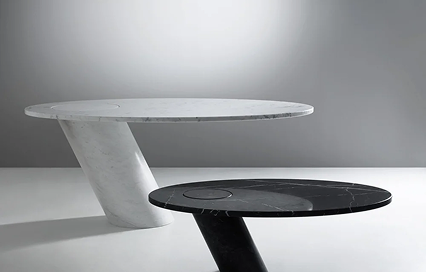
ECCENTRICO
All-marble table with an elliptical top fitted asymmetrically into an inclined cylindrical leg, using weight, friction, and eccentricity to lock the joint without fasteners. Custom sizes and finishes available.
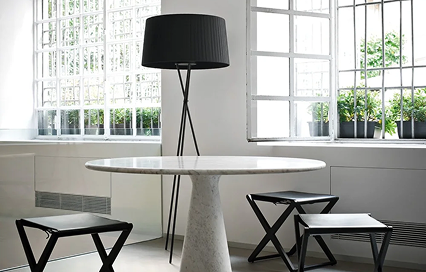
M
All-marble table with a lathe-turned central base in a hyperboloid shape—wider at the bottom, tapering toward the top—to support a circular top that rests embedded in its own thickness. Available in various finishes and sizes.
The Table as a Civic Object Within the Home
Every serious exploration of modern dining room ideas begins with the table, which functions less as furniture and more as the architectural center of the room. It establishes scale, anchors movement, and defines how bodies gather within space.
A table that is too small appears tentative, while one that overwhelms the footprint compromises intimacy and circulation. As a rule, at least thirty-six inches should remain between the table edge and surrounding walls or cabinetry, allowing guests to move comfortably without friction.
Material selection determines the emotional register. Solid walnut introduces warmth and lineage, while honed marble conveys permanence and cool composure. Glass can introduce visual lightness, though it demands balance through more grounded seating or substantial bases.
In thoughtfully curated collections of refined dining tables, attention to proportion and detailing distinguishes the exceptional from the ordinary. Chamfered edges, sculptural yet disciplined bases, and carefully resolved undersides all contribute to a sense of completeness. The table must hold the room with quiet authority, not through size alone but through precision.
Chair Design and the Geometry of Comfort
If the table defines the room’s axis, the chairs determine how long guests remain within its orbit. Comfort and silhouette must operate in concert, ensuring that elegance does not compromise ease.
In elevated modern dining room ideas, seating favors tailored upholstery in leather or wool that provides support while preserving crisp lines. Fully upholstered dining chairs can succeed when their profiles remain more structured than overly indulgent, avoiding visual excess.
The geometry of each chair should converse with the table’s base. Slender metal legs complement monolithic stone surfaces, while timber frames resonate with wood tabletops. This dialogue between materials reinforces cohesion. Craftsmanship becomes evident in joinery, curvature, and the subtle angle of the backrest, all of which influence posture and perception.
Spacing must be disciplined, allowing approximately twenty-four inches per guest to ensure comfort without crowding. Chairs should slide effortlessly, maintaining the room’s rhythm without interrupting it.
The Psychology of Shape in Dining Layouts
Shape carries psychological weight. Rectangular tables reinforce axis and hierarchy, structuring conversation along linear lines. Round tables dissolve hierarchy, encouraging equal eye contact and fostering intimacy. Oval forms soften architectural rigidity and ease circulation in narrower rooms, while square tables create compact intimacy when proportioned carefully.
Modern dining room ideas respond to context instead of formula. In open-plan homes, elongated dining tables may serve as spatial dividers, defining territory between the kitchen and living zones.
In enclosed rooms, circular or oval forms can introduce fluidity and soften perimeter lines. The decision should reflect how gatherings unfold, whether formal dinners that benefit from linear order or informal evenings that favor radial exchange.
Surface Reflection and the Ritual of Light
The dining room transforms after dusk, when light becomes the principal architect of mood. A pendant suspended above the table must align precisely with its center, and its scale must correspond to the table’s dimensions. Elongated tables may require a sequence of fixtures to establish rhythm, while round tables benefit from a singular sculptural presence.
Layered lighting introduces nuance without excess. Warm tones around 2700K preserve skin tones and enhance the presentation of food. Dimmers allow transitions from preparation to intimacy.
Reflective surfaces such as polished stone or lacquered cabinetry amplify candlelight subtly, while matte finishes absorb glare and maintain composure. The interplay between illumination and surface ultimately defines the room’s emotional temperature.
Acoustics and the Density of Materials
Dining rooms are acoustic environments, though this quality is rarely addressed directly in discussions of modern dining room ideas. Hard surfaces can create echo and diminish intimacy, while carefully chosen materials soften sound and contain conversation.
A substantial rug beneath the table dampens footfall and introduces warmth. Upholstered chairs absorb sound gently, and timber or fabric wall panels provide additional moderation.
Material density shapes the auditory experience. Heavy drapery drawn in the evening contributes to enclosure, and even artwork selection influences reflection and absorption. When acoustics are considered alongside proportion and material, conversation becomes effortless rather than strained.
The Peripheral Furniture and the Art of Service
Beyond tables and chairs, supporting furniture enables hospitality to unfold gracefully. A sideboard or credenza provides storage for linens, glassware, and serving pieces, and its height should relate proportionally to the mass of the table. Materials may echo the primary surface or introduce subtle contrast through restrained metal or stone detailing.
Open shelving demands discipline, as excessive display fragments visual calm. A limited number of ceramic vessels or sculptural objects can articulate the wall plane without distraction.
In more informal settings, particularly where dining merges with kitchen space, refined stools may accompany counter seating, provided their height and material align with the broader composition. Peripheral elements should support service without overwhelming the room’s architectural clarity.
FAQs
1. What is the ideal clearance around a dining table?
Allow at least thirty-six inches between the table edge and walls or furniture. This ensures comfortable movement and chair adjustment.
2. Are round tables better for conversation?
Round tables encourage equal eye contact and reduce hierarchy, making them ideal for intimate gatherings.
3. How high should a dining pendant hang above the table?
Typically, thirty to thirty-six inches above the tabletop. This height preserves visibility while maintaining focused illumination.
4. What materials work best for luxury dining tables?
Solid wood, honed marble, and high-quality veneers offer durability and visual depth. The choice should align with the room’s overall material language.
5. How can a dining room feel intimate in an open-plan home?
Define the area through ceiling articulation, rug placement, and lighting alignment. These elements create subtle boundaries without enclosing the space.
