
Sculptural Floor Lamps That Enhance Modern Living Room Design
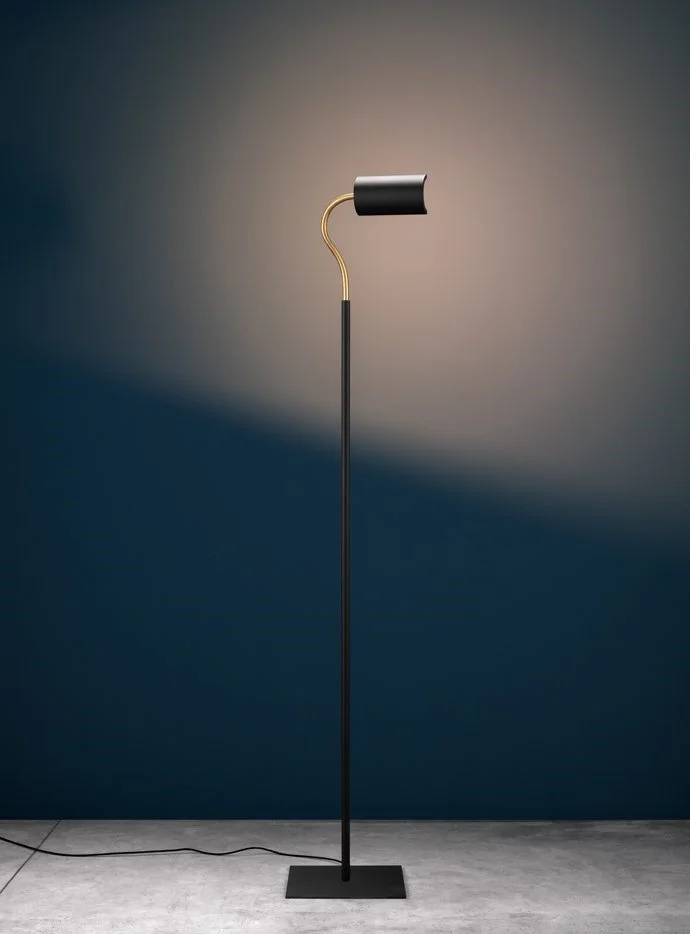
In contemporary interiors, floor lamps for living room settings operate as more than secondary light sources. They introduce vertical articulation within rooms defined by low seating, horizontal cabinetry, and expansive rugs. When treated sculpturally, a floor lamp becomes a spatial instrument. It establishes height, modulates shadow, and refines proportion. It stands as both object and atmosphere.
Modern living rooms emphasize horizontality; sectionals extend laterally, coffee tables sit low, and media units trace long perimeter lines. Within this composition, a floor lamp introduces a counterbalance. It lifts the eye, clarifies volume, and stabilizes the room’s elevation.
Vertical Emphasis Within Horizontal Rooms
A sculptural lamp introduces necessary vertical tension. Its stem or column interrupts the dominance of low furniture and reasserts ceiling height.
Proportion governs success. A lamp that terminates too low diminishes presence. One that competes with ceiling planes disrupts harmony. The ideal height aligns with eye level when seated, typically between fifty-eight and seventy inches, depending on ceiling height and furniture scale.
Placement matters equally. Positioned beside a sectional, a lamp marks the boundary of the seating field. Adjacent to a lounge chair, it establishes a reading enclave. In corners, it activates overlooked voids.
Floor lamps for living room compositions should feel anchored, not incidental. Their base must possess sufficient visual weight to ground the vertical line.
Sculptural Floor Lamps for Living Room as Independent Objects
The most compelling floor lamps maintain sculptural presence even when unlit. Their forms must withstand daylight scrutiny.
Arc lamps describe sweeping curves that counteract rectilinear architecture. Their reach should correspond to the room width. Excessive span overwhelms compact layouts. Calibrated arcs create graceful overhead gestures without encroachment.
Columnar lamps in marble, travertine, or carved wood operate as luminous monoliths. Their mass stabilizes open-plan interiors and introduces tactile depth. When paired with restrained shades, the material assumes prominence.
Minimalist rod lamps reduce the gesture to a singular vertical line. Integrated LED elements emphasize silhouette. These forms suit interiors where precision and restraint define the composition.
Tripod bases introduce geometric cadence. Three legs create structural rhythm and lightness. In walnut or matte black steel, they integrate seamlessly with modern furnishings.
Within curated collections of designer floor lamps, these sculptural approaches are treated as architectural components. The lamp participates in the room’s structural language.
Material Dialogue and Tactile Contrast
Material selection influences whether a lamp recedes or asserts.
Metal bases in brushed brass, bronze, or blackened steel introduce crisp edges. Their subtle reflectivity captures ambient light without glare.
Stone anchors the vertical gesture. Marble and travertine provide mass and permanence. Veining becomes an inherent ornament.
Wood softens austerity. Turned oak or walnut stems add warmth and organic contrast within mineral palettes.
Glass and alabaster diffuse illumination. These materials glow in dimmed conditions, reinforcing the atmosphere.
Textile shades require proportional alignment. Linen and silk diffuse evenly, and opaque shades create directional pools. The shade’s diameter must correspond to the base’s scale to preserve balance.
Material resonance strengthens cohesion. A brass lamp may echo cabinet hardware, whereas a marble base may correspond to a stone coffee table.
Light Distribution and Atmospheric Layering
Beyond form, floor lamps shape how light inhabits a room.
Up-lighting directs illumination toward the ceiling, expanding perceived height. Down-lighting focuses attention on seating or surfaces. Adjustable heads offer precision without compromising silhouette.
Integrated LED strips within slender frames provide even vertical glow. These designs read as illuminated lines rather than traditional fixtures.
Layered lighting defines depth. Floor lamps complement ceiling fixtures and wall lighting, creating varied intensities at multiple heights. This stratification enriches material texture and spatial clarity.
Warm light between 2700K and 3000K fosters intimacy. Cooler tones suit gallery-like spaces but require careful calibration in residential settings.
The luminous quality should align with the room’s mood. Light shapes perception as decisively as form.
Placement Within Seating Fields
In living rooms, placement reinforces composition.
Beside a lounge chair, a lamp establishes an intimate perimeter. The base should align subtly with furniture legs, maintaining circulation.
At the end of a sofa, a sculptural lamp operates as a vertical bookend. Its mass must correspond to the upholstery volume to avoid imbalance.
In open plans, floor lamps for living room areas can delineate zones without erecting barriers. Positioned behind a sectional, they articulate a transition between living and dining spaces.
Multiple lamps require coherence. Repetition of a finish or silhouette maintains unity.
Corners deserve attention. A sculptural lamp placed deliberately within a recessed angle prevents spatial dead zones and enriches depth.
Scale and the Refusal of Excess
The sculptural floor lamp is built on restraint. Excessive curvature or elaborate ornamentation undermines architectural clarity.
Scale must correspond to adjacent furniture. In compact interiors, slender stems preserve airiness. In expansive volumes, substantial bases prevent visual loss.
One or two sculptural lamps typically suffice. Accumulation dilutes authority.
The lamp’s geometry should converse with the room’s grid. Alignment with rug edges, sofa lines, or wall axes reinforces order.
Integrating Sculptural Lighting with Architectural Intent
Lighting should not be an afterthought. In projects approached through comprehensive residential design and planning, floor lamps are positioned in dialogue with furniture and circulation from inception.
Their axis aligns with spatial grids, their material corresponds to palette decisions, and their luminous quality supports the room’s atmosphere.
FAQs
1. What height is ideal for floor lamps in a living room?
Most range from 58 to 72 inches. The correct height aligns with the seating scale and ceiling proportion to avoid glare and maintain balance.
2. Are arc floor lamps appropriate for smaller living rooms?
Yes, when proportioned carefully. Slim arcs with moderate reach define seating areas without overwhelming compact layouts.
3. What materials work best for sculptural floor lamps?
Marble, travertine, brass, blackened steel, and solid wood provide durability and visual depth while integrating with refined interiors.
4. How many floor lamps should a modern living room include?
Typically one or two. Placement should complement other light sources and maintain compositional clarity.
5. Can floor lamps provide sufficient illumination without overhead lighting?
In intimate evening settings, layered floor lamps with adequate lumen output can replace ceiling fixtures and create a softer atmosphere.
