
How to Style an Entryway Console Table with Elegance
Curate Your Entryway With Luxurious Consoles
An entryway establishes the atmosphere of a home before the first room comes into view. A console gives that threshold a sense of intention, providing a surface for light, objects, and materials to come together.
Knowing how to style an entryway console table is less about adding decoration and more about understanding proportion, visual weight, and restraint. The most elegant arrangements leave enough space for each element to be appreciated.
Begin With the Console as the Architectural Anchor
The console should establish the composition before anything is placed upon it. Its proportions need to respond to the wall, the width of the passage, and the architecture surrounding the entrance. A piece that is too deep can interrupt circulation, while one that is too slight may disappear within a generous foyer.
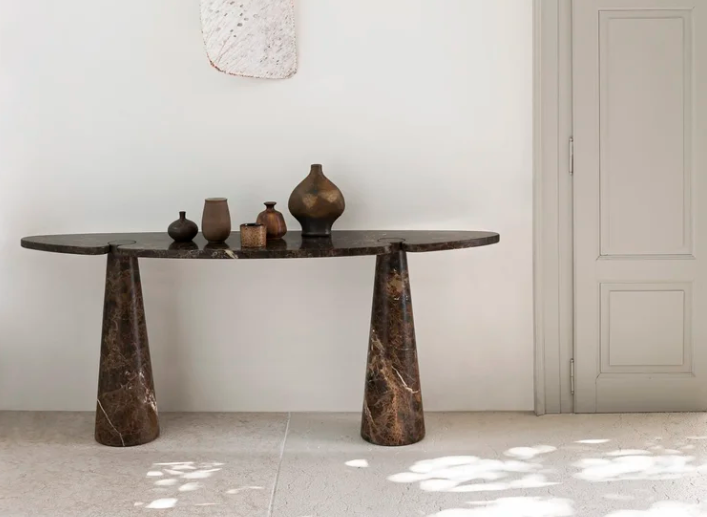
The Eros console by Angelo Mangiarotti offers a particularly strong example of furniture carrying architectural presence. Its geometric form and gravity-based construction allow the material and structure to remain visible rather than being concealed beneath ornament. In an entryway, that clarity gives the console enough presence to anchor the room without requiring a crowded surface.
Give the Furniture Room to Breathe
Once the console is positioned, resist the temptation to fill every available surface. When considering how to style an entryway console table, remember that negative space around the piece allows its proportions to register and keeps the entrance visually calm.
The same principle applies to the wall above it. A console needs enough surrounding space to read as an intentional element, not another object placed against the wall.
Create One Clear Focal Point Above the Console
The wall above a console offers an opportunity to establish the vertical element of the composition. A mirror, artwork, or sculptural wall piece can provide that focus.
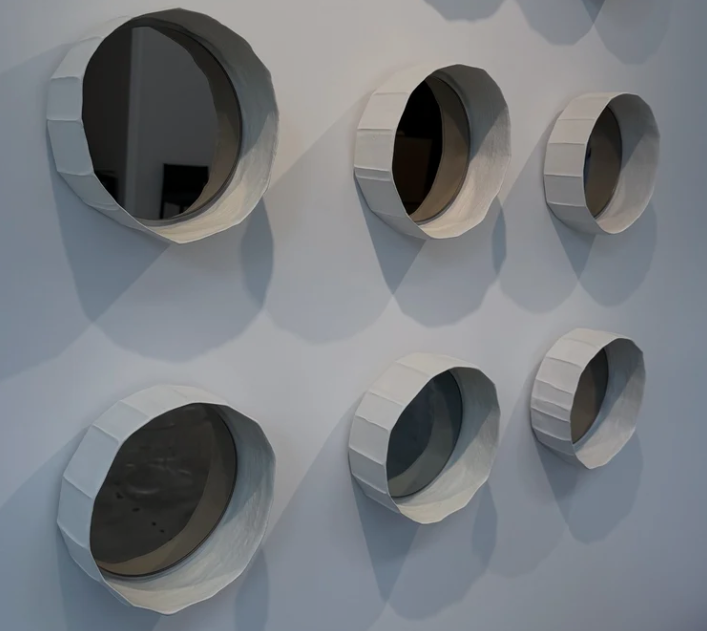
A mirror is particularly effective in an entryway because it introduces reflection while giving the wall a defined center. The Ninfea mirror by Paola Paronetto and Giovanni Botticelli, handmade in Italy with ceramic and glass, brings material character to a functional object. Its presence can soften the harder geometry of a console while adding another layer of texture and light.
Explore Graye's Mirror Collection
Layer Objects With Deliberate Variation
Once the main focal point is established, the console surface can hold a small selection of objects. The most compelling arrangements usually combine different heights, textures, and densities without becoming visually busy.
A tall vessel can establish verticality. A low box or stack of books introduces a horizontal note. A small sculptural object can occupy the space between them.
This is where how to style an entryway console table becomes an exercise in editing. Three considered objects can have more presence than ten decorative pieces competing for attention.
Let Material Create the Interest
Objects do not need to match. They need to relate.
Stone can sit comfortably beside timber. Ceramic can introduce softness against metal. Glass can bring a subtle reflection into a composition dominated by matte surfaces. Repeating one material from another part of the home can also create continuity between the entryway and the rooms beyond.
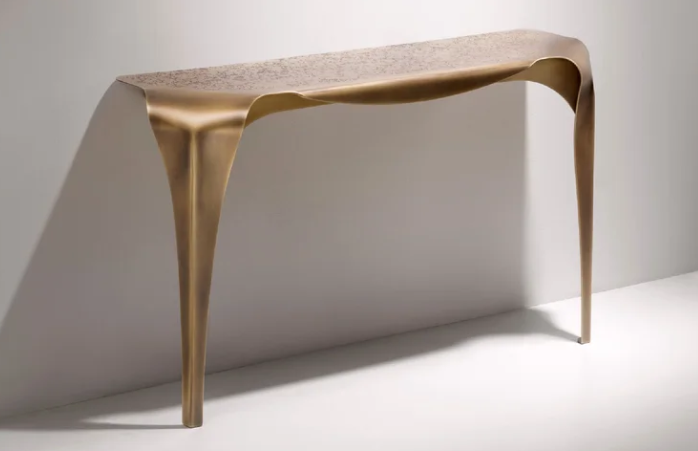
The Convivium console by Nikita Bettoni demonstrates how material itself can become the focal point. Sculpted from solid brass, it carries a distinct presence without relying on elaborate ornamentation.
Introduce Practical Elements Without Introducing Clutter
The entrance has an unavoidable practical role. Keys, correspondence, glasses, and other daily objects naturally arrive here. When considering how to style an entryway console table, elegance comes from giving those things a defined place rather than pretending they do not exist.
A shallow tray can gather smaller belongings. A discreet box can conceal objects that would otherwise interrupt the composition. The distinction is subtle but important. Practicality should be integrated into the arrangement instead of becoming its dominant visual language.
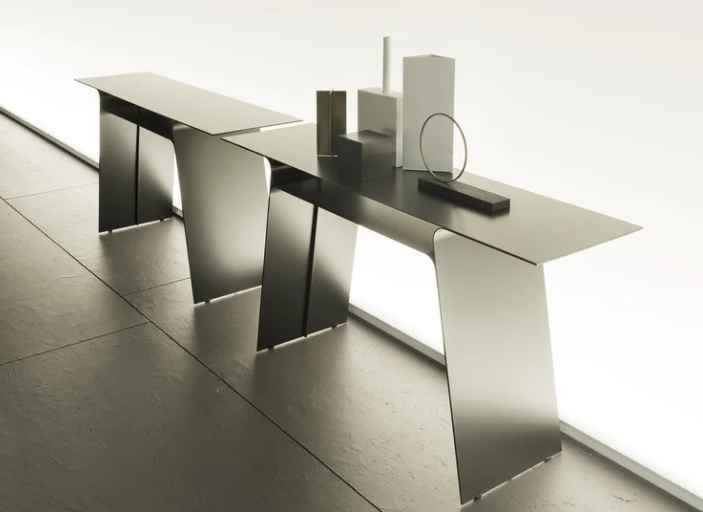
The Inari console by Mist-o offers a quieter direction, with its black lacquered metal construction and restrained silhouette. Its simplicity leaves room for the surrounding materials and selected objects to establish the atmosphere.
Consider the Entryway as Part of the Larger Interior
The entrance should not feel like a separate decorative moment. Its materials and tones can establish a vocabulary that continues throughout the home.
If the living room introduces warm timber, the entryway might repeat that warmth through a sculptural object or framed artwork. If the interior relies on stone, metal, and neutral upholstery, the console arrangement can echo those qualities without becoming overly coordinated.
Graye's The Anatomy of a Curated Space explores this broader approach, where furniture, material, proportion, and function are considered as parts of one environment.
Know When the Composition Is Complete
The final stage is subtraction. Step back from the console and remove anything that does not contribute to the composition. Look at the arrangement from the doorway, then from the rooms beyond it. The entrance should feel complete from every angle.
A particularly useful question is whether each object has a reason to remain. Does it introduce scale, texture, reflection, color, or memory? If it contributes nothing beyond filling space, it may not belong.
This restraint is central to how to style an entryway console table with elegance. The objective is not to create a display that demands attention. It is to create an arrangement that rewards it.
Speak With Our Design Specialists
FAQs
-
It can, provided the proportions create a clear relationship between the two. A small gap allows the mirror and console to read as separate elements while still forming one composition.
-
Artwork with a strong material or visual quality can work particularly well. The scale should correspond to the console, while the palette can either complement or thoughtfully contrast the surrounding interior.
-
Use fewer objects and give greater attention to their materiality. A single sculptural vessel, a considered lamp, or an exceptional piece of art can carry more weight than a crowded arrangement.
-
No. Symmetry can create formality, but asymmetrical compositions feel more natural and collected. Balance visual weight instead of simply matching objects on both sides.
-
There is no fixed percentage, but generous negative space generally allows the console and its objects to retain their presence. The surface should feel composed, not occupied.