
Elevated Mid-Century Modern Living Room Design Ideas
Explore Graye's Designer Collection
Mid-century modern living room ideas occupy a distinct position in contemporary interior design: they draw on a movement that resolved the relationship between organic form, honest materials, and functional purpose with a clarity few subsequent movements have matched.
Applying these principles at a luxury level means selecting pieces whose material and structural character aligns with that heritage rather than pieces that merely reference its visual surface.
What Mid-Century Modern Design Demands of a Living Room
The mid-century modern canon was not defined by a single aesthetic signature. It was defined by materials used with structural honesty, forms derived from the logic of manufacture and human proportion, and spaces organized around function.
A living room that applies these principles requires pieces that earn their place through construction and material quality. Mid-century modern living room ideas at the luxury level are not exercises in reproduction. They are exercises in selection.
Seating That Belongs to the Mid-Century Tradition
The lounge chair is the piece most closely associated with mid-century modern design. Its combination of considered proportions, supportive upholstery, and a scale suited to sustained occupation defines a typology that continues to influence contemporary interiors.
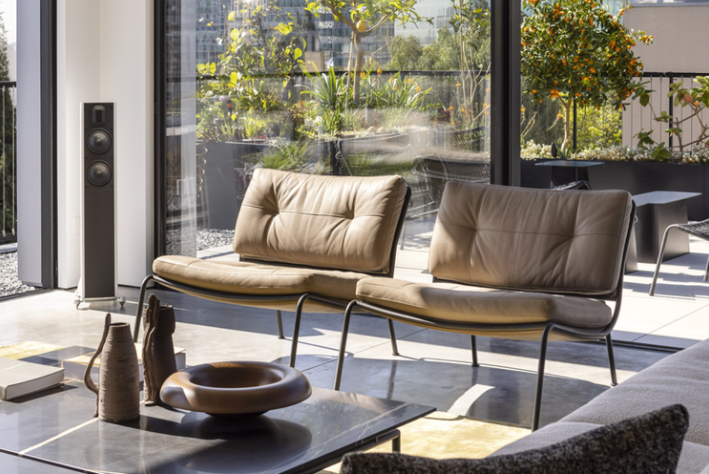
The Frog lounge chair, designed by Piero Lissoni, interprets this tradition through a clean, adaptable form with removable leather or fabric covers. Its restrained silhouette allows the materials and upholstery to take precedence, creating a piece that feels equally at home in refined residential and contemporary interior settings.
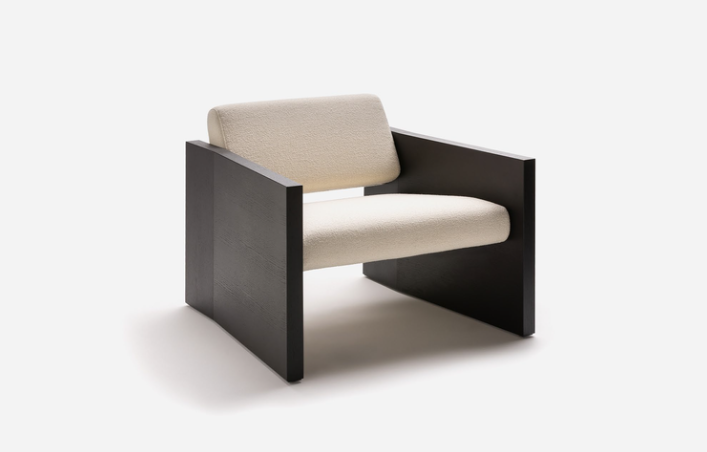
The Haven armchair, designed by Yabu Pushelberg, takes a softer approach to modern lounge seating. Its padded steel and plywood structure is available in upholstered or wood-paneled versions, with fully removable fabric or leather covers. The combination of gentle proportions, considered construction, and material flexibility gives the chair a quiet presence suited to sophisticated interiors.
Explore Graye's Full Lounge Chair Collection
The Sofa as the Room's Low Horizontal Anchor
Mid-century modern sofas are characterized by their relationship to the floor: low profiles, considered proportions, and clean architectural lines give the furniture a horizontal emphasis that keeps the sightline open above the furniture plane, making them a natural foundation for mid-century modern living room ideas.
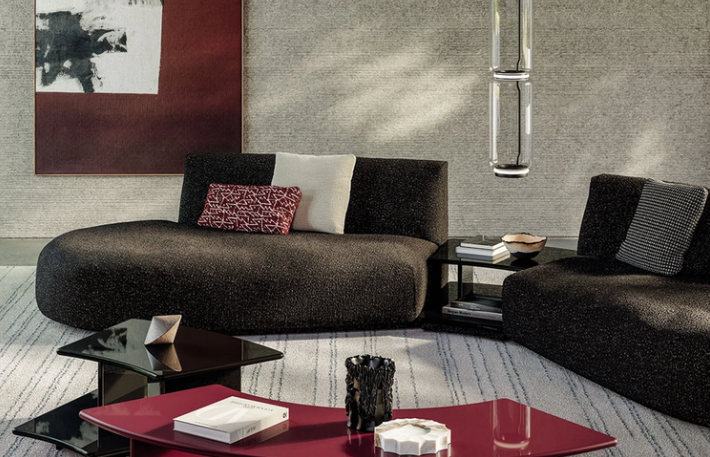
The Dao Soft sofa, designed by Gordon Guillaumier, interprets this principle through a modular system defined by a geometric harmony of soft volumes. Its generously padded seating and high backrests create comfort without losing the clarity of the overall composition. The modular structure allows the sofa to adapt to the scale of the room while maintaining the measured proportions and restrained character that work naturally within a mid-century-inspired interior.
As discussed in our blog on Contemporary Interior Design Trends for Modern Luxury Homes, the sofa establishes the room's horizontal territory while lounge chairs punctuate it. In a mid-century context, both must hold their material quality to the same standard.
Sculptural Lighting That Earns Its Place
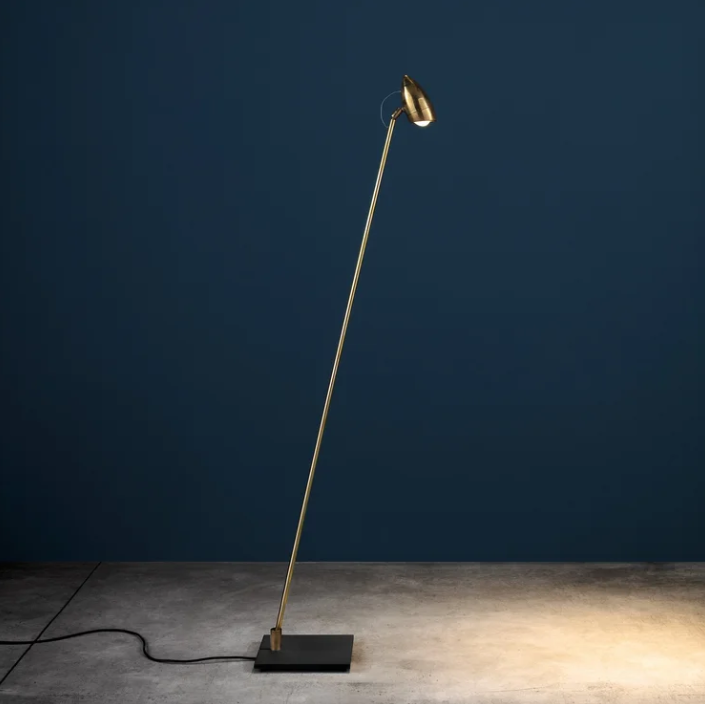
The Cicloitalia floor lamp, designed by Enzo Catellani, is a brass floor lamp whose material character places it in direct conversation with the mid-century tradition of using metal as both structure and surface. Positioned beside a lounge chair, it introduces light at reading height while contributing a vertical sculptural element the furniture alone cannot provide.
For further guidance on how lighting shapes a living room's composition, our blog on Best Indoor Lighting for a Cozy Atmosphere covers how fixture placement and material interact with the room's atmosphere.
Timber, Leather, and Brass as the Material Foundation
Mid-century modern living room designs that hold quality over time share a consistent palette: warm-toned timber, full-grain leather, and brass or oxidized metal.
Each has a long material life, each develops a patina with use, and each produces warmth at room scale that synthetic alternatives cannot replicate. Three materials selected for compatibility produce a more resolved result than five selected for period authenticity.
Discover Mid-Century Modern Living Room Ideas at Graye
The mid-century modern living room ideas that produce the most enduring interiors are grounded in material honesty, structural resolution, and a considered relationship between every piece in the room.
At Graye, our collection brings together international designers whose work embodies these principles at the highest level of craft. Contact our design specialists to explore seating, lighting, and accent pieces suited to your living room.
FAQs
-
Genuine mid-century modern furniture is defined by structural and material logic: forms derived from manufacturing or human proportion, materials used without concealment, and construction methods legible in the finished piece. Pieces that only reference the style apply period visual cues to conventional construction, whereas authentic work makes those details structurally necessary.
-
Treat mid-century pieces as members of a material family, not historical references. A walnut lounge chair alongside a marble coffee table and a brass floor lamp reads as contemporary because the palette is coherent. The mid-century character comes through in joinery and proportional discipline rather than any single nostalgic detail.
-
Yes. Brass was widely used in mid-century interiors because its warm tone complemented the timber species most associated with the movement. Unlacquered brass that exhibits a patina over time is more consistent with the spirit of material honesty than a permanently polished finish.
-
Wool rugs with a flat weave or low pile in a geometric pattern are most consistent with the tradition. Natural fiber rugs in sisal or jute introduce similar structural discipline and pair well with warm timber tones.
-
Mid-century modern sofas typically have seat heights between 38 and 44 centimeters, noticeably lower than a standard contemporary sofa. This gives the furniture its characteristic horizontal emphasis. A seat height at the lower end of this range produces the most authentic spatial reading.