
Inspiring Luxury Home Décor Ideas for Timeless Interiors
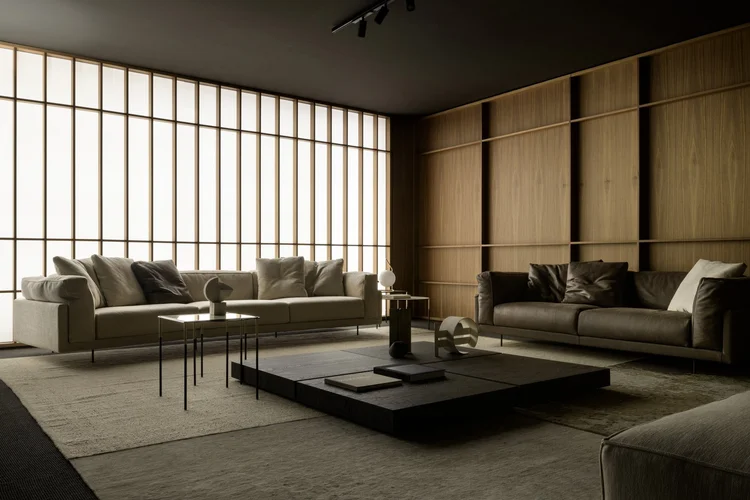
There is a moment, often unnoticed, when a space begins to shift from something arranged into something understood. It does not announce itself. It reveals itself slowly, in the way a room settles into stillness or how light lingers a little longer than expected.
This is where luxury home decor begins to take form, not as decoration, but as intention made visible.
You might not recognize it immediately because it is not designed to be obvious.
The Quiet Authority of Restraint in Shaping a Room
We tend to associate refinement with accumulation, as though a space must gather more in order to become more. But the rooms that endure rarely follow that instinct. They rely instead on restraint.
An empty surface holds a different kind of weight. A single object, placed without urgency, begins to define its surroundings. The room adjusts itself around it. There is no need for reinforcement.
This is not an absence. It is precision.
In such spaces, nothing feels provisional. Even the pauses between objects carry intention. The room does not try to impress. It only exists with clarity.
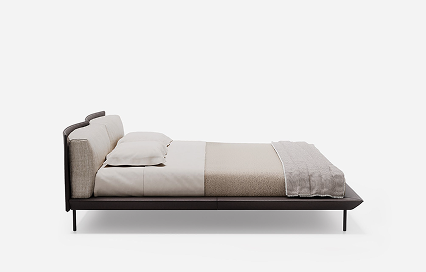
GREENE
Upholstered bed with padded steel-frame headboard, removable goose down cushions, and a two-part bed base with powder-coated steel feet.
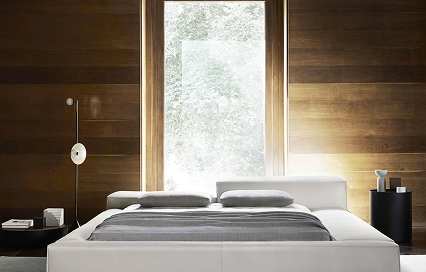
EXTRASOFT
Modular bed comprised of different size elements with fully removable fabric or leather covers and exposed seams.
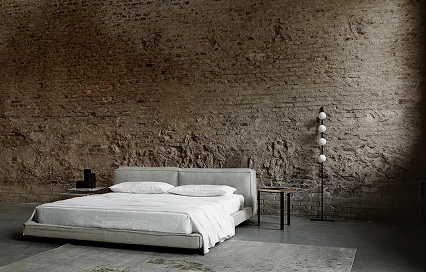
NEOWALL
Bed comprised of soft elements with fully removable fabric or leather covers.
Materials That Carry Time Rather Than Resist It
Some materials seem to understand time better than others. They do not fight it. They absorb it.
Stone softens in tone, and wood deepens quietly. Metals lose their sharpness and begin to reflect something more subdued. These changes are not imperfections. They are continuations.
Luxury home decor, in its more considered form, does not rely on surfaces that remain untouched. It leans toward those that evolve. A table marked by use becomes more specific, not less. A surface altered by light begins to hold memory.
Over time, the material becomes less about appearance and more about presence.
Light as a Structure Instead of an Addition
Before anything is placed, there is already a framework in motion. Light moves through the space, defining edges, revealing textures, and shifting the room without asking for permission.
A well-resolved interior does not attempt to control this movement. It follows it.
You begin to notice how certain surfaces respond. A matte finish absorbs the afternoon light differently than a polished one; a textile softens its edges, and a reflective surface extends it.
Artificial lighting, when introduced, does not interrupt. It continues what is already there and remains quiet, almost secondary.
In this way, light becomes less of a feature and more of a structure the room is built around.
Objects That Remain Without Asking to be Seen
There are objects that immediately draw attention, and others that reveal themselves gradually. The latter tend to remain longer.
They do not depend on novelty or seek approval. Instead, they hold their place with a kind of quiet certainty.
At first, they might seem understated. But with time, they become essential.
This is where selection becomes something more deliberate. Not an act of gathering, but of recognition. The object is not chosen for how it stands alone, but for how it exists within a larger composition.
Within Graye’s curated collections, this relationship becomes more apparent. Objects are not isolated. They are placed in conversation, each one adjusting the presence of the other.
Rethinking Luxury Home Decor Through Proportion And Stillness
The idea of luxury home decor is reduced to visual richness, but its more enduring expression lies in proportion.
How a piece occupies space, how it relates to the distance around it, and how much room is left untouched?
These decisions are rarely immediate, as they unfold gradually over time, with even the slightest shift in placement capable of altering the entire balance of a room.
Stillness becomes part of the composition, not as emptiness but as a quiet form of alignment.
Nothing feels excessive, and nothing feels incomplete, as the room eventually arrives at a point where it no longer needs to explain itself.
Interiors That Allow Themselves To Remain Open
There is a subtle difference between a space that feels complete and one that feels resolved. The former often closes itself off, and the latter remains open.
Timeless interiors tend to resist finality. They leave room for change, for adjustment, for something unexpected to enter later, without disruption.
This openness gives the space longevity and prevents it from becoming fixed within a particular moment.
We begin to understand that a room does not need to be finished to feel whole. It needs only to feel coherent.
Texture as a Language That Does Not Rely On Contrast
Not all contrast is visual, as some of it exists in the way surfaces are experienced rather than seen.
A smooth plane set beside something more tactile, or a structured form placed near something softer, creates a quiet sense of depth without introducing visual noise. These shifts are rarely immediate and are often noticed over time rather than at first glance.
In interiors that avoid strong color variation, texture becomes the primary means through which a space differentiates itself, introducing subtle changes while preserving an overall sense of calm.
As a result, the room maintains consistency without ever feeling static.
The Relationship Between Objects and the Space That Holds Them
No object exists independently of its surroundings. It is always in relation to something else.
The height of a ceiling alters how a form is perceived. The depth of a wall changes how far an object can extend before it feels intrusive. Even the placement of a window influences how a piece settles within a room.
These relationships are not incidental. They are considered.
Spaces developed through interior design processes reflect this awareness, where objects are not introduced afterward but understood as part of the spatial composition from the beginning.
Color That Emerges From Within the Material Itself
In more restrained interiors, color hardly feels applied. It feels inherent.
It exists within the grain of wood, the variation of stone, and the subtle shifts of fabric. These tones do not dominate; however, they support.
As light changes, they adjust. They deepen or soften, but they do not disappear.
This creates a palette that remains consistent without becoming rigid, and the space holds its identity without relying on contrast for definition.
Luxury Home Decor as a Practice of Permanence
There is a certain stillness in spaces that are carefully considered. Not a stillness that suggests inactivity, but one that suggests certainty.
Objects chosen with intention tend to remain. They do not require replacement or lose relevance.
Luxury home decor, at this level, is less about acquiring and more about deciding. Each addition carries weight, and each decision is deliberate.
Gradually, the space becomes less about what has been added and more about what has been understood.
The Atmosphere That Cannot Be Measured
Beyond form and material, there is something less tangible that begins to emerge.
A room holds a certain tone. It might feel quiet without being empty, grounded without being heavy, and open without feeling incomplete.
This quality is not something that can be designed directly, but rather emerges as the result of alignment, where proportion, light, texture, and restraint begin to work together in a quiet and cohesive way.
You sense it before you define it.
Closing Reflections on Spaces That Continue to Unfold
To elevate a space is not to transform it instantly, but to approach it with a different awareness that values patience over immediacy.
It involves observing before adjusting, removing before adding, and allowing the room to reveal what it needs instead of imposing decisions upon it. When approached in this way, luxury home decor becomes less about appearance and more about continuity, where the space does not rely on constant change to remain relevant but evolves without urgency.
Over the years, you begin to notice that nothing feels excessive and nothing feels lacking, as the room settles into a quiet balance and holds its place with ease.
FAQs
1. What defines luxury home decoration in a timeless interior?
Luxury interior decor is defined less by price and more by intention, craftsmanship, and longevity. Timeless interiors rely on refined materials, thoughtful proportions, and curated pieces that continue to feel relevant as the space evolves.
2. How do you make a home look luxurious without following trends?
The most enduring spaces focus on natural materials, balanced scale, layered textures, and restraint rather than trend-driven styling. A room feels luxurious when every piece has purpose, and the overall atmosphere feels cohesive.
3. Which materials work best for timeless luxury home decor?
Materials such as natural stone, solid wood, linen, brass, and hand-finished metals age beautifully and add permanence to a room. These materials develop character over time, making them ideal for timeless interiors.
4. Can luxury interior decor work in smaller spaces?
Yes, High-end home decor works exceptionally well in smaller spaces because it prioritizes proportion, clarity, and curation. A smaller room benefits from fewer but more intentional pieces that allow the space to feel open and composed.
5. How often should luxury home decoration be updated?
A timeless space does not need frequent updates. Instead of complete redesigns, small shifts such as introducing new art, wall lighting, or texture layers can refresh the room while preserving its original design language.
