
Elegant Living Room Storage Ideas for Streamlined Spaces
Find Your Elegant Cabinet Piece
Living room storage has a difficult brief. It needs to absorb books, technology, objects, and everyday necessities while preserving visual calm. The most successful living room storage ideas treat cabinetry and shelving as part of the architecture, not as pieces added after furniture is arranged.
Proportion, material, depth, and the balance between open and concealed compartments determine whether storage feels integrated.
Let Storage Establish Visual Order
A storage wall can do more than clear surfaces, creating a stronger visual structure. Begin by considering what needs to be concealed and what deserves to remain visible. Media equipment and daily objects generally benefit from enclosed compartments. Books and selected pieces can introduce rhythm through open shelving.
This balance reflects Graye’s approach to contemporary interiors. Our discussion of the anatomy of a curated space shows how proportion and material shape a coherent whole.
Choose The Right Scale For The Wall
A low cabinet can reinforce the horizontal relationship between a sofa and coffee table, while a tall storage system gives a quiet wall greater architectural presence. Respond to ceiling height, circulation, and surrounding furniture.
Avoid filling every available inch. A measured area of wall can make the piece feel substantial.
Use Cabinetry To Conceal Everyday Clutter
Closed storage works well because it allows the room to change character throughout the day. Games, chargers, remotes, paperwork, and media equipment can disappear behind doors, leaving the visible composition focused on furniture, art, and selected objects.
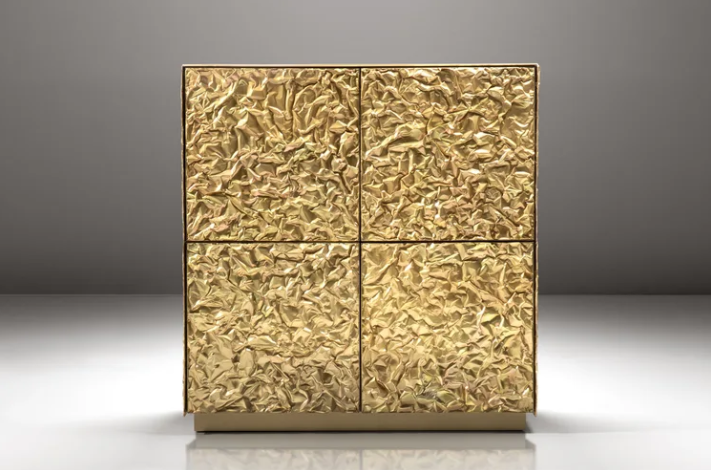
The Froissé cabinet by R&D De Castelli introduces a tactile interpretation of concealed storage. Its metal-clad exterior features a textured DePiqué finish that evokes fabric-like folds, with a black walnut core beneath. It gives a functional cabinet a distinct identity without decorative excess.
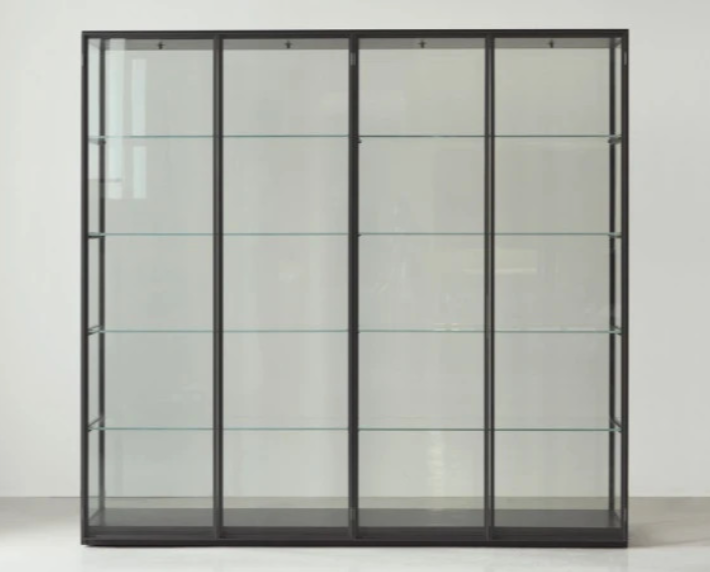
For a different expression, consider the Ex-Libris bookshelf by Piero Lissoni, another option within refined living room storage ideas. Its black metal structure frames glass shelving and enclosed display compartments, allowing storage to shift between openness and concealment. Optional LED lighting can further define the interior arrangement.
Give Media Storage a Quieter Role
A television wall can quickly dominate a living room. Low, wall-mounted cabinetry can reduce that effect by creating a continuous plane beneath the screen. Keep the surface restrained and plan cable access, equipment depth, and ventilation before specifying the piece.
Technology still needs a considered place within the room’s composition.
Treat Shelving as Architecture
Open shelving works best when it has a clear relationship to the room, making it a useful direction for living room storage ideas. It can divide zones, emphasize ceiling height, or introduce transparency where a solid cabinet would feel too heavy. Edit what sits on it.
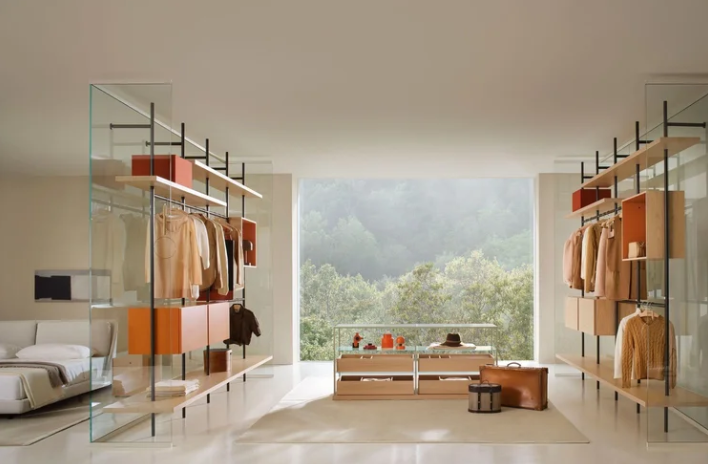
The Boutique Mast by Piero Lissoni combines a burnished brass framework with elm veneer cabinets, open shelving, and integrated drop-down doors. Its wall-supported structure organizes storage while also functioning as an architectural partition. The combination of enclosed and open elements gives the system depth without creating a dense visual block.
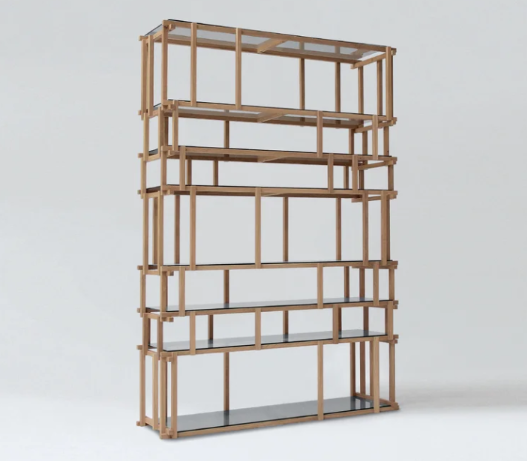
For a lighter approach, the Off Cut bookshelves by Nathan Yong use natural oak with extra-clear glass shelves. The transparent shelving allows stored objects to remain part of the room rather than creating another solid visual boundary.
Build Rhythm Through Repetition
When styling shelves, repetition can create order. Group books by scale, leave intentional gaps, and use a limited number of objects with different heights and textures. A ceramic form beside a stack of books reads differently from several similarly sized objects placed at equal intervals.
The same principle applies to modular storage. Repeated supports or aligned shelves can give a large wall visual cadence.
Connect Storage With the Rest of the Room
Storage should not be considered in isolation. Good living room storage ideas connect with the rest of the room. A wood finish can echo flooring or a nearby table, while metal can connect with lighting, hardware, or architectural details. Glass can preserve sightlines and introduce lightness where wood or stone would add visual weight.
Contemporary interior design trends consider this broader relationship between furniture, material, and spatial composition. Storage becomes more convincing when its finish and geometry belong to the same design language as the surrounding room.
Leave Room for the Objects That Matter
Good storage does not eliminate personality. It creates a framework for it. Closed compartments manage the practical requirements of daily life, while selected open areas give books, art objects, and collected pieces enough space to register.
This distinction is especially important in a refined interior. When every surface is occupied, even exceptional objects lose their visual importance. A quieter arrangement gives each piece room to register.
Conclusion
The best living room storage ideas combine utility with proportion, material intelligence, and architectural clarity. Whether you choose a sculptural cabinet, a wall-supported system, or open shelving, the storage should contribute to the room instead of competing with it.
At Graye, we curate contemporary furniture and storage systems that bring order to everyday living while preserving the character of a thoughtfully designed interior.
FAQs
-
Daily-use items, electronics, paperwork, chargers, games, and other visually busy necessities are good candidates for concealed compartments. Keeping these items out of sight allows more considered pieces to remain visually prominent.
-
Depth depends on what the shelves need to hold. Books and smaller objects can work with a relatively shallow profile, while media equipment or larger objects require additional clearance. Consider circulation before selecting dimensions.
-
Yes. The success depends on editing. Fewer objects, consistent spacing, and a restrained material palette can make open shelving feel architectural rather than crowded.
-
A freestanding or wall-supported shelving system can define zones without creating a fully enclosed wall. Open sections preserve visual connection while cabinets provide practical separation and concealed storage.
-
It does not need to match exactly. Coordinating material, finish, scale, or geometry is usually enough to establish a relationship. A considered contrast can add depth while keeping the overall composition coherent.