
Inspiring Contemporary Dining Room Design Ideas for Living
Shape Your Dining Room with Luxury Table Design
The dining room has a particular role within the home. It brings people together while providing an opportunity to express a distinct approach to material, light, and proportion. The most successful contemporary dining room design ideas begin with this balance, allowing individual pieces to have presence while maintaining a sense of visual continuity.
Establish a Strong Foundation With Considered Furniture
A dining room feels resolved when its primary furniture establishes a clear hierarchy. The table usually provides the central point, while chairs, storage, lighting, and objects support its presence without competing for attention.
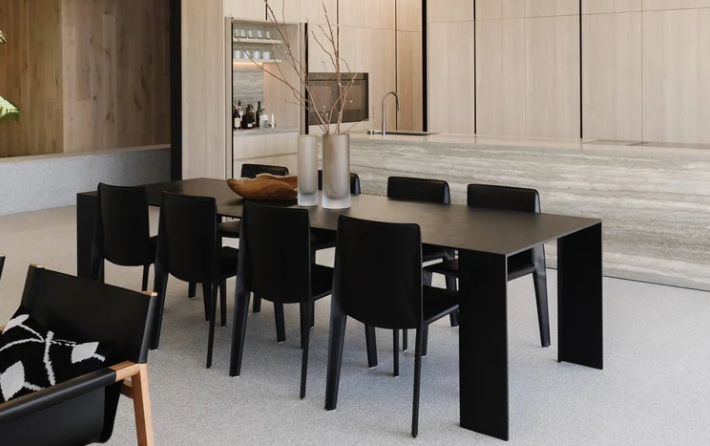
The Metallico table by Piero Lissoni offers a particularly architectural starting point. Made entirely from solid metal, its material presence gives the dining area a defined visual center. Its restrained construction also leaves room for softer elements around it, such as upholstered seating or natural textiles.
When choosing the main pieces, consider how they will read together from different parts of the home. In an open-plan setting, the dining table may be visible from the kitchen and living area, making its silhouette and finish part of a larger composition.
Use Lighting to Shape the Atmosphere Above the Table
Lighting can shape a dining room as much as the furniture itself. Among contemporary dining room design ideas, a pendant over the table creates a visual axis while focused lighting highlights where people gather. Secondary sources can add softer illumination around the room.
Scale matters, too. A small fixture can disappear above a substantial table, while an oversized one may overwhelm the setting. Match the fixture to the table’s geometry, using elongated forms for linear tables and centralized designs for round surfaces.
Graye’s dining room lighting ideasexplore how illumination, proportion, and atmosphere work together.
Introduce Storage That Adds Depth Without Visual Clutter
A credenza or cabinet can give the dining room practical function while contributing another horizontal element to the composition. It can hold serving pieces, glassware, and dining accessories while providing a surface for carefully selected objects.
The strongest approach is to consider storage as part of the room rather than an isolated functional addition. A cabinet with a substantial finish can balance a lighter table, while a restrained piece can allow a sculptural dining table to remain dominant.
Color can also be introduced through storage, artwork, or objects instead of relying entirely on the dining furniture. A deeper wood tone, dark lacquer, or hand-finished metal can create contrast against pale walls and flooring.
Treat the Walls as Part of the Dining Experience
Contemporary dining spaces do not need to rely on furniture alone for character. Among contemporary dining room design ideas, artwork can establish scale on a quiet wall, while mirrors reflect light and extend the sense of space.
Consider how artwork relates to the furniture. A large work can anchor a wall behind a credenza, while smaller pieces can create a more intimate arrangement. Negative space allows each element to retain its visual presence.
Material can add depth in a similar way. Textured walls, stone surfaces, or wood details can complement strong furniture geometry without adding unnecessary decoration.
Create a Centerpiece With Sculptural Restraint
The dining table provides an opportunity to introduce smaller objects that can be appreciated at close range. A centerpiece does not need to dominate the surface. One carefully chosen object can provide enough visual interest, particularly when the table already has a distinctive material or sculptural base.
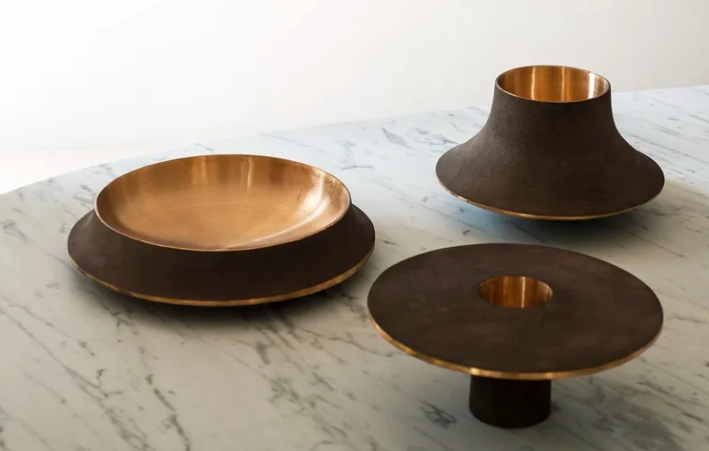
The Cap53 by Angelo Mangiarotti demonstrates this approach. Its cast and polished form draws attention through material, shape, and surface rather than ornament. The object can function independently or become part of a restrained grouping.
Discover Luxurious Centerpieces
Balance Texture Through Dining Chairs and Surrounding Materials
Chairs are one of the most tactile elements in the dining room. Their upholstery, frame, and silhouette can either soften the architecture or reinforce its more structured qualities.
A wood chair can introduce warmth around a metal table. Upholstered seating can soften stone or glass. A visually open frame can help a substantial table feel lighter, while a more enveloping chair can create a sense of intimacy.
The same approach works equally well for rugs, curtains, and nearby furnishings. Layering several materials gives the room depth, but the palette should remain controlled. Two or three dominant material families are enough to create a coherent visual language.
Let Proportion Guide Every Final Detail
The most effective contemporary dining room design ideas are not about adding more. They are about understanding how much visual weight each element should carry.
A substantial table may need quieter chairs. A sculptural pendant may call for a restrained centerpiece. A richly finished credenza may work best against a relatively quiet wall. These relationships create hierarchy, allowing the eye to move naturally through the room.
Consider the dining room from every viewpoint, including from adjacent spaces. The backs of chairs, the profile of the lighting, and the silhouette of the table all become part of the composition when the room is visible from elsewhere.
Create a Dining Room That Feels Composed and Lived In
A successful dining room combines design clarity with the realities of daily life. It should accommodate meals and conversation while giving carefully selected materials and objects enough space to register.
The best contemporary dining room design ideas use furniture, lighting, art, storage, and objects as connected elements rather than separate purchases. With considered proportions and a restrained material palette, Graye’s collection can help shape a dining environment that feels sophisticated, personal, and designed to be lived in.
FAQs
-
Introduce tactile materials such as wood, leather, upholstered seating, and textured textiles. Warm lighting can also soften harder architectural surfaces and create a more intimate atmosphere after dark.
-
It can be, particularly when the table sits against a wall or within a dedicated dining room. The artwork should relate to the table’s width and leave enough surrounding space to prevent the wall from feeling crowded.
-
Keep the arrangement selective. Combine objects of different heights and materials, leaving sections of the surface open so the credenza itself remains part of the composition.
-
Yes. A carefully chosen older piece can introduce contrast and prevent the room from feeling overly uniform. The key is to establish a relationship through material, scale, or color.