
Sophisticated Living Room Seating Ideas for Layouts
Plan Your Living Room With Graye
A sophisticated living room begins with more than a beautiful sofa. The relationship between each seat, the architecture, circulation, and the room’s focal points determines how the space feels and functions.
These living room seating ideas approach furniture as part of the architecture, using modular sofas, sculptural lounge chairs, and flexible accent pieces to create layouts with clarity and depth.
Let the Sofa Establish the Room’s Primary Geometry
The sofa usually carries the greatest visual and physical weight, so its proportions should establish the foundation for everything around it. In a generous room, a modular system can define a seating zone without enclosing it completely. In a more compact interior, a streamlined sofa can preserve circulation while giving the room a clear center.
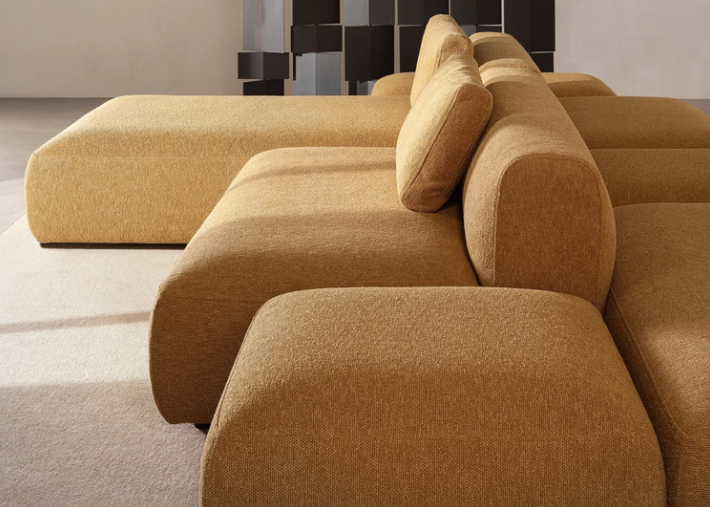
The Cosy Island sofa, designed by Francesco Rota, is particularly suited to this approach. Its modular system can be combined into different configurations, allowing the seating arrangement to respond to the dimensions and use of the room.
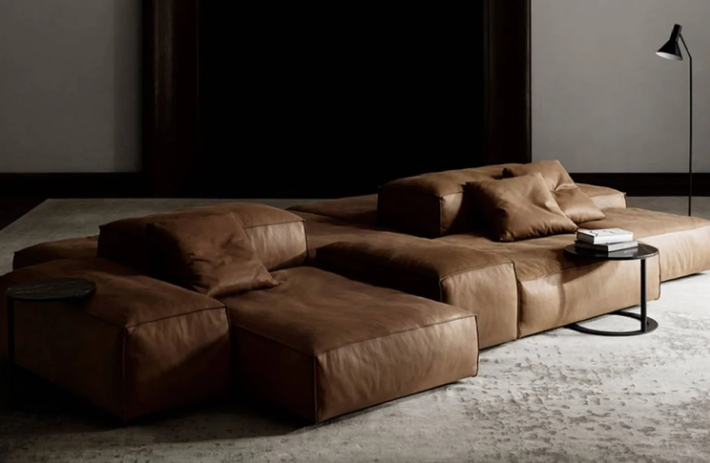
For expansive interiors, Extrasoft by Piero Lissoni offers another interpretation. Its generous proportions and modular construction can create a substantial seating landscape while retaining a relaxed, contemporary character.
When planning a layout, consider the sofa’s depth as carefully as its length. A large piece may look balanced on a floor plan yet reduce the passage behind or beside it once installed.
Create Conversation With Angled and Swivel Seating
A living room becomes more inviting when seating supports several directions of interaction. Among living room seating ideas, a chair positioned directly opposite a sofa establishes a straightforward conversational relationship. Turning it slightly can open a sightline toward a window, fireplace, artwork, or another area of the home.
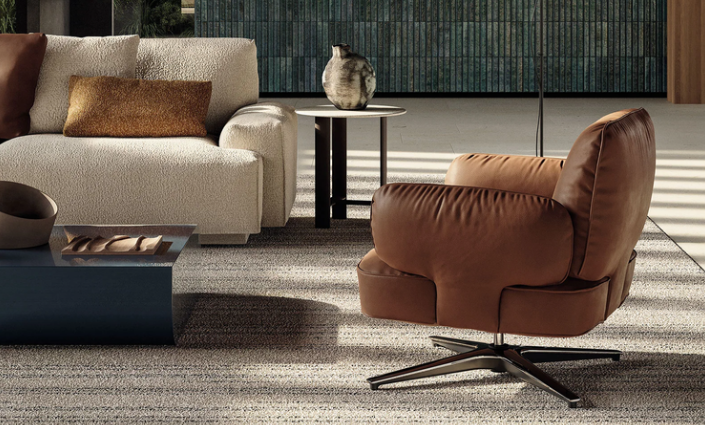
Swivel seating adds another layer of flexibility. The Dafne lounge chair, designed by Gordon Guillaumier, features an upholstered form with a cast aluminum base and both swivel and reclining functions. It can face into the principal seating arrangement when conversation takes priority, then turn toward another part of the room when the activity changes.
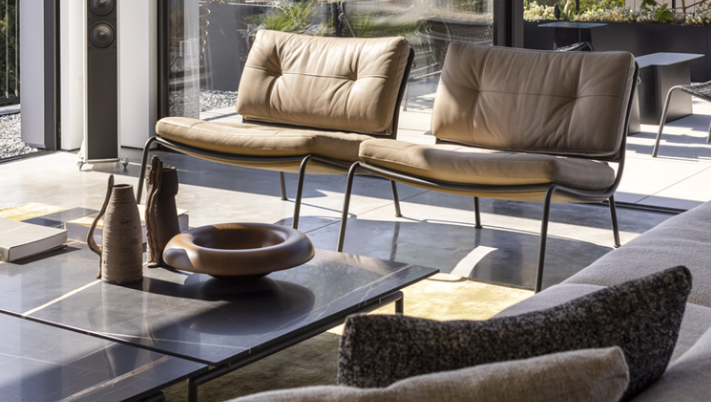
For a more sculptural counterpoint, the Frog lounge chair by Piero Lissoni offers a distinctive individual presence. Its removable leather or fabric covers also allow material choices to become part of the room’s broader palette.
As explored in earlier thinking on modern living room chairs, a lounge chair can function as a spatial figure, contributing to the composition even when it is not occupied.
Discover Premium Lounge Chairs
Use Modular Seating to Define Open-Plan Spaces
Open-plan rooms require furniture to perform some of the work that walls once handled. A sectional can establish a living zone while preserving visual continuity with the dining area, kitchen, or exterior.
The arrangement does not need to form a perfect rectangle. A chaise can extend toward a window, a corner module can turn toward a fireplace, or two seating sections can create an island within a larger room. This gives the furniture a role in defining territory without introducing a physical barrier.
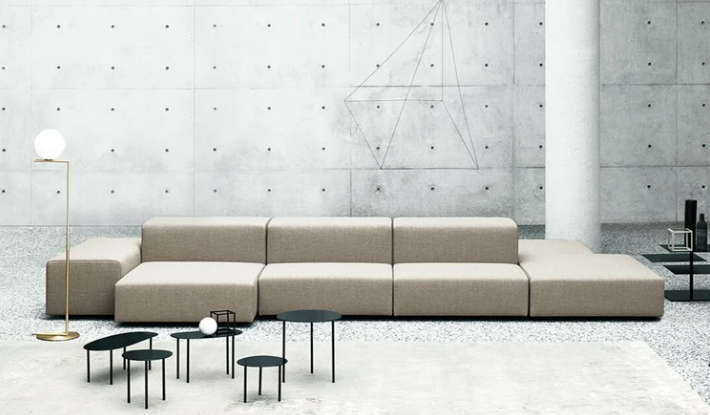
The Extra Wall sofa, also designed by Piero Lissoni, takes this relationship between furniture and architecture further. Its modular structure can be used along a wall or to help divide an open interior into distinct zones.
For a room with several functions, this flexibility allows the seating to establish boundaries while keeping the overall floor plan visually connected.
Explore Flexible Modular Seating
Balance Upholstered Volume With Open Space
Plush seating can bring warmth and comfort to a room, but generous upholstery needs breathing room around it. Living room seating ideas should allow visible floor between pieces, helping substantial forms retain their individual presence.
This is where a smaller upholstered element can become useful. A pouf or low stool can provide an additional place to sit, rest the feet, or hold a tray without introducing the visual mass of another armchair.
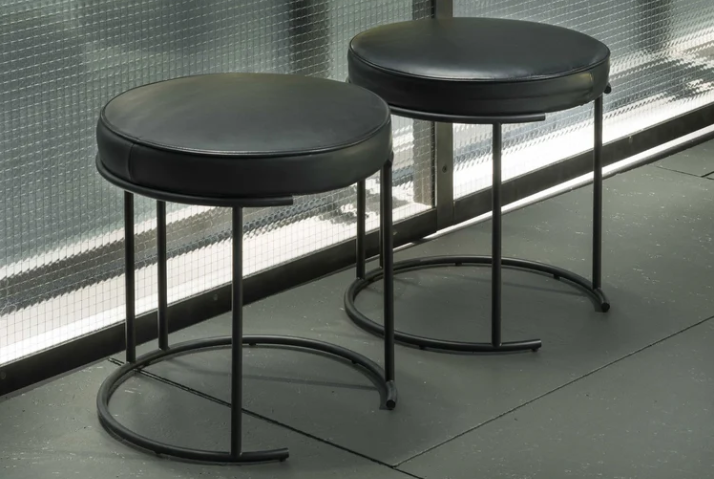
The Nina stool, designed by David Lopez Quincoces, combines an upholstered seat with a black metal frame. Its compact proportions make it a useful supporting element around a larger seating arrangement.
Build Layers Through Material and Position
Sophisticated seating does not require every piece to match. Living room seating ideas can create cohesion through proportion, tone, texture, or a repeated material detail.
A deep upholstered sofa can sit alongside a leather lounge chair, while a wood accent introduces warmth against a stone or metal surface. Similar tones can connect different materials without making the room feel coordinated to the point of uniformity.
Consider the view from every direction. A chair floating in the room has a visible back, while a sectional may be seen from adjoining spaces. The silhouette should therefore work beyond the primary seating position.
The same principle applies to lighting and rugs. A floor covering can visually gather the seating group, while a floor or table lamp can create a secondary point of focus. These layers help the room feel composed without requiring additional furniture.
Last Thoughts
The most successful living room seating ideas begin with the room itself. Scale, circulation, sightlines, material relationships, and the way people gather should guide every decision.
From the adaptable Cosy Island to the swivel functionality of Dafne and the sculptural character of Frog, each piece can contribute to a seating arrangement that feels intentional without becoming overly arranged.
At Graye, seating is considered as part of a larger interior composition, where comfort, proportion, and design language work together.
FAQs
-
The distance depends on the room and the intended interaction, but the chair should remain close enough to participate in conversation without obstructing circulation. Angling it toward the sofa can strengthen that relationship.
-
Yes. A sectional can be positioned to acknowledge more than one focal point, particularly when its modules allow different orientations. The arrangement can address a fireplace while maintaining a view toward windows or an adjoining space.
-
Not necessarily. Some variation can add visual depth, provided the differences remain comfortable and intentional. Extremely mismatched proportions can make the composition feel disconnected.
-
An accent chair can help define the living area without closing it off. Positioning it near the edge of the seating zone, with its profile visible from adjoining spaces, can create a subtle transition between functions.