
The Complete Home Office Lighting Guide
A refined workspace depends on more than a well-designed desk. A considered home office lighting guide should address natural daylight, task illumination, ambient light, glare, and the visual relationship between each fixture and the furniture around it. The objective is a room that supports concentrated work during the day and remains composed when the sun goes down.
Let Natural Daylight Establish the First Layer
Natural daylight should establish the first layer of illumination. Before selecting fixtures, observe how sunlight enters the room at different hours. A desk positioned perpendicular to a window can receive useful daylight without placing the monitor directly in the path of glare.
Control Daylight Without Losing Its Character
Window treatments should filter harsh direct sun while preserving the softer qualities of natural light. Sheer curtains, adjustable blinds, or architectural shades can provide control without making the office feel enclosed.
Our take on high-end home office design considers orientation, material warmth, and visual focus as connected parts of the workspace. These same principles help determine where artificial light should enter the composition.
Build a Precise Task-Lighting Layer at the Desk
The desk requires the most controlled illumination in the room. A task lamp should light documents and the working surface without reflecting directly into a screen. Positioning, shade direction, and the height of the source matter as much as the fixture itself.
A useful home office lighting guide also considers what happens outside working hours. A desk lamp with a warm, controlled glow can transition the room from an active workspace to a quieter evening setting.
Choose a Lamp With Material Presence
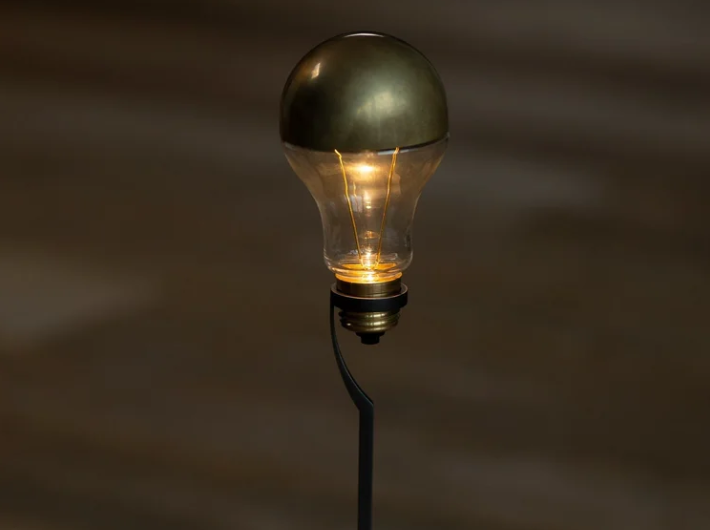
The Trenta table lamp by Enzo Catellani offers a compact interpretation of sculptural task lighting. Its natural brass E27 bulb is paired with a burnished iron stand, while its rechargeable USB design allows the lamp to be positioned without relying on a fixed power connection. The contrast between warm metal and darker iron gives the fixture a distinct material character.
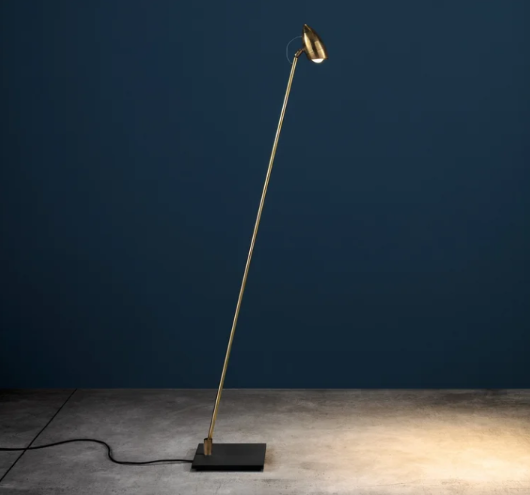
For a more architectural approach, Graye’s lighting collection includes the CicloItalia floor lamp by Enzo Catellani. Its natural brass frame, black lacquered base, and frosted glass lens combine structure with softly diffused illumination. Positioned near a reading chair or beside a storage wall, it can provide a secondary pool of light beyond the desk.
Choose Your Premium Table Lamps
Use Ambient Illumination to Soften the Entire Office
Task lighting handles concentrated work, but it should not light the entire room. Ambient illumination establishes the general brightness level and prevents the desk from becoming an isolated pool of light.
Ceiling fixtures, wall lights, and carefully positioned floor lamps can create a more even visual field. The strongest home office lighting guide approaches these sources as layers rather than competing fixtures.
Add Vertical Light to Emphasize Architecture
Floor and wall lighting can draw attention to shelving, artwork, textured walls, or architectural details. This vertical layer is particularly useful in an office with tall storage because it prevents the upper portion of the room from disappearing into shadow.
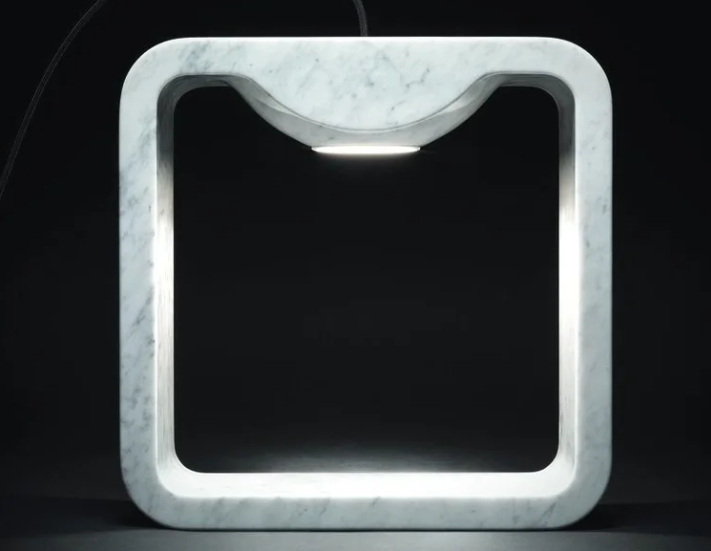
The Quattrolati lamp by Hisham Kulhanek is made from hand-polished Carrara marble and formed from four identical sides around an open central space. Its geometry gives it a strong sculptural presence, while the open center allows light to diffuse through the composition. Used on a credenza or side surface, it introduces both illumination and material weight.
Lighting should support the architecture rather than flatten it. A mixture of direct and indirect sources creates depth across walls, shelves, and furniture.
Coordinate Light Temperature With Materials and Use
The color character of artificial light affects how materials appear. A home office lighting guide should consider how warm illumination can emphasize walnut, oak, leather, and brass, while cooler light can make white surfaces and polished materials feel more neutral.
For concentrated desk work, the source should provide sufficient clarity without producing harsh contrast. The rest of the room can remain warmer and softer, creating a useful distinction between the working plane and surrounding space.
This layered approach also helps an office adapt throughout the day. During working hours, task illumination can take priority. Later, ambient and accent sources can become more prominent.
Keep Fixtures Visually Connected to the Furniture
Lighting should have a relationship with the room’s furniture without matching every finish. Brass can echo a desk detail or cabinet hardware. Marble can relate to a nearby stone surface. A black metal fixture can reinforce the darker lines of shelving or a chair base.
Graye’s contemporary office furniture collection considers this relationship between furniture, storage, and the quality of concentrated work. Lighting completes that composition by defining where the eye settles and how the room transitions between functions.
A well-resolved office also avoids visual clutter from cables and adapters. Where possible, plan power locations before furniture is installed, keeping electrical connections close to the pieces that require them.
Final Thoughts
A thoughtful home office lighting guide begins with daylight and builds through task, ambient, vertical, and accent illumination. Each layer should serve a clear purpose while contributing to the material and architectural character of the room.
At Graye, lighting is treated as part of the interior composition, allowing sculptural fixtures, refined materials, and carefully directed illumination to support a workspace that remains functional and visually resolved from morning through evening.
FAQs
-
A single ceiling fixture can provide general illumination, but it may not adequately light the desk or architectural features. Combining ambient light with task and accent sources creates more flexible control.
-
Not necessarily. A clearer task source can support detailed work, while warmer ambient lighting can make the surrounding room feel more comfortable. Keeping the transition controlled prevents the space from feeling visually disjointed.
-
A floor lamp can work beside a lounge chair, near shelving, or in a darker corner of the room. Its position should add illumination where the ceiling or desk source leaves the space visually flat.
-
Use multiple lower-intensity sources instead of relying on one bright fixture. Illuminating a wall, shelf, or corner can extend the perceived depth of the room and reduce the visual weight of a single central light source.