
Inspiring Luxury Home Office Design Ideas for Executives
Elevate Your Workspace With Contemporary Pieces
A private office should feel distinct from the rest of the home without feeling disconnected from it. The most successful luxury home office design ideas balance professional function with residential warmth, using considered furniture, natural materials, and architectural storage to create a room that supports focused work.
A substantial desk can establish the room’s center, while refined seating, shelving, and lighting complete the composition.
Make the Desk the Architectural Center of the Room
The desk is both the primary working surface and one of the largest visual elements in the office. Its scale should correspond to the room, leaving enough space for circulation while providing a comfortable area for screens, documents, and writing.
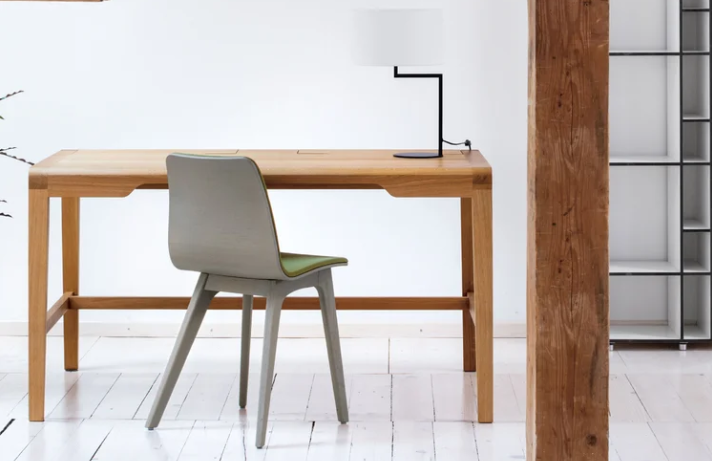
The Secret Desk by Markus Schmidt takes a restrained approach. Its structure is available in solid oak or American walnut and incorporates concealed cable management. This allows technology to remain part of the working environment without becoming the visual focus.
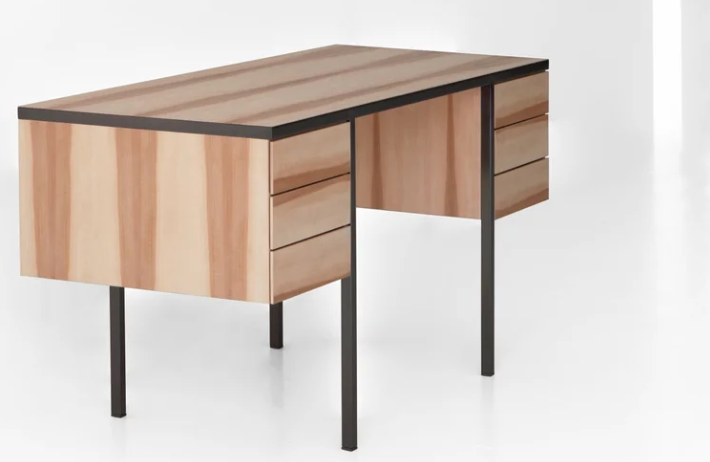
For a more substantial executive presence, the Collector desk by GamFratesi combines an apple tree wood desk and drawers with a lead-effect metal structure. The contrast between wood and dark metal gives the piece a strong material identity while maintaining a contemporary profile.
Consider the Desk From Every Angle
A desk positioned in the center of a room needs a resolved rear profile as much as an attractive working surface. This is particularly important in an executive office where the desk may face the entrance or sit away from the wall, as luxury home office design ideas should consider every visible angle.
For additional guidance, Graye’s discussion of desk proportions and working surfaces considers how dimensions, material, and posture should be addressed together.
Pair Executive Seating With Lasting Comfort
The chair is the piece that has the closest relationship with the body, making comfort and proportion central to the office. An executive workspace does not require a visually bulky chair. A refined silhouette can provide presence while preserving the openness of the room.
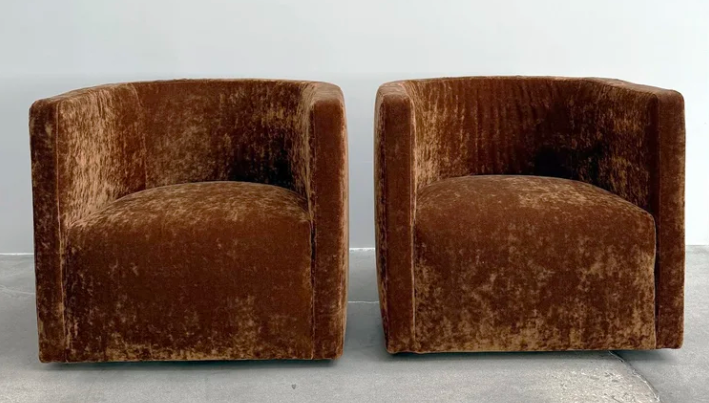
The Confident chair by Piero Lissoni is available in fabric or leather and has a restrained profile suited to a contemporary workspace. Its material options allow the chair to either blend with the desk or establish a subtle contrast.
A second chair can also give the office a more residential character. Instead of placing guest seating directly opposite the desk, consider an angled position near a window or bookcase. This creates a separate setting for reading, informal conversations, or reviewing documents.
Create a Second Zone for Meetings and Reading
Larger offices benefit from more than one working position. A compact lounge area can make the room useful beyond screen-based tasks while giving the composition another layer.
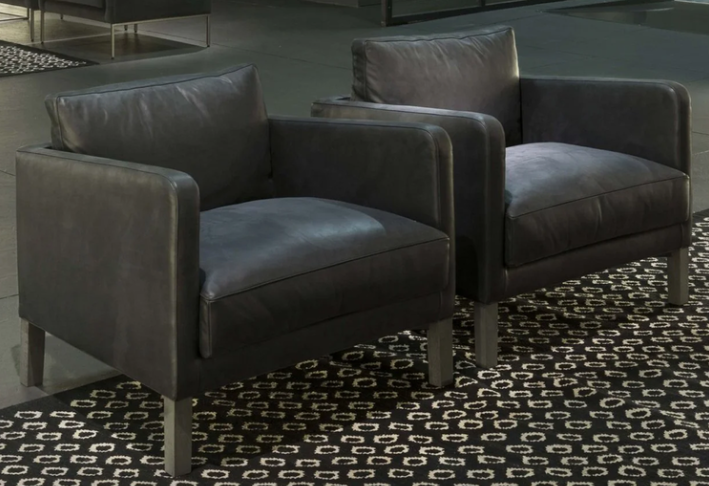
The Dumas lounge chair by Piero Lissoni, available with fabric or leather covering, offers a softer counterpoint to a structured desk. Its presence can define a quieter corner without introducing an entirely separate design language.
Use Shelving to Organize the Room Vertically
Storage is one of the most important elements in luxury home office design ideas because it determines how much visual information remains exposed. Books, documents, objects, and technology need dedicated places, but not everything needs to remain visible.
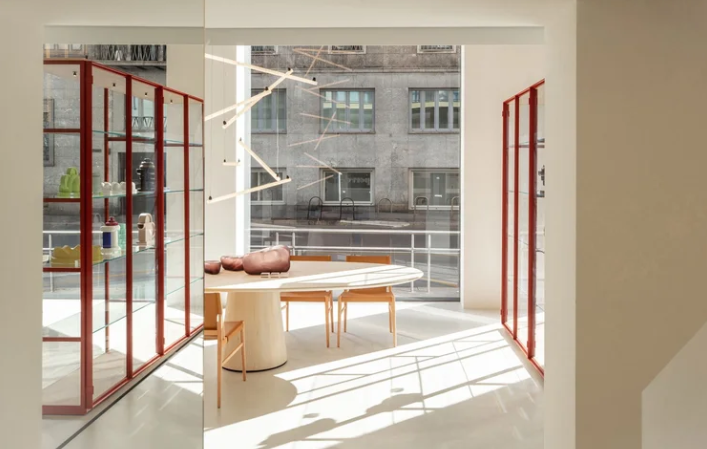
The Ex-Libris bookshelf by Piero Lissoni combines a black base with metal and glass doors, with optional locking and LED lighting. Its transparent shelving can display selected books and objects, while enclosed areas provide a more controlled approach to storage.
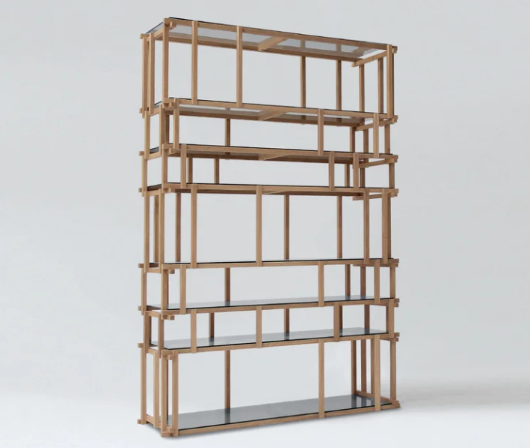
For a lighter architectural expression, the Off Cut bookshelves by Nathan Yong use a natural oak structure with extra-clear glass shelving. The combination gives stored objects a visible place within the room without creating a solid wall of cabinetry.
Bring Warmth Through Wood, Leather, and Controlled Contrast
Workspaces can quickly become overly technical when screens, cables, metal, and hard surfaces dominate. Natural materials introduce another register, shaping luxury home office design ideas through texture and comfort.
Walnut and oak provide visible grain and warmth. Leather brings a tactile surface to seating. Metal can provide structure without making the room feel industrial when used selectively.
These relationships are central to contemporary office furniture, where the desk, storage, and surrounding architecture are considered as connected elements rather than isolated purchases.
Layer Lighting for Focused Work and Evening Use
Lighting needs to support the office at different times of day. Natural light can provide the primary ambient layer, while a dedicated desk lamp illuminates the working surface after sunset.
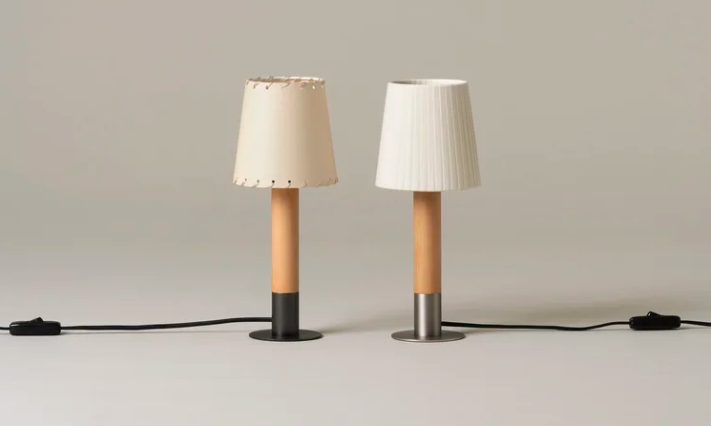
The Básica Minima table lamp by Santa & Cole Team and Santiago Roqueta has a compact profile with either a bronze-finish base and pleated natural parchment shade or a nickel-finish base with a ribbon-stitched shade. Its material presence makes it suitable for a desk, console, or nearby surface.
Avoid relying entirely on overhead illumination. A combination of desk-level and ambient lighting gives the room greater depth and prevents the workspace from feeling clinical.
In Conclusion
The strongest luxury home office design ideas begin with the way the room needs to function, then develop through proportion, material, storage, seating, and light. A substantial desk establishes the workspace, considered seating supports long periods of use, and architectural shelving keeps the room organized without sacrificing character.
At Graye, these elements come together through a curated selection of contemporary furniture designed to make the home office feel as considered as every other room in the residence.
FAQs
-
The position depends on the room and available natural light. Positioning the desk perpendicular to a window can provide daylight without putting the screen directly in its path, while facing into the room can create a stronger sense of spatial connection.
-
Material choice has a major influence. Wood, leather, textiles, artwork, and carefully selected objects can soften the functional character of desks and technology while connecting the office to the wider home.
-
Built-in storage can be useful when the room requires substantial capacity, but freestanding or modular systems provide greater flexibility. The right approach depends on the architecture, storage requirements, and desired visual weight.
-
Choose a desk with a visually light base and keep the surrounding furniture restrained. Maintaining clear circulation around the desk is more important than filling the available floor area.