
Chic Bedside Table Styling Ideas for High-End Suites
Style Your Bedside with Luxury Nightstands
A bedside table has a small footprint, but it has a significant role in the bedroom. The most successful bedside table styling ideas begin with proportion, function, and restraint. A well-chosen table provides a place for reading, lighting, and personal essentials while contributing to the larger composition of the bed, headboard, textiles, and surrounding architecture.
Begin With a Bedside Table That Has Visual Character
Styling starts with the furniture itself. A nightstand should relate to the height and width of the bed without competing with it. Rounded edges can soften an angular bedroom, while a sculptural base can introduce an architectural note beside a restrained upholstered bed.
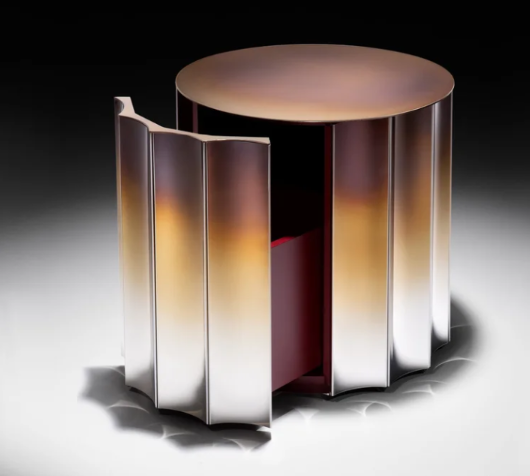
The Dorica nightstand by Francesco Forcellini takes this approach through a fluted, column-inspired structure. Its stainless steel finish references classical architectural forms while giving the piece a distinctly contemporary presence. An internal drawer keeps practical necessities concealed, allowing the sculptural exterior to remain the focus.
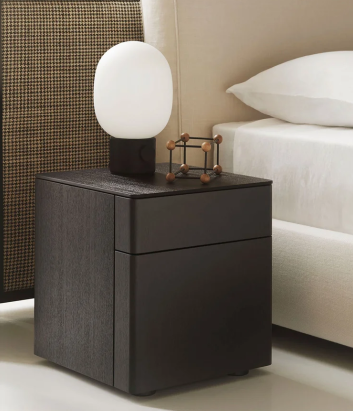
For a quieter composition, the Byron Comodino by Piero Lissoni offers compact proportions and rounded corners. Its ash frame and Black Sugi melamine interior create contrast between natural warmth and a darker interior surface.
The choice between these directions depends on the room. One can act as a sculptural accent, while the other can recede into a more restrained material palette.
Create a Considered Lighting Layer Beside the Bed
Lighting should be the first functional element considered after the table itself. Among bedside table styling ideas, the right lamp provides enough illumination for reading without flooding the room with brightness. Its scale also matters. A substantial nightstand can accommodate a more expressive lamp, while a compact surface benefits from a smaller footprint.
Use Material to Shape the Quality of Light
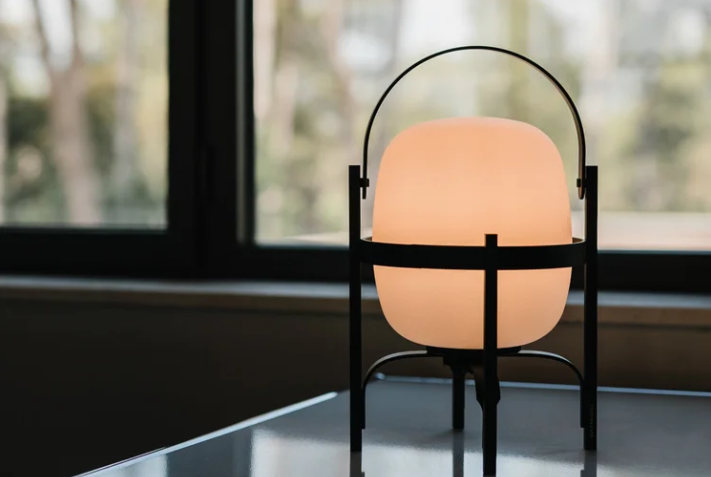
The Cesta table lamp by Miguel Milá combines a white opal glass diffuser with a choice of wooden or metal structures. Its warm material presence allows it to function as both a useful bedside light and a quiet decorative object.
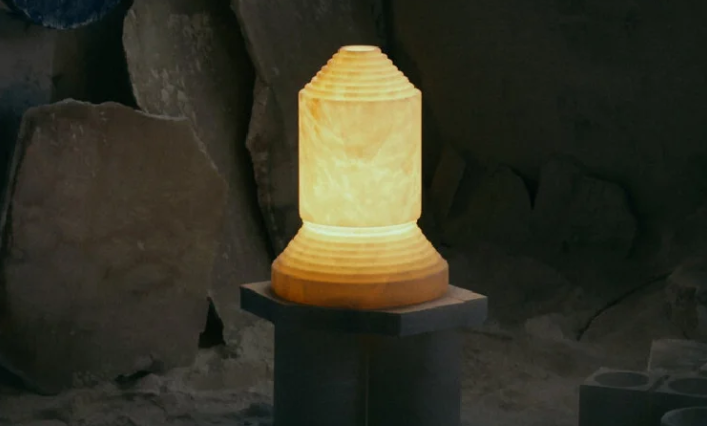
For a more sculptural direction, the Babel table lamp by Angel Jove is formed from sculpted alabaster. The natural translucency of the stone gives the light a softer character, while the irregularity of the material keeps the piece visually distinctive.
Creating a cozy atmosphere with indoor lighting shows how warm sources, placement, and material interact to shape the atmosphere of a room.
A lamp should not merely occupy the bedside table. It should establish a relationship between the table, bed, wall, and evening light.
Keep Bedside Objects Edited and Purposeful
The most refined bedside table styling ideas do not depend on filling the surface. A small selection of objects gives the arrangement greater clarity. Begin with what you genuinely use, then consider which pieces add visual interest.
A shallow tray can hold smaller necessities such as reading glasses, a watch, or personal items. A book introduces scale and communicates use without appearing decorative for its own sake. A small vessel can bring another material or shape into the arrangement.
Build a Hierarchy Instead of a Collection
Vary the height of objects while keeping the total number controlled. The lamp usually provides the tallest element. A book or tray establishes a lower horizontal plane, while a small object or vessel can provide an intermediate point.
This creates visual rhythm without making the surface feel arranged for display alone.
Avoid placing several objects with identical proportions together. Contrast is more effective. A rounded vessel beside a rectangular book, for example, creates a subtle exchange between forms.
Introduce Natural Elements With a Lighter Touch
Flowers and branches can soften a bedroom, and among bedside table styling ideas, a compact vessel with a few stems can add an organic touch without overwhelming the lamp or furniture.
Fresh greenery works especially well in rooms dominated by stone, metal, glass, or lacquer. Keep the container understated when the nightstand already has a strong material identity.
The goal is not a centerpiece but a natural element that feels part of the room’s daily rhythm.
Coordinate Materials Without Making Everything Match
A high-end suite does not need identical finishes across every piece. Material relationships are more important than matching.
If the nightstand has a metal finish, introduce warmth through wood, linen, or a natural fiber. A wooden table can be paired with a glass or alabaster lamp. Dark surfaces can gain dimension through lighter books, pale ceramics, or soft textiles.
This approach gives the room a collected quality. The bedside area should relate to the larger bedroom palette while retaining enough variation to avoid looking overly coordinated.
Furniture, lighting, textiles, and material transitions can work together as parts of one continuous composition, creating a cohesive approach to luxury bedroom interiors.
To Sum Up
The most successful bedside table styling ideas combine practical use with proportion, material contrast, and visual restraint. Begin with a nightstand that suits the bed, introduce lighting that supports the evening atmosphere, and layer only the objects that contribute something meaningful.
At Graye, carefully selected furniture and lighting allow the smallest details of a bedroom to participate in a larger, more considered composition.
FAQs
-
The surface generally works best when it sits close to mattress height, making lamps and personal items easy to reach. The exact relationship depends on the bed frame, mattress thickness, and proportions of the nightstand.
-
Not always. Centering creates a formal, symmetrical arrangement, while an offset lamp can leave room for books or a tray. The best position depends on the lamp's footprint and how the surface will be used.
-
Keep frequently used personal items inside the drawer so the surface remains clear. Reading glasses, charging cables, medications, notebooks, and other small essentials can be organized there without contributing to visual clutter.
-
Yes. Different tables can create a more cohesive interior when they share a material, finish, height, or visual weight. The lighting can also establish continuity between otherwise different pieces.
-
There is no fixed number, but restraint generally works best. A lamp, one useful object such as a book or tray, and one smaller decorative element can establish enough variation without overcrowding the surface.