
High-End Home Office Design: Crafting Productive, Elegant Workspaces
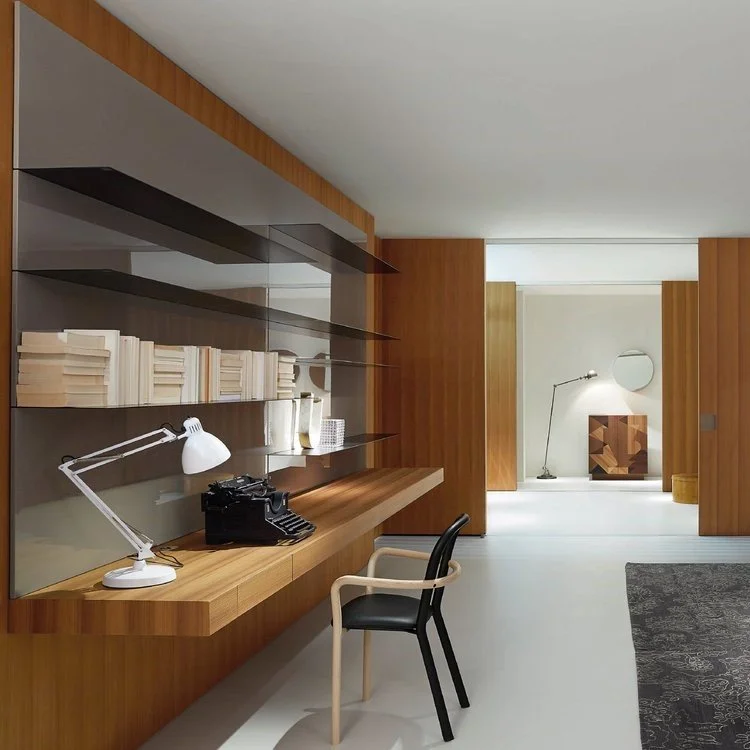
The home office has shifted from auxiliary space to primary environment. What was once a spare bedroom accommodating a laptop now demands the same architectural consideration given to living rooms and primary suites.
High-end home office design must reconcile competing imperatives: the focus required for sustained intellectual work and the material refinement expected in luxury interiors. This is not a matter of installing expensive furniture into underutilized rooms. It is a compositional exercise in spatial psychology, acoustic performance, and ergonomic precision.
The office within the home occupies a unique threshold. It must feel distinct enough to signal professional seriousness yet integrated enough to avoid stylistic rupture with the surrounding residence. The most successful examples achieve this balance through architectural clarity rather than decorative differentiation.
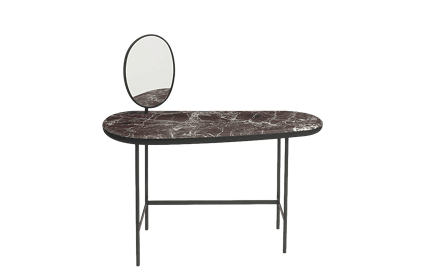
PEBBLE
Inspired by the materiality and the organic form of stones. Available in lacquer, marble, or glass and various finishes
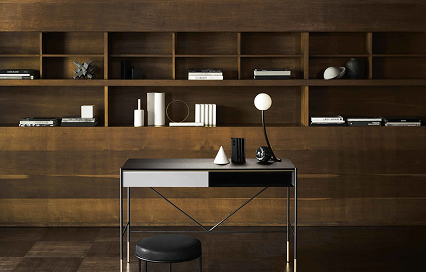
ERA SCRITTOIO
Desk with gunmetal grey legs, matte brass accents, Italian walnut, stone oak, or striped grey top and drawer with coordinating wood or glossy lacquer external parts.
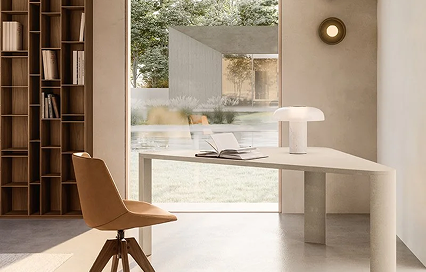
BONNET
Interpret the theme of soft, rational forms with architectural elan, introducing a touch of femininity. With the Coccioperla finish. Available in various colors.
The Spatial Logic of Concentration
Home office design begins not with furniture selection but with an understanding of how sustained focus operates spatially. Concentration is disrupted by visual clutter, acoustic intrusion, poor lighting, and ergonomic discomfort. A well-designed office removes these friction points.
Orientation matters. Natural light should enter from the side rather than directly ahead or behind the desk, avoiding glare and silhouetting. The desk, when possible, should face into the room instead of pointing toward a wall, allowing peripheral vision to read space.
Circulation should remain simple. A clear path from entry to desk maintains spatial clarity. The principle is environmental support for cognitive work. The space recedes, allowing thought to advance.
The Desk as Functional and Formal Centerpiece
The desk anchors the office. It is both a worksurface and a sculptural mass. In high-end home office design, the desk must satisfy ergonomic requirements while contributing formally to the room's composition.
Scale is the first consideration. A desk that is too small cramps work. One that is too large dominates the room and isolates the user. The width should accommodate a monitor, a laptop, a writing surface, and the minimal necessary tools without crowding. Sixty to seventy-two inches is standard for serious work, though spatial constraints and work type may alter this.
Depth determines reach and comfort. Twenty-four to thirty inches allows ergonomic positioning of screens and keyboards. Deeper surfaces, while visually impressive, often result in poor posture as users lean forward.
Material and form distinguish luxury desks from utilitarian alternatives. Solid walnut, book-matched veneer, honed marble, or blackened steel bases introduce material authority. Joinery should be visible and precise. Drawers, if present, should operate silently and close with damped mechanisms.
Minimalist desks, essentially floating planes on slender legs or cantilevered from walls, suit smaller offices or those prioritizing visual lightness. Substantial timber desks with integrated storage provide mass and presence, grounding larger rooms.
The desk's finish affects daily experience. Matte surfaces reduce glare and feel warmer to the touch. High-gloss lacquers, while striking, reflect light and show fingerprints. Oil-finished wood develops patina and tolerates minor abrasion gracefully.
Seating and the Ergonomics of Sustained Work
A beautiful chair that fails ergonomically undermines the entire office. Conversely, an ergonomic chair lacking formal refinement disrupts the room's visual coherence. The task is to locate seating that satisfies both requirements.
Traditional executive chairs in leather and chrome read as dated. Contemporary alternatives, such as those by Vitra, Herman Miller, or Italian manufacturers like Alias, integrate ergonomic support within restrained forms. Mesh backs, adjustable lumbar support, and tilt mechanisms can be housed in sculptural shells that complement, not contradict, luxury interiors.
Upholstery in full-grain leather, wool, or high-performance textiles should be considered for longevity. Leather ages visibly, developing character over the years. Textile seating requires periodic cleaning but offers broader color and texture options.
The chair's base, whether five-star casters or a four-leg frame, contributes to the room's overall aesthetic. Polished aluminum, blackened steel, or powder-coated finishes in matte black or white maintain visual discipline.
Seating height, armrest position, and recline tension should be adjustable. A fixed chair, regardless of its beauty, cannot accommodate the shifts in posture required during extended work sessions.
Secondary seating, a lounge chair or small sofa for reading and conversation, softens the office and permits postural variety. This need not match the desk chair but should align tonally with the room's material palette.
Storage Systems That Preserve Spatial Clarity
Offices generate paper, books, equipment, and supplies. Without integrated storage, these necessities become visual clutter. High-end home office design anticipates this and provides architectural solutions.
Built-in shelving, floor-to-ceiling and custom-fitted, enhances vertical space while maintaining clean lines. Open shelves display curated objects and frequently referenced books. Closed cabinetry, with flush doors and minimal hardware, conceals less visually appealing materials.
Modular shelving systems offer flexibility without sacrificing formal discipline. Aluminum uprights in anodized or powder-coated finishes support shelves in walnut, oak, or lacquered MDF. The system can be reconfigured as needs evolve.
Credenzas and low cabinets provide horizontal storage while doubling as surfaces for printers, plants, or art objects. Sliding doors eliminate the spatial intrusion of swinging panels. Drawers with internal dividers organize smaller items without visible chaos.
Filing, though increasingly digital, still requires accommodation. Lateral file cabinets integrated within millwork or designed as standalone pieces in matching materials maintain aesthetic coherence. Drawer interiors lined in felt or leather dampen sound and protect contents.
The principle is that everything has a designated location. Surfaces remain largely clear, preserving the room's compositional clarity.
Acoustic Performance and the Architecture of Quietness
Concentration requires acoustic control. Open-plan homes, hard surfaces, and ambient household noise disrupt focus. High-end home office design must address sound as rigorously as it addresses light.
Location within the home is the first consideration. Offices adjacent to kitchens, playrooms, or high-traffic corridors face constant intrusion. When possible, offices should occupy quieter zones, away from mechanical systems, plumbing, and external traffic.
Solid-core doors with proper seals isolate the office acoustically. Hollow-core doors, standard in many residential applications, offer minimal sound attenuation.
Within the room, hard surfaces reflect sound. Acoustic treatments need not be utilitarian. Textile wall panels in linen or wool, upholstered furniture, heavy curtains, and area rugs all absorb sound while contributing to the room's material palette.
Acoustic ceiling tiles or panels, when tastefully integrated, reduce reverberation. Wood slat systems with backing absorbers combine visual warmth with acoustic performance.
For offices within shared spaces, white noise systems or low-level ambient sound can mask household activity without distraction. The objective is not silence but controlled sound.
Video calls introduce additional acoustic considerations. Rooms with excessive echo produce poor audio quality. Strategic placement of absorptive materials behind and around the desk improves vocal clarity during remote meetings.
Technology Integration Without Visual Intrusion
Modern offices depend on technology, yet visible cables, devices, and peripherals disrupt visual coherence. The challenge in home office design is to accommodate necessary equipment without allowing it to dominate.
Cable management begins at the desk. Grommets, troughs, or integrated channels route power and data cables beneath surfaces. Wireless peripherals, keyboards, mice, and charging pads reduce cord density.
Monitors should be positioned comfortably, with the top of the screen at or slightly below eye level, approximately an arm's length away. Monitor arms allow flexible positioning and free desk surfaces. When not in use, screens can be rotated away or lowered.
Printers, scanners, and other equipment should be housed within credenzas or closets rather than occupying desk surfaces. Wireless models eliminate additional cabling.
Charging stations for phones and tablets can be integrated within desk drawers or dedicated docking areas, preventing surface clutter.
Smart home integration, lighting control, climate adjustment, and window treatments should be operable through concealed wall panels or mobile devices, eliminating banks of visible switches.
The principle is that technology serves the work but does not dictate the room's aesthetic.
Material Warmth in Rooms of Intellectual Labor
Offices risk feeling institutional. The dominance of desks, screens, and storage can produce environments that read as transactional rather than inhabitable. Material warmth counters this tendency.
Timber, whether in flooring, wall paneling, or furniture, introduces organic texture and acoustic softness. Rift-sawn oak, walnut, or whitewashed ash carries natural irregularity that prevents sterility.
Textile surfaces, upholstered seating, curtains, and area rugs provide tactile richness. Linen, wool, and leather age visibly, developing character rather than deteriorating.
Stone, when used sparingly, adds mass and gravitas. A marble-topped credenza or limestone flooring grounds the room materially.
Metallic accents in brushed brass, blackened steel, or bronze contribute visual definition without excess. Drawer pulls, lamp bases, shelf brackets, and picture frames in coordinated finishes establish a soft continuity.
The palette should remain restrained. Neutral tones, warm whites, soft grays, and natural wood allow the work and inhabitant to occupy the foreground.
Art and the Question of Distraction in a Home Office Design
Art in offices presents a paradox. It enriches the environment yet risks distracting from focused work. The solution lies in selection and placement.
Large-scale abstract works, monochromatic compositions, or minimalist photography provide visual interest without narrative complexity. The eye can rest on them briefly without being drawn into extended contemplation.
Placement matters. Art positioned outside the primary sightline, behind the desk, or on perpendicular walls, offers respite during breaks without interrupting focus.
Sculptural objects, ceramic vessels, carved wood forms, and books displayed as objects introduce three-dimensional interest. These should be few and carefully sited.
Your office is not a gallery. Curation should be restrained, privileging a few strong pieces over dense installation.
FAQs
1. What is the most suitable square footage for a functional luxury home office?
A minimum of 100 square feet allows for a full desk, seating, and storage without crowding. Larger offices, 150 to 200 square feet, can accommodate secondary seating, expanded shelving, and flexible work zones.
2. How should home offices handle video call backgrounds without sacrificing design integrity?
Position the desk so the camera faces a curated wall with minimal shelving, a single artwork, or a textured surface. Avoid busy backgrounds. Integrated lighting ensures even facial illumination without visible fixtures in the frame.
3. Are standing desks compatible with high-end office aesthetics?
Motorized height-adjustable desks in solid timber or stone tops with minimalist base mechanisms integrate seamlessly. Avoid utilitarian models with visible cables and industrial finishes. Custom millwork can conceal mechanisms entirely.
4. What acoustic treatments work in offices that share space with living areas?
Area rugs, upholstered furniture, and heavy linen curtains provide absorption without signaling commercial acoustic treatment. Decorative wood slat panels with acoustic backing combine visual warmth with performance.
5. How can natural light be maximized in a north-facing home office design?
Large windows, light-colored walls, and reflective surfaces distribute available daylight. Supplemental task lighting at 4000K to 5000K compensates for cooler natural light without introducing harsh contrast.
