
The Ultimate Dining Table Buying Guide for Host Homes
Start Your Dining Table Selection
A dining table has to accommodate more than plates and place settings. It shapes how guests gather, how conversation moves, and how the room functions between occasions.
This dining table buying guide looks at the practical and design considerations that matter when selecting a table for a home where entertaining is part of everyday life, from dimensions and seating capacity to materials, shape, and proportion.
Begin With the Proportions That Suit Your Room
Before choosing a finish or designer, establish how much space the table can occupy comfortably. Measure the dining area and account for the clearance needed to pull out chairs and move around seated guests. A table that fits its surface dimensions but restricts circulation will quickly compromise the experience.
The table should also relate to the scale of the architecture. Generous rooms can accommodate longer surfaces or substantial sculptural bases, while more intimate spaces may benefit from round or oval forms that preserve movement around the perimeter.
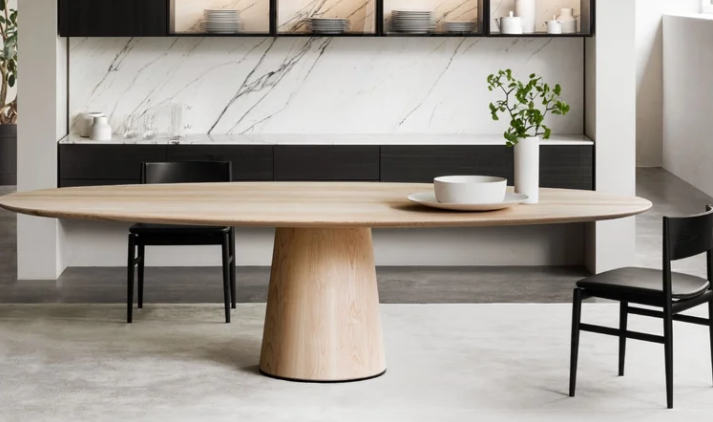
For a balanced, adaptable profile, the Materic table by Piero Lissoni is available in round and oval configurations, with marble or wooden tops and different base options. Its range of proportions allows the design to respond to different dining environments while retaining a clear material identity.
Choose a Shape According to How You Host
Shape influences both the atmosphere and practical rhythm of a gathering. As part of any dining table buying guide, it is worth considering how each form suits your room and the way you entertain.
Rectangular tables establish a strong axis and work well in long rooms, while round tables encourage conversation and create a more intimate setting. An oval table combines the capacity of a rectangular design with softer edges, offering flexibility for different gatherings.
Modern round dining table ideas examine how circular forms influence circulation, sightlines, and conversation, offering another perspective when deciding which geometry belongs in your room.
Match Seating Capacity With the Way You Entertain
Choose a table for everyday use, not occasional maximum capacity. If you regularly seat four, a table designed for twelve may overwhelm the room.
An extendable design can accommodate guests without taking up extra space daily. Also consider chair width and arm clearance, especially with upholstered or armchair seating.
Select materials that suit the rhythm of your home
Material affects more than appearance. In any dining table buying guide, consider how each surface responds to light, touch, maintenance, and surrounding furniture.
Marble introduces natural variation and a sense of permanence. Wood brings warmth through visible grain and tonal depth. Glass can reduce visual weight, making the dining area feel more open. Metal creates a more architectural expression and can emphasize the geometry of a base.
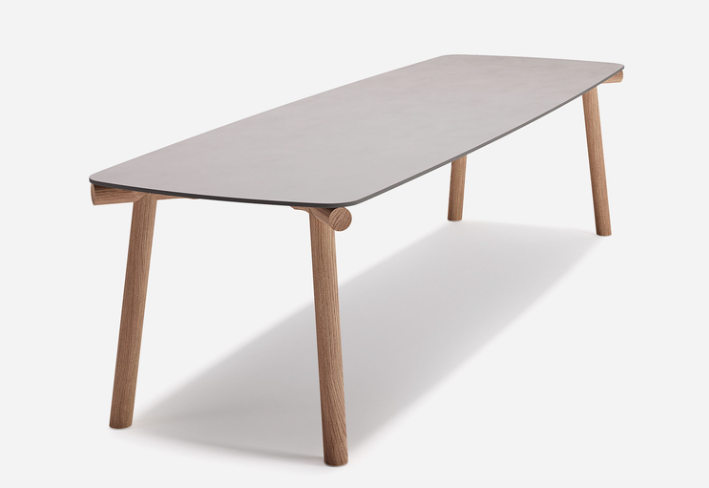
The Kasumi table by MIST-O combines solid teak legs with a black stainless steel frame and a choice of porcelain stoneware or black granite top. The mixture of warm wood and darker industrial elements gives it a distinct material contrast without relying on decorative detailing.
For a host home, think about how the chosen surface will perform during actual gatherings. Frequent entertaining may call for a material whose care requirements align with the way the table will be used.
Pair Dining Chairs With Your Table
Consider Extendability and Everyday Flexibility
An extendable table can be valuable when the number of guests changes regularly. As part of a dining table buying guide, it allows the dining area to remain proportionate during everyday meals while providing additional surface area when hosting.
The mechanism should not be considered separately from the design. Leaves, extensions, or other moving components should preserve the table’s overall visual integrity when in use. When extended, the proportions should still feel deliberate rather than improvised.
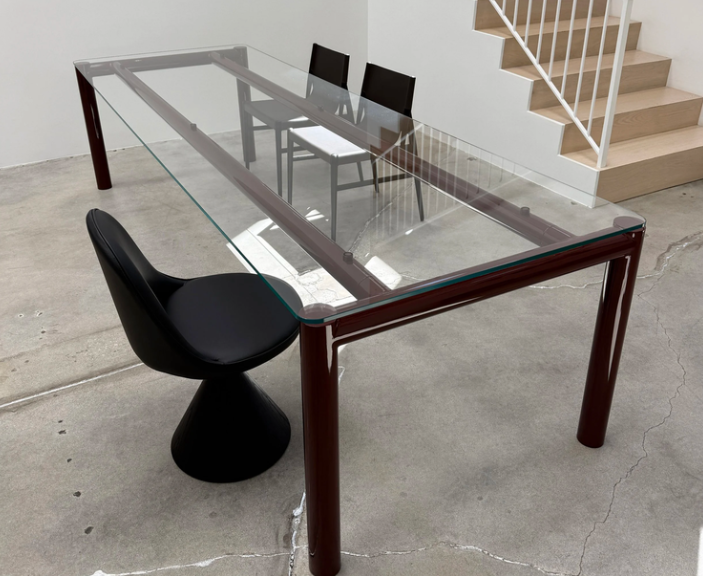
For larger dining environments, the Porro Ventiquattro table offers a more expansive architectural presence. Its name refers to the twenty-four-hour production process behind the table, reflecting the attention given to its material and manufacturing. The design is suited to spaces where the table itself needs to carry considerable visual presence.
Think Beyond the Table to the Complete Composition
A dining table should not be selected in isolation. Its relationship with chairs, lighting, rugs, cabinetry, and surrounding architecture determines how successfully it inhabits the room.
A substantial marble surface may benefit from visually lighter chairs. A wood table can accommodate upholstery that introduces softness. A sculptural base may call for simpler surrounding forms so its geometry remains legible.
Lighting deserves particular attention. A pendant or linear fixture should correspond to the table’s length or geometry and sit at an appropriate height above the surface. A well-positioned fixture can reinforce the table as the room’s central element without overwhelming it.
Make a Considered Choice for Every Kind of Gathering
The best dining table balances everyday practicality with the presence needed for larger gatherings. This dining table buying guide comes down to choosing the right scale, shape, seating capacity, and materials for your space and lifestyle. Graye’s European designs bring character and lasting presence to the dining setting.
FAQs
-
Allow sufficient clearance for chairs to be pulled out comfortably and for guests to move behind seated diners. The exact amount depends on the room layout and whether other furniture sits nearby.
-
Neither is universally better. An oval table can soften circulation and provide a more fluid visual profile, while a rectangular table can make efficient use of longer rooms and accommodate larger groups.
-
Yes. A central pedestal or recessed base can provide more freedom for chair placement and legroom, while perimeter legs may restrict certain seating positions depending on their placement.
-
Matching is not essential. Related tones, complementary grains, or deliberate contrast can create a more layered interior while allowing the dining table to retain its own identity.