
Welcoming Modern Entryway Ideas for Luxury Residences
Shape Your Entryway With Graye
The entryway establishes the mood of a residence before the living spaces come into view. These modern entryway ideas consider the foyer as part of the home's larger architectural composition, bringing together consoles, mirrors, lighting, seating, and carefully selected objects. The goal is not to fill the entrance but to give it a clear sense of proportion, materiality, and purpose.
Establish the Entryway With a Distinct Architectural Anchor
A console can give an expansive foyer a visual center while providing a practical surface for everyday essentials. Its proportions should respond to the width of the wall and the available circulation, particularly in narrower entrances where excessive depth can interrupt movement.
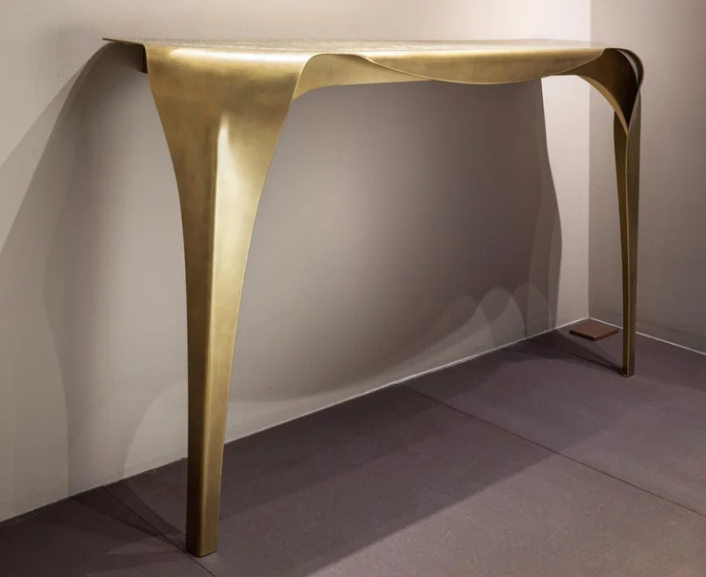
The Convivium console by Nikita Bettoni is a sculptural solid brass piece that gives material presence to the entrance without relying on decorative excess. Its warm metallic character can introduce contrast against stone, plaster, wood, or darker architectural finishes.
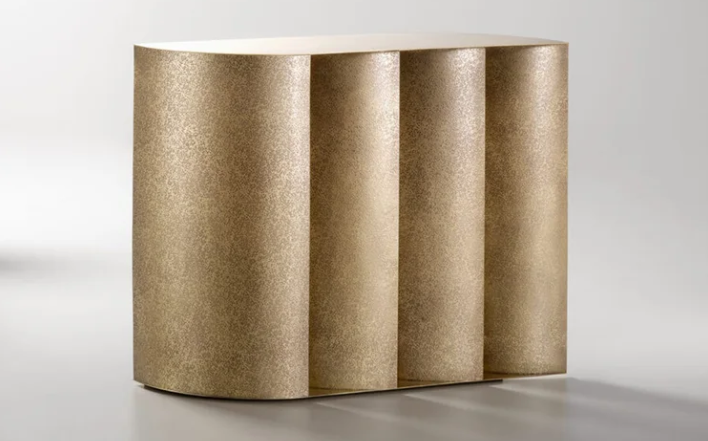
For a quieter direction, the Sinestesia console can bring a more restrained architectural presence to the wall while allowing surrounding artwork and objects to remain part of the composition.
Use Mirrors to Extend Light and Visual Space
A mirror can do more than provide a final glance before leaving home. Among modern entryway ideas, a thoughtfully positioned mirror can reflect daylight, amplify nearby materials, and create a greater sense of depth within a compact foyer.
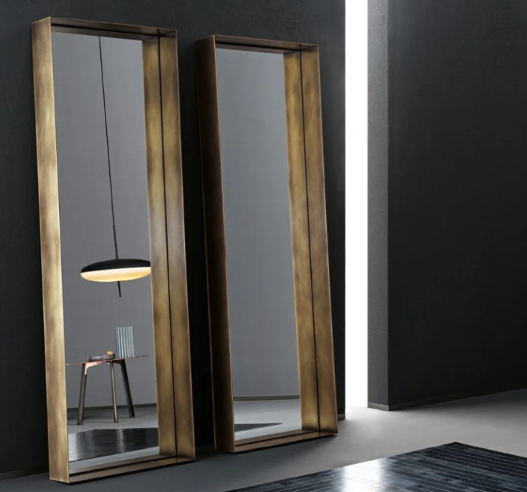
The Frame mirror, designed by Antonella Tesei, is available in brass, stainless steel, or copper. The choice of finish allows the mirror to connect with other metallic details throughout the residence, creating continuity without requiring identical finishes.
The shape matters, too. A strong geometric frame can reinforce architectural lines, while a softer silhouette can balance an entrance dominated by rectilinear furniture.
As part of a broader interior, reflection should be considered from the approach to the front door and from the rooms beyond. A mirror positioned to capture a garden, artwork, or natural light can become part of the experience of moving through the home.
Layer Ambient Lighting for a Softer Arrival
Lighting determines how materials and proportions are perceived as soon as someone enters. A single overhead fixture may provide adequate illumination, but layered sources create greater depth.
A console lamp can establish a warm point of light at eye level, while architectural or wall lighting can illuminate artwork and surfaces. The resulting variation prevents the entry from feeling flat after sunset.
When choosing fixtures, consider the finish of nearby furniture. Warm metals can echo brass or bronze details, while blackened finishes can reinforce darker architectural elements. The fixture should contribute to the material language without competing with the console or mirror.
Introduce Seating Without Crowding the Entrance
A bench can make a large entryway feel more inviting while providing a useful place to sit when you’re putting on shoes or setting down a bag. In a narrow foyer, however, its depth and position need to preserve a comfortable path through the space.
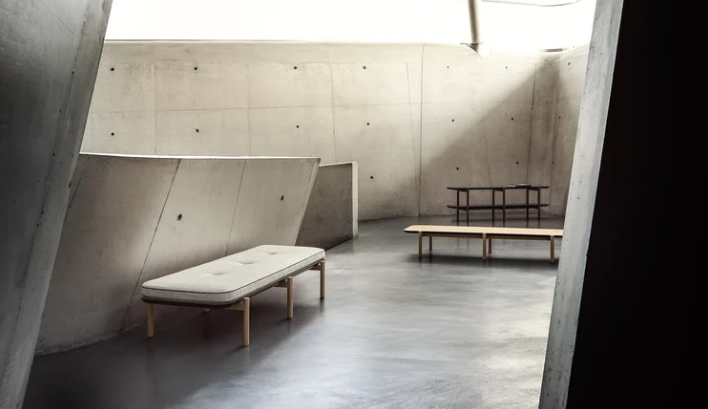
The Stepan bench, designed by David Lopez Quincoces, is characterized by what Graye describes as formal essentiality and is available in various finishes. Its restrained profile can work beneath artwork or along a wall where a larger upholstered piece would feel excessive.
A bench can also provide a useful visual counterweight to a console. When the two pieces share a finish or material quality, they can read as related elements without becoming a matched set.
Refine Your Entrance With Considered Benches
Choose Materials That Continue Into the Home
One of the most effective modern entryway ideas is to treat the foyer as the opening chapter of the interior rather than a separate decorative zone.
Look at the materials already present beyond the entrance. If the living room features wood, introduce a related wood tone or warm finish near the door. If stone dominates the main spaces, a stone surface or metallic detail can establish that connection immediately.
The relationship does not need to be exact. Repeating a material through smaller details can be enough to create continuity. A brass console might relate to cabinet hardware, while a copper-framed mirror can echo warm tones found elsewhere in the home.
Graye's approach to curating a complete interior emphasizes this relationship between furniture, materials, proportion, and function. Each piece gains meaning through the company it keeps.
Keep Decorative Objects Purposeful and Measured
A luxury entryway does not need a crowded console. Start with the architectural anchor, then add a few purposeful objects.
A sculptural vessel can add height, while a small object or shallow tray can provide interest and keep essentials organized. Consider the arrangement from different viewpoints, keeping the composition balanced without overcrowding the space.
Restraint matters. One exceptional object can create more impact than several unrelated accessories.
Let Scale and Circulation Guide Every Choice
Even beautiful furniture can feel misplaced when proportions are wrong. Measure the entryway before selecting a console, bench, or mirror, accounting for doors, stairs, passageways, and comfortable movement.
A long console can suit a generous foyer, while a compact design preserves circulation in a narrower space. The strongest modern entryway ideas respond to the architecture first, allowing furniture to clarify rather than constrain the space.
Bringing It Together
The most successful modern entryway ideas begin with the architecture and develop through proportion, material, light, and restraint. A well-chosen console can establish the foundation, while a sculptural mirror, considered lighting, and carefully scaled seating give the entrance depth and function.
When each element contributes to the larger composition, the foyer becomes more than a passage. It becomes the first expression of how the residence is designed and lived.
Style Your Entryway With Graye
FAQs
-
The focal point depends on the architecture. A sculptural console, striking mirror, artwork, or distinctive light can anchor the space. Choose one primary element and allow the surrounding pieces to support it.
-
Keep circulation clear and select furniture with a restrained depth. Reflective surfaces, lighter finishes, and wall-mounted elements can also preserve visual openness without leaving the space feeling empty.
-
It does not need to match exactly. Repeating a material, finish, or tonal family can create a visual connection while allowing the entryway to have its own character.
-
A bench works well along a wall where it does not interfere with the main route through the home. Its placement should leave enough clearance for doors and comfortable movement.