
Marble Coffee Table Ideas for Elegant Living Rooms
The coffee table occupies a specific position in the living room: it sits at the visual center of the seating arrangement and is encountered at close range, making its material quality immediately legible.
A marble coffee table brings a geological permanence to that position. The stone's veining, formed over millions of years, produces a surface pattern that no manufactured material approximates, and its thermal mass gives it a physical presence that lighter materials simply do not have.
Understanding how different marble types, forms, and compositions work within a living room is the starting point for a decision that will shape the space for decades.
EXPLORE GRAYE’S LUXURY COFFEE TABLE COLLECTION
Why Marble Reads Differently from Other Stone Materials
Not all stone coffee tables perform equivalently within an interior. Travertine is porous and warm in tone; limestone is dense and matte. Marble, by contrast, has a surface reflectivity and depth of veining that give it visual animation. In a living room where light shifts across the day, a marble surface responds to that movement in a way that a lacquered or timber top does not.
The veining pattern also means that no two marble tops are identical. The slab selected for a specific piece carries its own character, introducing a degree of exclusivity inherent to the material itself rather than manufactured into it.
How Form Determines the Role of a Stone Coffee Table in the Room
The geometry of a coffee table is not a neutral decision. A round marble coffee table handles the center of a seating group differently from a rectangular one. The circular form has no corners, which reduces visual weight and allows circulation around the piece without the eye catching on any one edge. It works well where the seating arrangement is symmetrical, and the room benefits from a form without a strong directional axis.
A rectangular table reinforces the linearity of a sofa-facing arrangement and provides a longer surface for objects, books, or trays. In a room where the furniture already has strong horizontal emphasis, a low rectangular marble top extends that reading across the center of the composition.
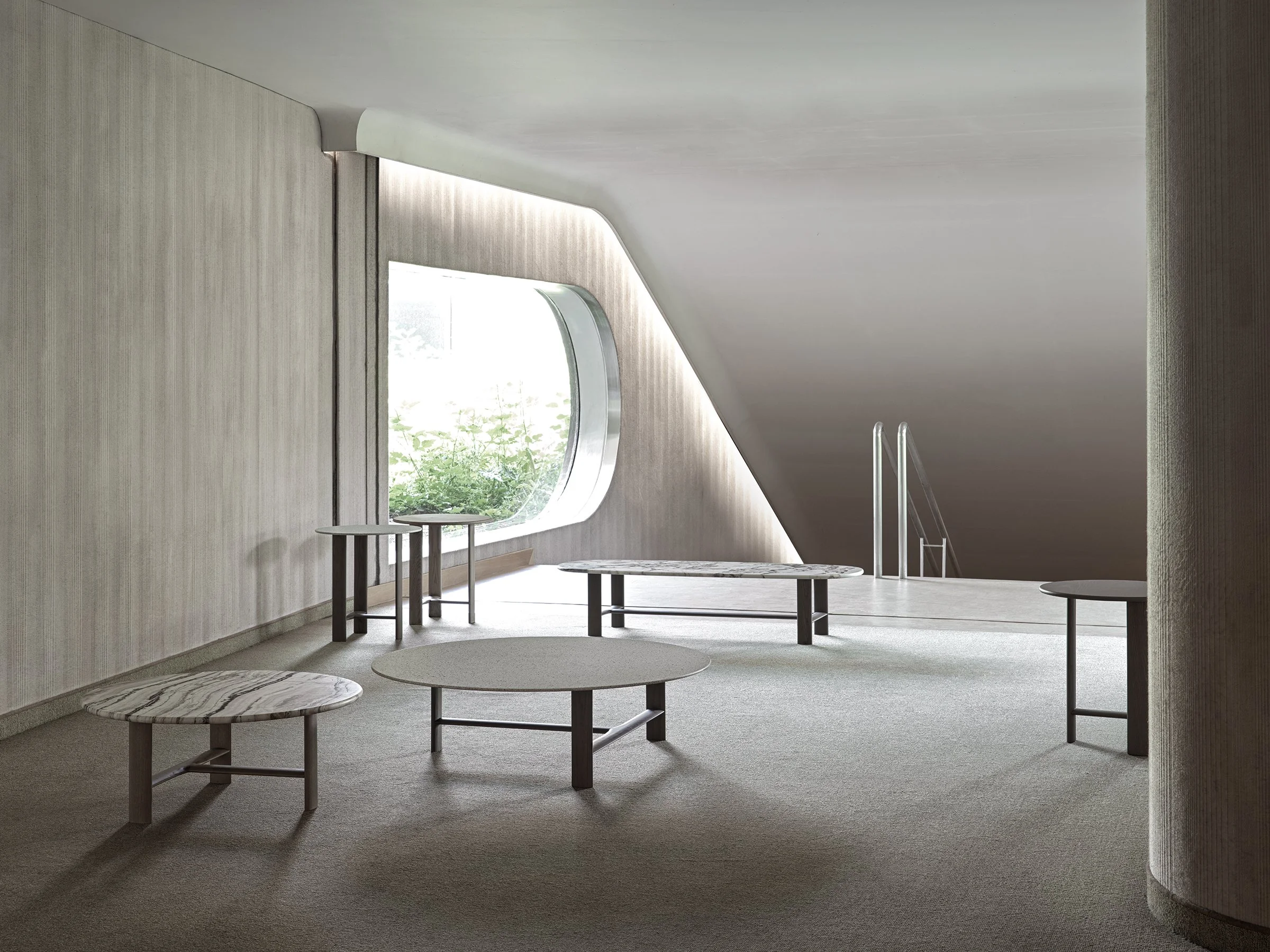
The MOCKI SERIES, designed by Federica Biasi, addresses this through a family of coffee tables with ash structures and marble tops. The pairing of warm ash with the cooler stone surface produces a material contrast that is resolved without being contrived.
SEE THE FULL ACCENT TABLE COLLECTION AT GRAYE
Pairing a Marble Coffee Table with the Surrounding Furniture
A marble coffee table works within a composition, not in isolation. Its surface tone and vein color will either reinforce or contrast with the upholstery, rug, and flooring materials around it. White Carrara marble reads lightly and pairs naturally with linens, pale leathers, and light oak. Darker stones with more complex veining suit rooms with deeper upholstery tones or richer material palettes.
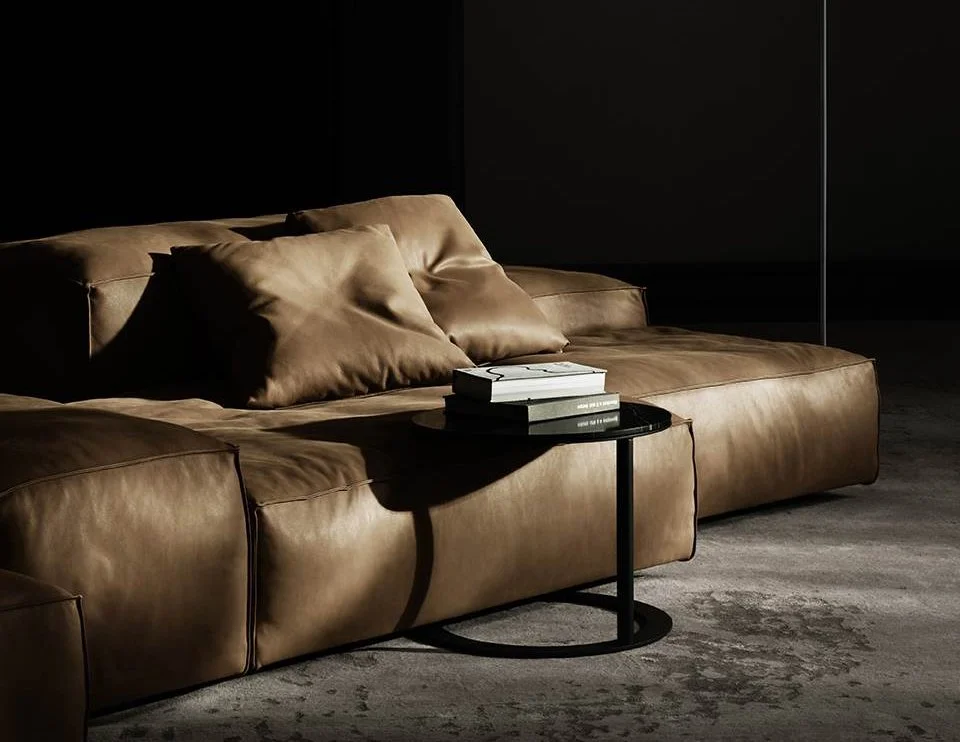
The TETHYS ACCENT TABLE introduces a refined metal element that balances the visual weight of a marble coffee table. Its circular tray top and slender pedestal base create a light, understated profile, allowing the richness of the stone to remain the focal point while adding contrast through material and form. The pairing of marble and metal creates a layered composition that feels both contemporary and timeless.
As noted in our guide to modern outdoor patio furniture, material selection is most effective when considered as part of a complete scheme. The same principle applies in the living room, where the relationship between the coffee table and its surrounding pieces carries as much design weight as the table itself.
What to Consider When Combining Materials Around a Luxury Coffee Table
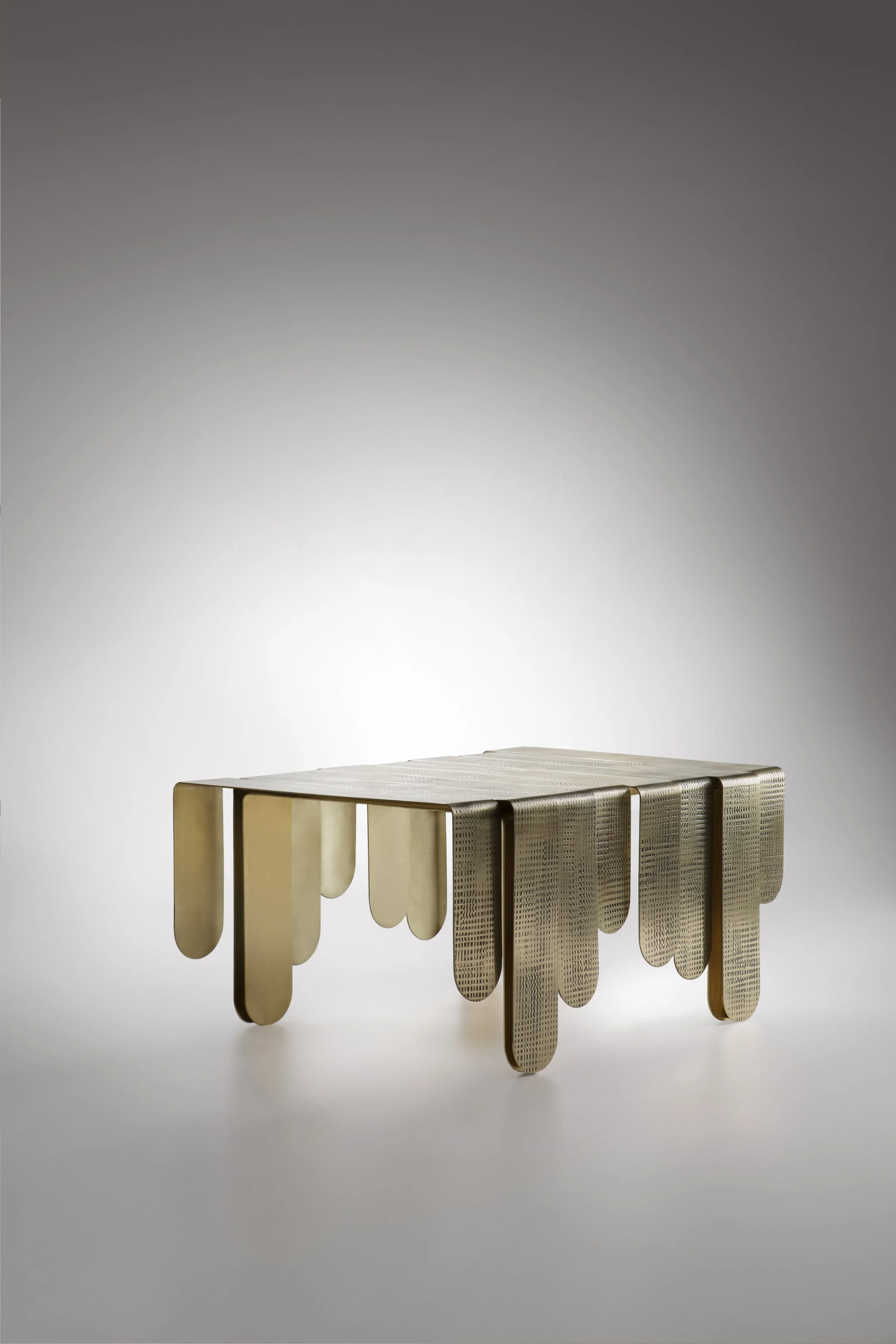
Stone and metal work together with a particular precision. A marble top on a brushed brass or blackened steel base creates a material dialogue between the geological and the industrial, and the base determines how the top reads within the room.
The XILO ACCENT TABLE in brass demonstrates how a metal piece at the same height as a stone primary table can anchor a grouping while introducing material variety without either one dominating.
For further context on how material choices shape the character of a designed interior, our blog on best indoor lighting for a cozy atmosphere covers how surface reflectivity and material tone interact with light across the space.
Discover Designer Marble Coffee Tables at Graye
The marble coffee table is one of the few pieces in a living room where the material is the primary argument. Its geological character, surface variation, and physical weight bring qualities to a composition that designed and manufactured materials cannot replicate. At Graye, our curated collection of stone and marble tables brings together Italian designers whose work treats material selection as a fundamental design decision.
CONTACT OUR SPECIALIST TO EXPLORE COFFEE TABLES
FAQs
-
Yes. Applying a penetrating stone sealer once or twice a year helps protect marble from stains. While it won't prevent etching completely, a honed finish makes everyday wear less noticeable.
-
A round marble coffee table is ideal for open-plan spaces because it improves flow and softens the layout. Rectangular tables work best in larger, more defined seating areas.
-
Carrara and Calacatta are popular for their elegant white backgrounds and grey veining, while Nero Marquina offers bold black contrast. Emperador marble is a warm-toned option that pairs well with wood and leather.
-
Marble is durable but naturally develops a patina over time. Choosing a honed finish helps minimize the appearance of everyday scratches and etching.
-
Yes. Pairing different stone varieties or finishes creates contrast and prevents the space from feeling repetitive while maintaining a cohesive design.