
Living Room Lighting Ideas to Transform Your Space
In a well-resolved interior, light is never an afterthought applied once the furniture has found its place. The best living room lighting ideas are decided at the design stage, given the same weight as the sofa or the rug.
A living room lit by a single overhead source will always feel flat, however fine the furnishings beneath it. The most compelling living room lighting ideas layer several sources at different heights, letting a space move from crisp by day to glowing by evening.
EXPLORE LUXURIOUS LIGHTING DESIGNED FOR MODERN LIVING
Establishing a Layered Lighting Foundation
Layered lighting ideas rest on a simple principle. A room calls for at least three sources in concert, an ambient glow, a task light for reading, and an accent that draws the eye toward a chosen object.
Without this layering, a room falls back on a single, unforgiving wash of light. No chandelier, however beautiful, can carry a space the way a considered combination of fixtures can.
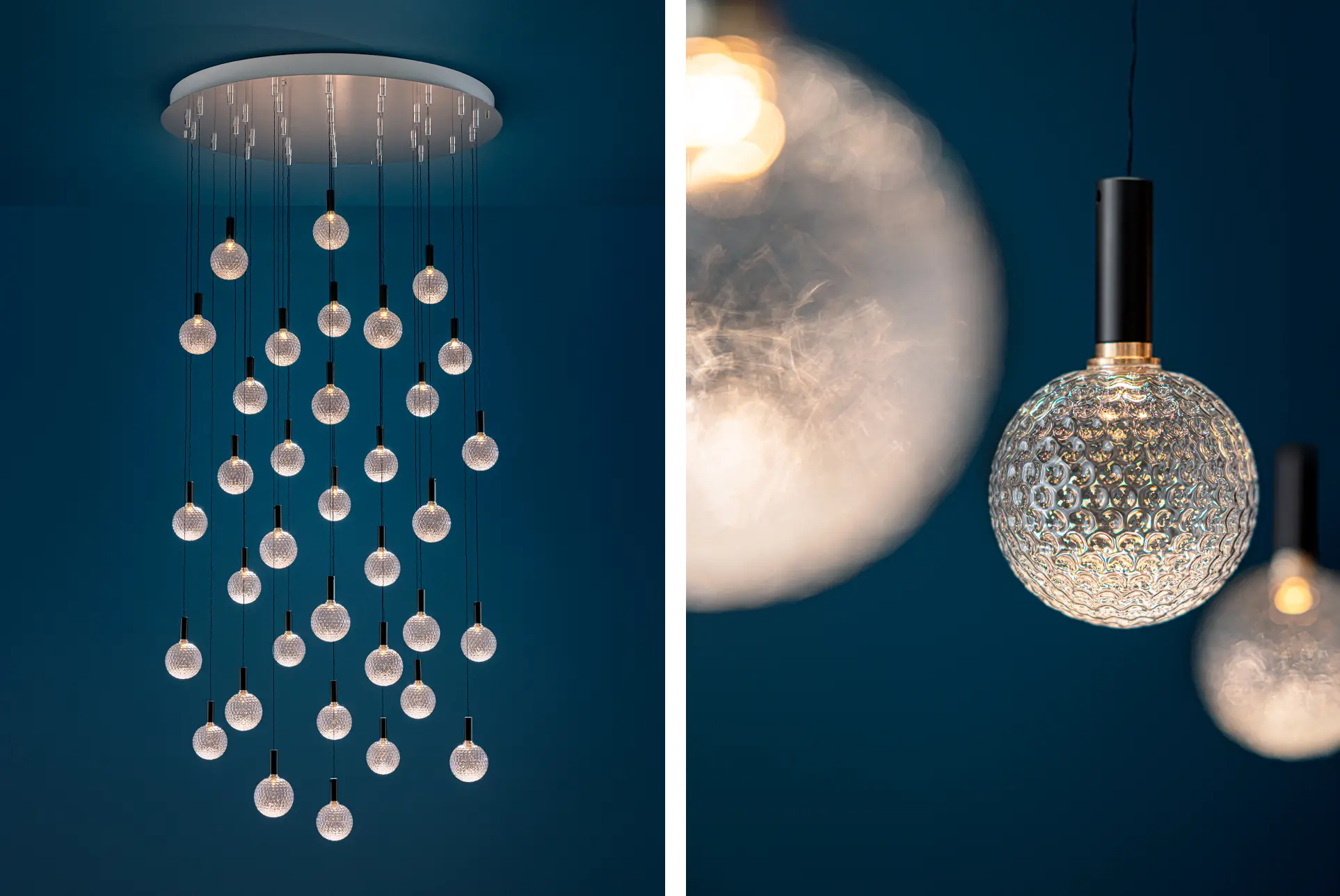
The SYPHA SPOT CHANDELIER by CATELLANI & SMITH shows how a single ceiling fixture can anchor the ambient layer without overtaking the room. Its glass shades diffuse light with a quiet hand, so the piece reads as sculpture even when switched off.
FIND THE RIGHT FIXTURES FOR YOUR LIVING ROOM
Considering Living Room Ceiling Lights as an Architectural Statement
Living room ceiling lights carry a presence few other fixtures can claim, seen as they are from nearly every seat in the room. A pendant chosen for its scale and honesty of material becomes a fixed point of reference, not unlike a piece of sculpture suspended above the seating group.
This is one of the more overlooked living room lighting ideas. Treat the pendant as a permanent line in the room's composition, not a placeholder to be swapped out with the next passing trend.
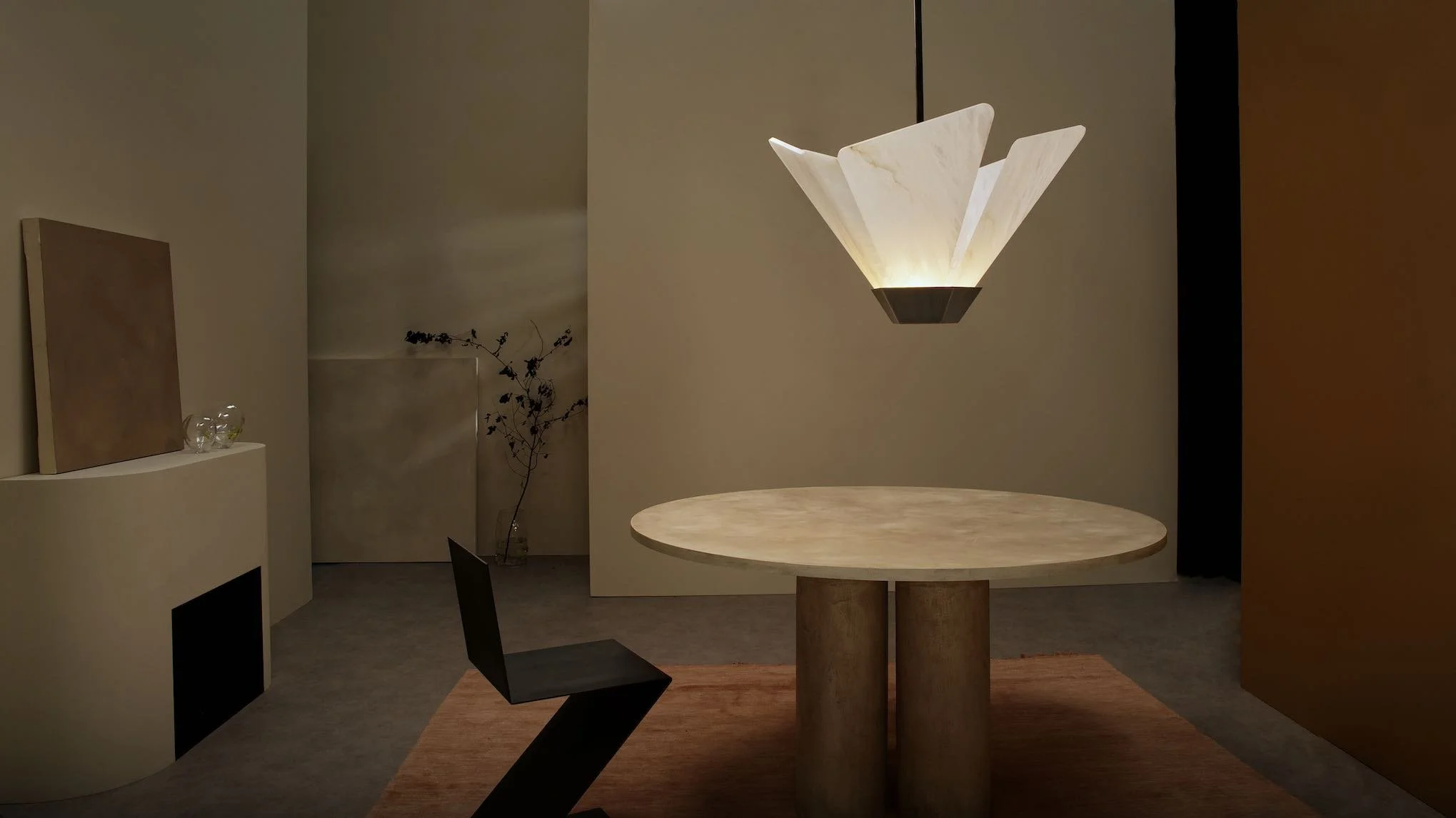
The SHARD PENDANT by CTO Lighting sets a brass pentagon base against honed alabaster, casting a warm, diffused glow. Handled as a true architectural statement, a fixture like this gives the room something to organize itself around, much the way a fine rug settles the ground plane of a seating arrangement.
Selecting Floor Lamps for Living Room Corners and Reading Nooks
Floor lamps for living room settings solve what a ceiling fixture cannot. Positioned at eye level, they soften shadow and lend a quiet corner or reading chair a purpose of its own.
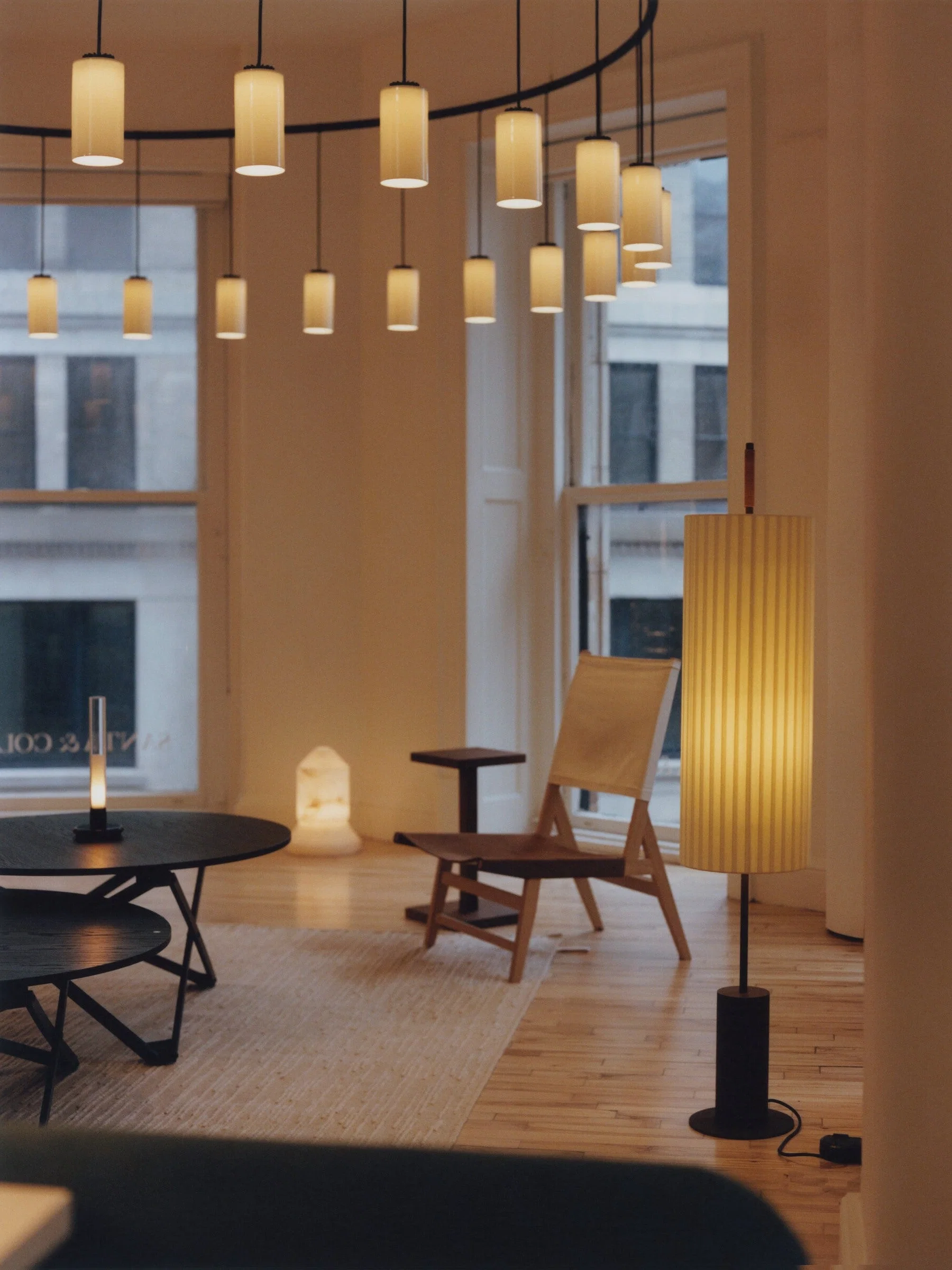
The Dórica floor lamp combines a vertically pleated diffuser with a refined metal base to produce a soft, evenly diffused glow. Its warm illumination and sculptural silhouette create a comfortable reading environment while adding a subtle architectural presence that complements contemporary living spaces.
For living rooms that take their cues from a well-chosen rug, our earlier piece on rugs for living room spaces explores how the floor plane and the light plane work together to define a seating group's edges.
Bringing Warmth Through Modern Living Room Lighting at Table Height
Modern living room lighting need not live only on the ceiling or the wall. A table lamp introduces a portable, adjustable layer, one that moves as the room's purpose shifts through the day.
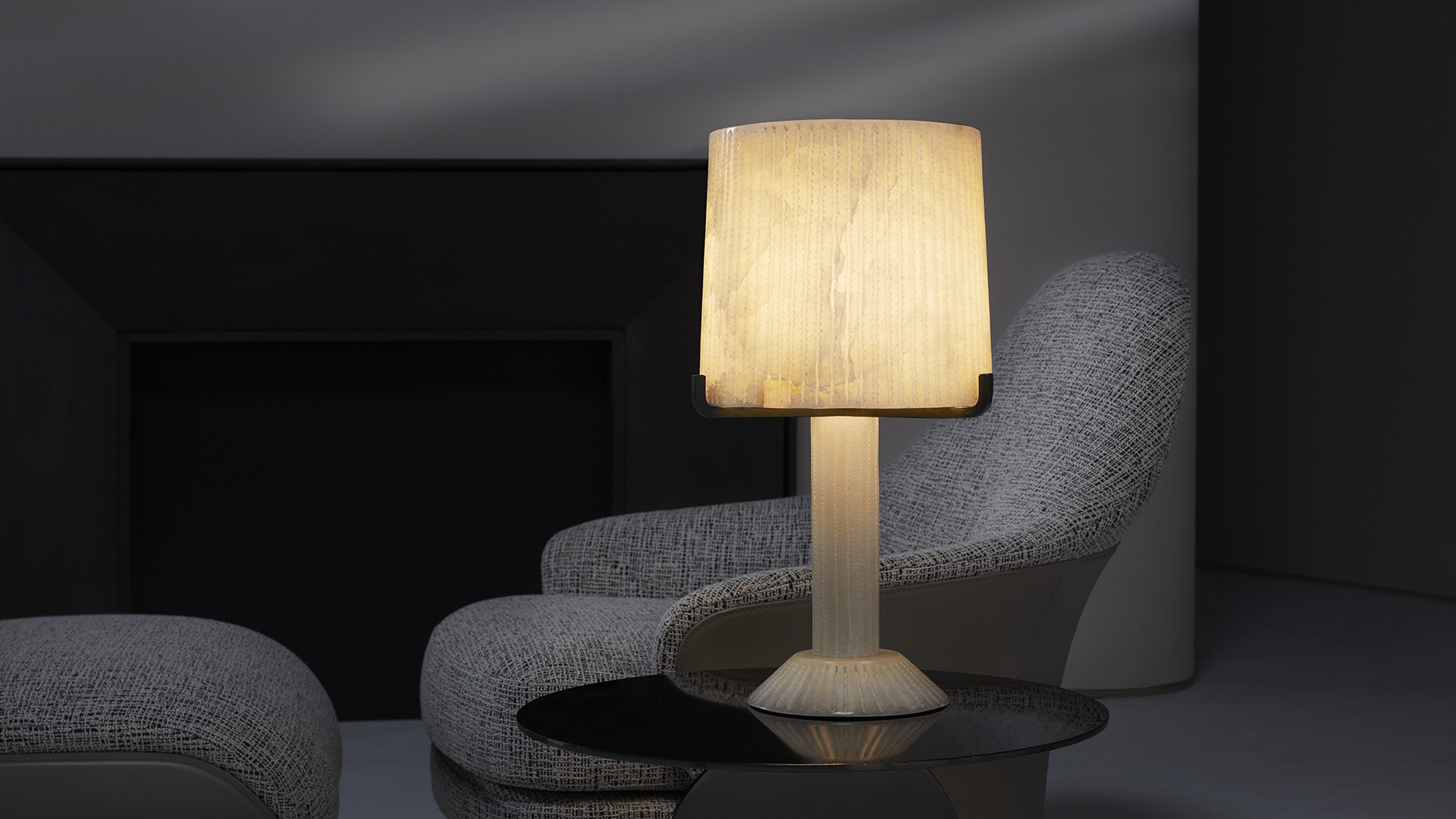
The Acropolis table lamp by CTO Lighting, crafted from white alabaster with black steel accents, emits a soft, diffused glow that brings warmth to side tables and shelving. Its sculptural form makes it as much a design object as it is a practical light source.
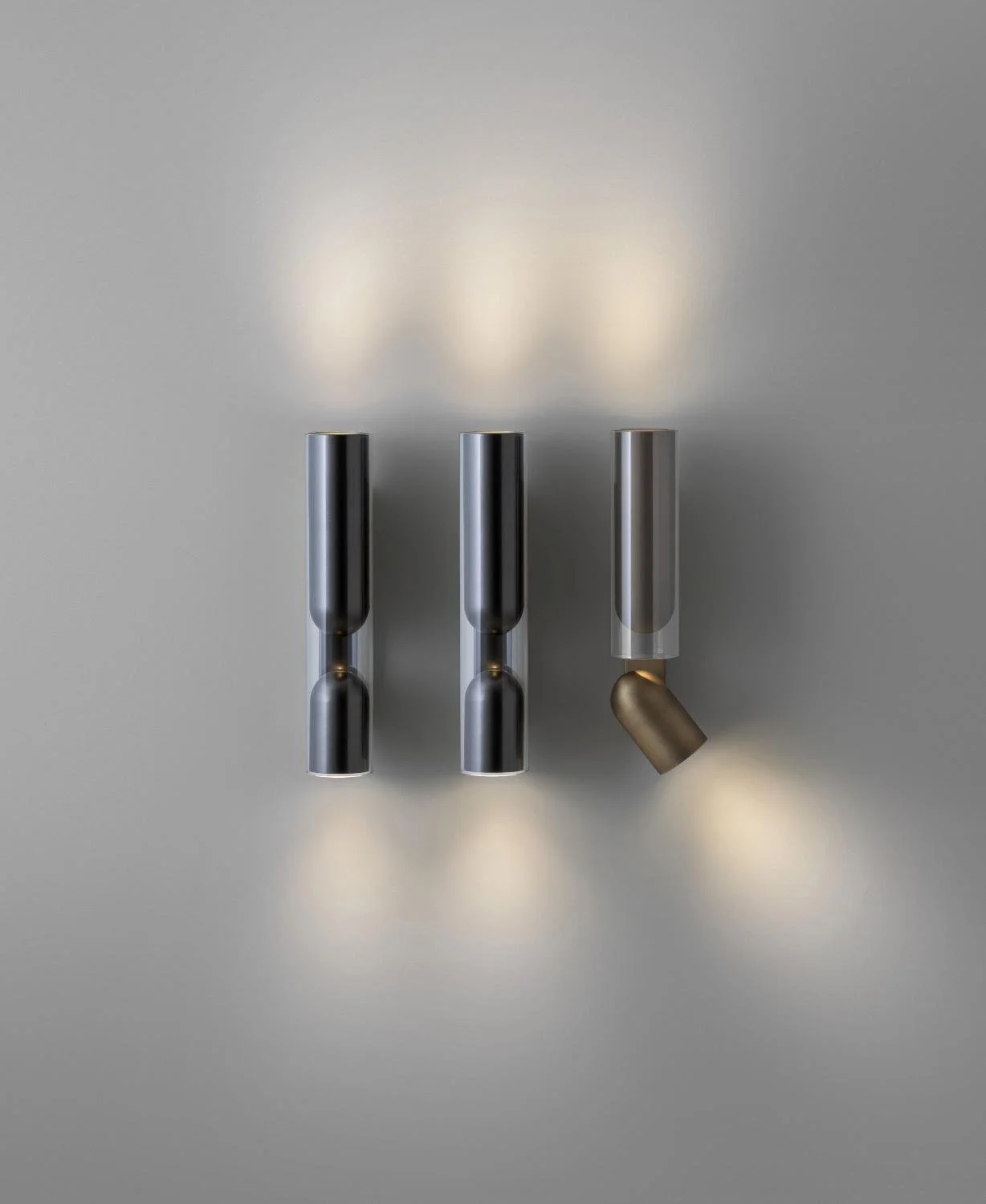
Wall-mounted fixtures deserve the same consideration. The Clash wall lamp designed by Artefatto pairs a refined metal structure with delicate glass to produce a soft, ambient glow. Available in fixed or adjustable versions, it introduces warmth while adding a sculptural accent that complements contemporary living spaces.
Achieving Luxury Living Room Lighting That Suits the Architecture
Luxury living room lighting ideas are defined less by price than by how precisely a fixture answers the room's proportions and palette. A piece chosen without regard for ceiling height or the tone of surrounding furnishings will read as imported rather than at home.
Our earlier piece on outdoor patio furniture touches on a related idea: that materials should evolve alongside the architecture they inhabit. The same holds true indoors, where a fixture's finish should echo the room's existing material language.
Explore Designer Lighting at Graye
At Graye, we treat lighting as a defining element of the design brief, weighed with the same care as the furniture and the floor plane it sits above. Our collection gathers fixtures shaped by honest materials, drawn from makers who understand light as a medium rather than a mere utility.
We encourage you to visit our West Hollywood showroom to experience these fixtures in person and to consult with our design team on scale, finish, and placement.
REQUEST A PERSONALIZED LIGHTING CONSULTATION
Thoughtful living room lighting ideas are, in the end, about resolving a room in three dimensions rather than one. When ambient, task, and accent sources are layered with intention, a room takes on a depth no single overhead fixture could offer alone.
FAQs
-
Most living rooms are best served by a minimum of three sources at different heights, typically a ceiling fixture, a floor or table lamp, and one accent source. This lets the room be tuned to different moments in the day rather than settling for one unforgiving light level.
-
Strict matching is rarely necessary, and a room often feels more considered when metals are mixed with intention. What matters more is a shared undertone; warm brass and aged bronze sit comfortably together, while cool chrome beside warm brass can feel unresolved.
-
A color temperature between 2700K and 3000K tends to produce a warm, residential glow. Cooler temperatures above 4000K read as clinical and are better suited to task-driven areas like a home office.
-
A dimmer adjusts intensity, but it cannot recreate depth built from light arriving at several angles. A dimmed single source still casts a flat wash, while layered sources build shadow and dimension regardless of brightness.
-
Centering a pendant over the coffee table produces a more balanced composition, since the table typically anchors the visual center of a seating arrangement. Positioning it off center can work within an asymmetrical layout, but it calls for a confident hand.