
Pendant Lighting Ideas to Elevate Every Room in Your Home
A hanging light fixture occupies a position in the room that no other piece of furniture or object reaches: suspended between the ceiling plane and the space of inhabitation, it is simultaneously architecture and object. Pendant lighting performs in multiple registers at once, casting directed or diffused light while contributing its material and formal presence to the room's composition. Understanding how to select and position these fixtures room by room produces results that no single design formula can deliver.
EXPLORE LUXURY PENDANT LAMPS AT GRAYE
Why the Dining Room Demands the Most Considered Pendant Choice
The dining room is where pendant lighting has the clearest functional mandate. A fixture positioned above the table must concentrate light on the horizontal plane where activity occurs, define the territory of the dining zone, and do both without introducing glare into the sightlines of seated occupants.
Suspension height is the first variable to resolve. A pendant hung between 70 and 80 centimeters above the table surface delivers light at the correct angle while keeping the fixture within the visual field of the room rather than disappearing toward the ceiling.
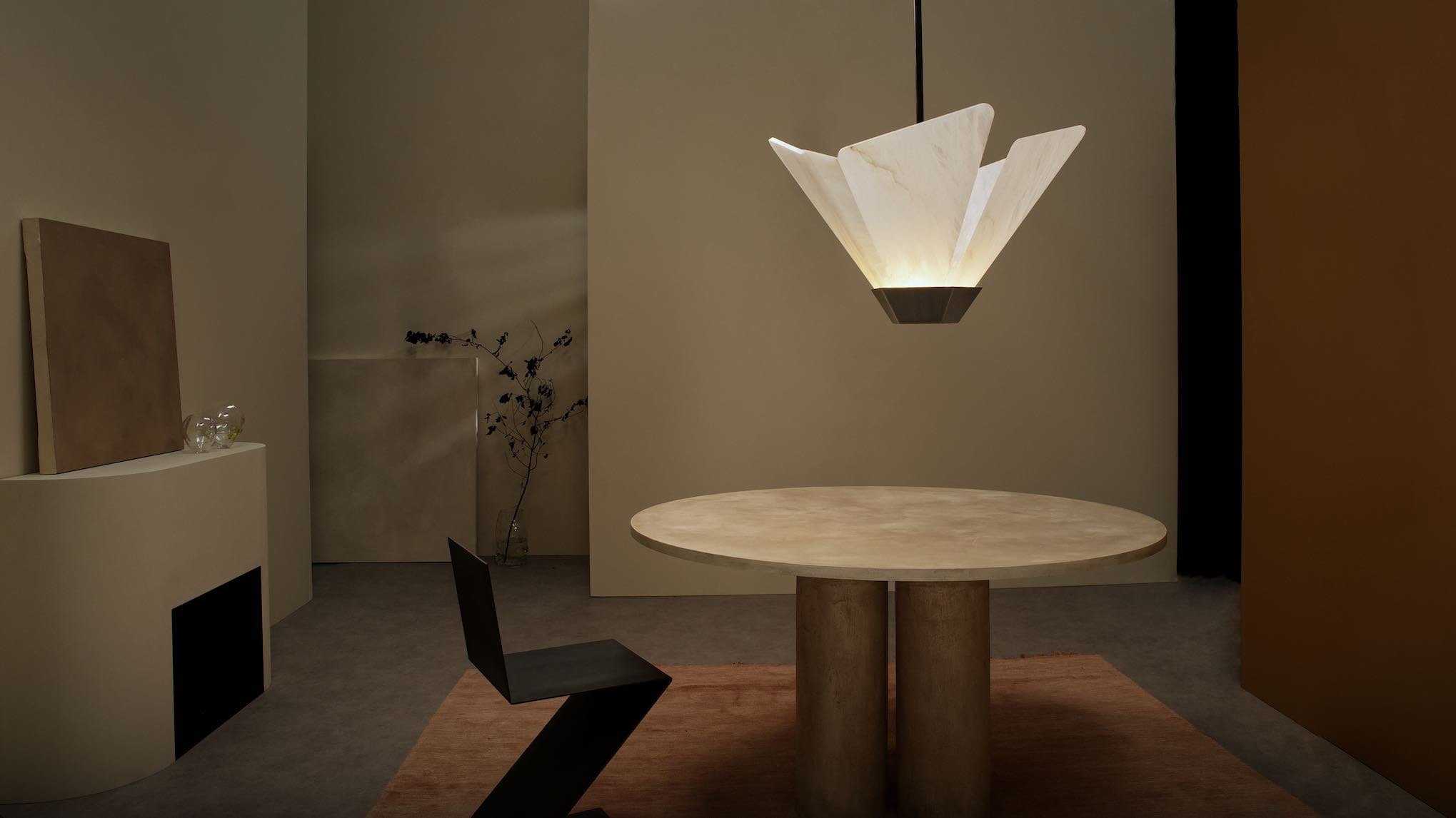
The SHARD PENDANT by CTO Lighting, with its pure brass pentagon base and honed alabaster or tinted glass shade, is a piece that resolves the dining room's requirements precisely. Alabaster transmits light with a diffused warmth that glass cannot replicate, and the brass hardware reads with the authority the dining context demands.
DISCOVER DINING ROOM PENDANT LIGHTS AT GRAYE
How Kitchen Pendant Lighting Balances Task Performance with Visual Restraint
Kitchen pendant lighting presents a different set of requirements from those of the dining room. Over a kitchen island, the fixture must deliver adequate task illumination across a work surface while remaining visually subordinate to the architecture of the kitchen itself. Multiple pendants in a linear arrangement over an island are often more effective than a single large fixture, as they distribute light more evenly and establish a rhythmic element that reinforces the horizontal emphasis of the counter below.
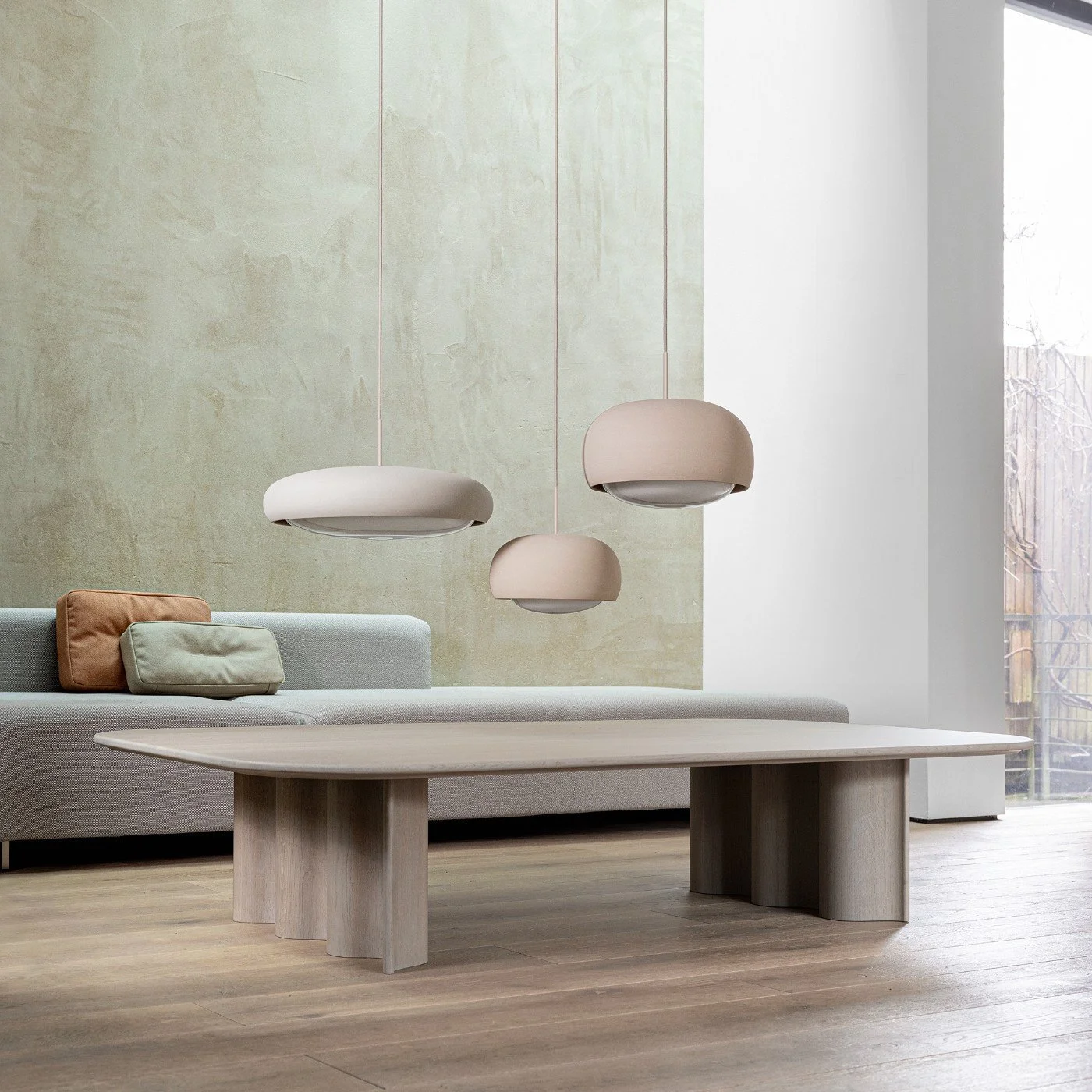
The GEMA L CEILING LIGHTING, BY ZEITRAUM, approaches this balance through sculptural simplicity. Its mouth-blown glass diffuser appears to float within a refined metal frame, creating a composition that feels both light and architectural. The soft diffusion of light supports everyday tasks without introducing unnecessary visual weight, allowing the surrounding materials, cabinetry, and stone surfaces to remain the defining elements of the kitchen.
Living Room Pendants and the Logic of Zone Definition
In an open-plan living room, modern pendant lights perform a spatial function beyond illumination. Positioned above a coffee table or seating group, a pendant establishes a visual ceiling within the room, creating a sense of enclosure that makes the seating arrangement feel settled and defined.
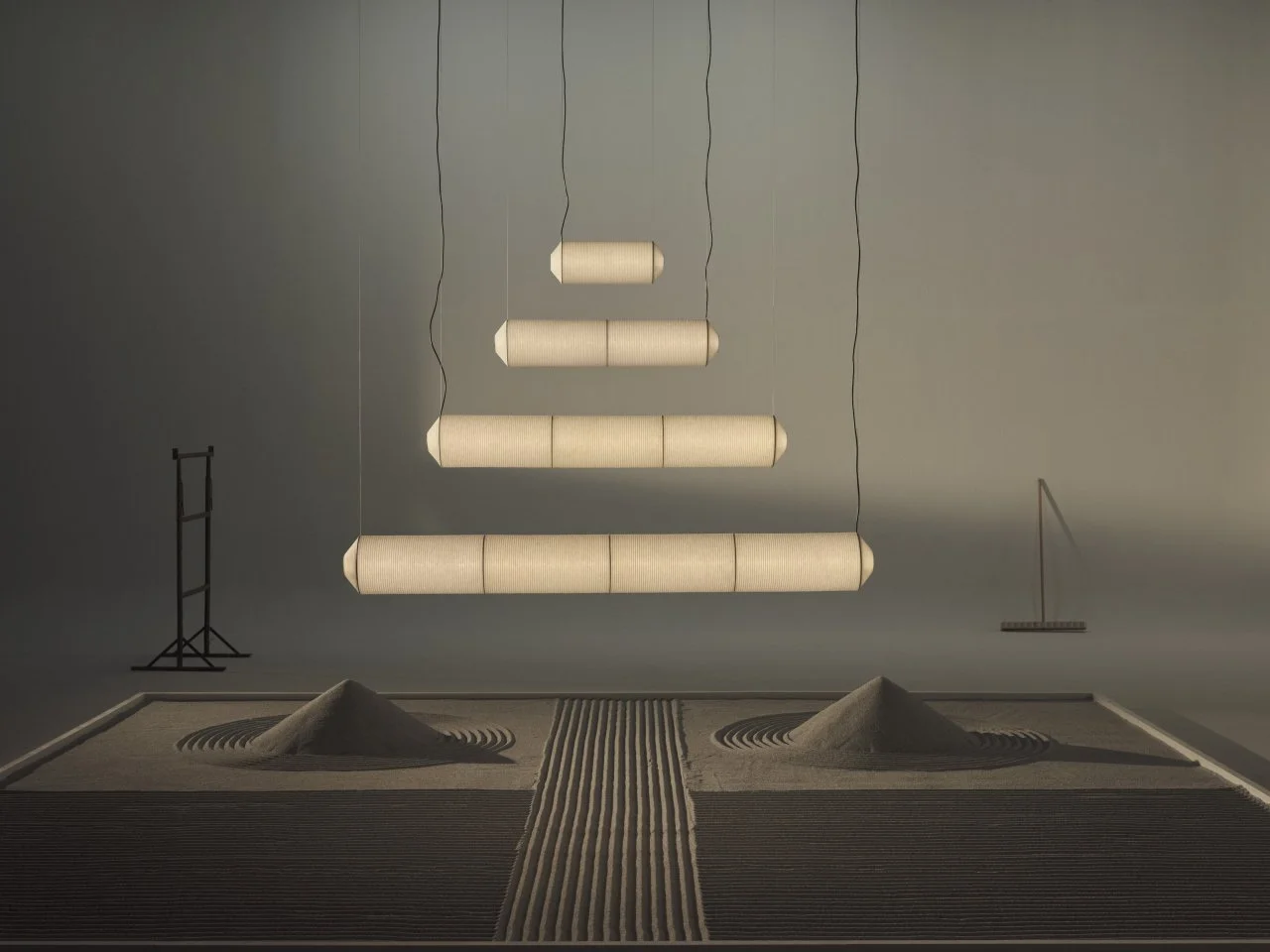
The TEKIO HANGING LAMP by SANTA&COLE, a family of pendants constructed from Japanese washi paper and black cord, produces a diffused warm light that is well-suited to the living room's atmospheric requirements. The material is lightweight and translucent, giving the fixture a quiet presence that does not compete with the furniture composition beneath it.
Statement Ceiling Fixtures That Hold the Room's Visual Center
Not every pendant is chosen primarily for its light output. In a double-height entrance hall or a generous reception room, the hanging light fixture may function as a sculptural anchor, a piece whose formal presence gives the room its primary vertical focal point.
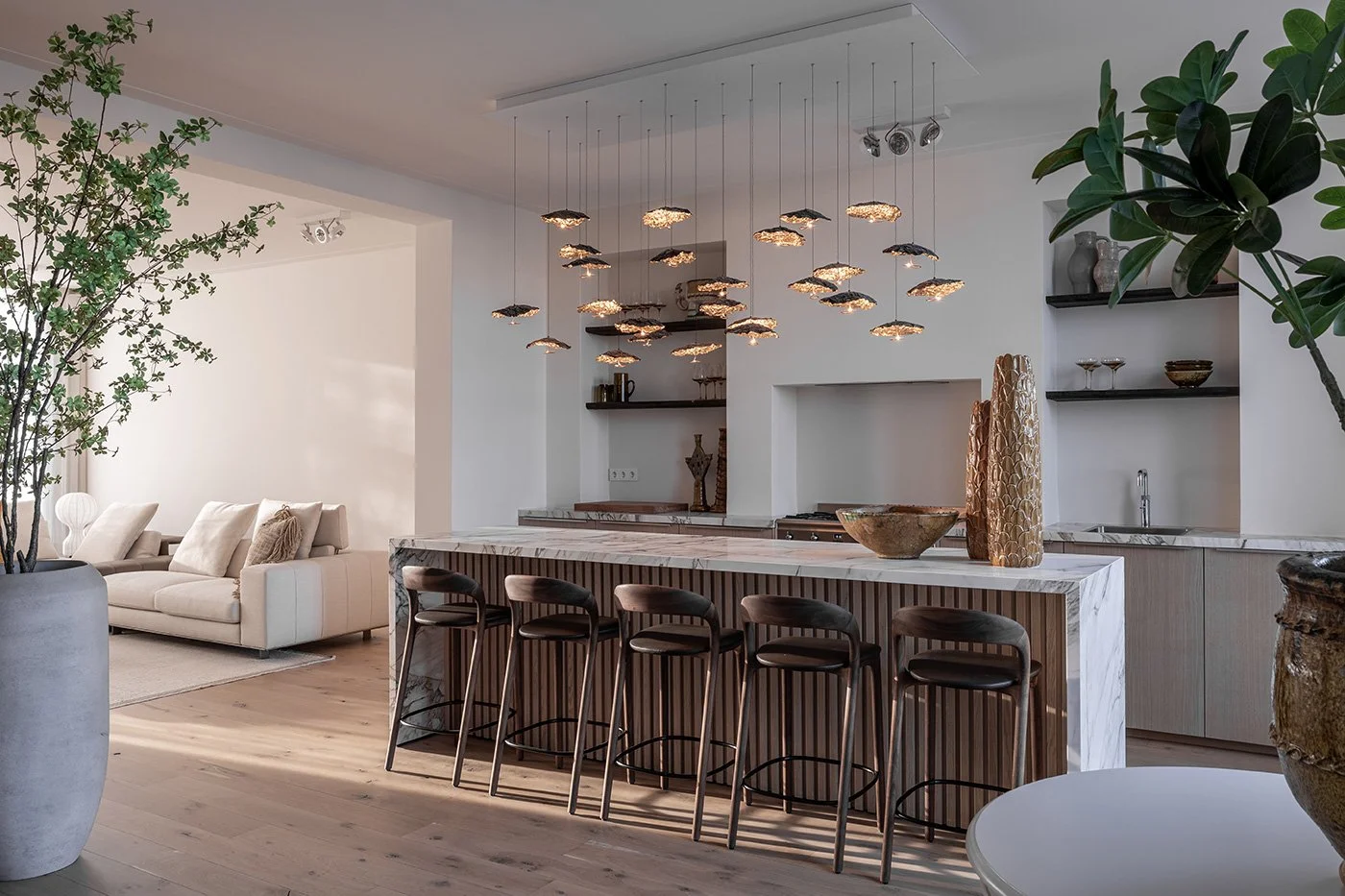
The GOLD MOON CHANDELIER by Catellani&SMITH, with its black and gold-wrapped LED lights, operates at this scale. The piece reads as a composed object in its own right, with the light it emits being secondary to the visual presence it establishes. For rooms where the ceiling height and spatial volume call for something with genuine architectural weight, this is the kind of fixture that delivers without resorting to decorative excess.
Refined Material Choices That Define Luxury Pendant Lighting
The material specification of a pendant is what separates a fixture that merely functions from one that contributes meaningfully to the room's design. As discussed in modern chairs for the living room, a piece's three-dimensional material presence shapes how a room reads at every hour of the day, and hanging light fixtures are no different.
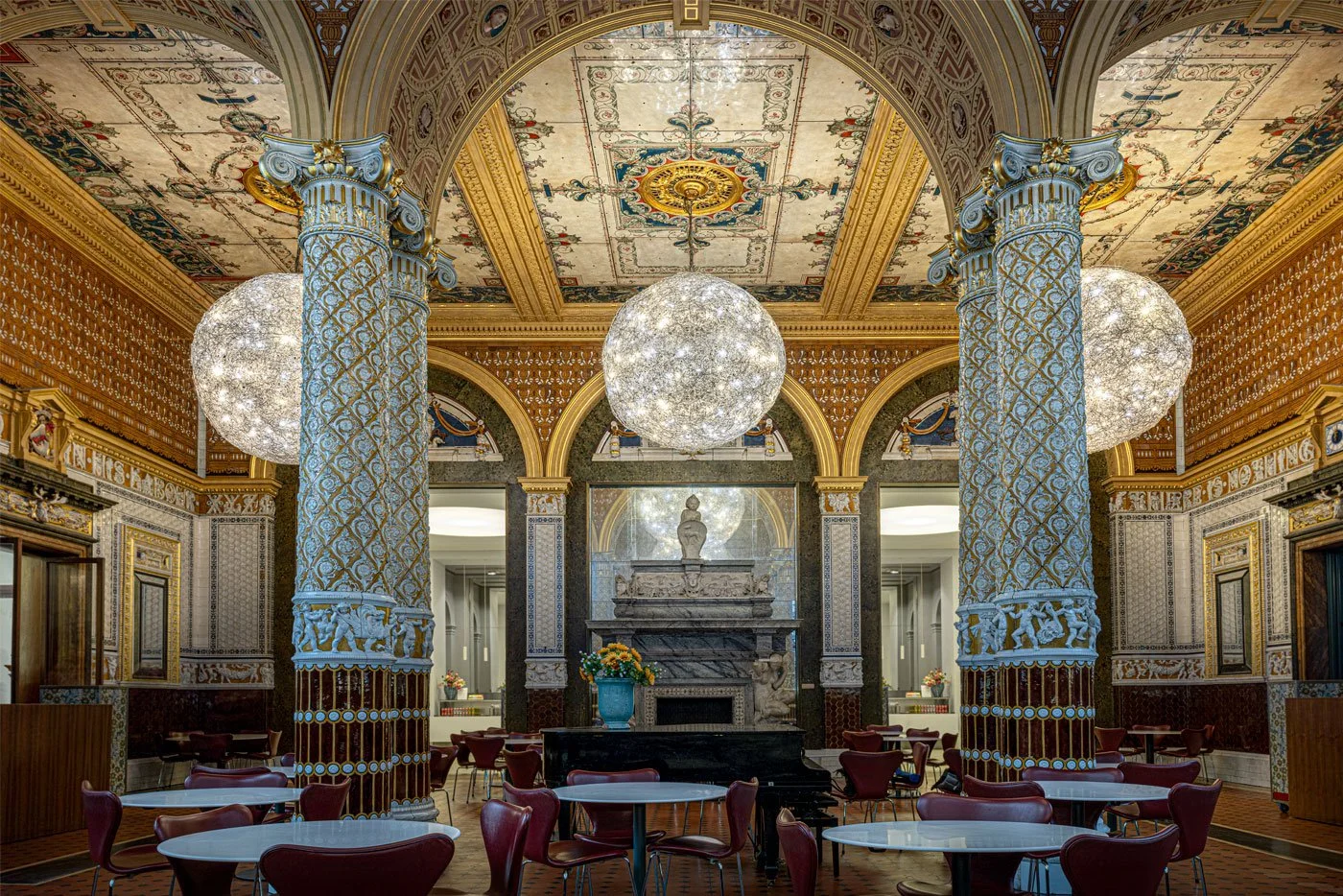
The Fil de Fer chandelier by Catellani & SMITH, hand-formed in aluminum or gold with integrated LED lights, demonstrates how material process and light output can be unified in a single object. The hand-coiled aluminum reads with a textural depth that manufactured forms cannot replicate. Suspended in a study or a primary bedroom, it introduces warmth at ceiling height without requiring an elaborate installation.
Curate Your Ideal Lighting Scheme with Graye
Pendant lighting is one of the most consequential decisions in a considered interior, and the range of contexts it must serve demands an equally considered approach to selection. At Graye, our ceiling lighting collection brings together European designers who treat suspension fixtures as spatial instruments rather than decorative additions.
Speak with our design specialists to identify pendant lighting solutions that align with your home's architecture, material palette, and the quality of light you want each room to have.
CREATE A LIGHTING PLAN WITH GRAYE
FAQs
-
The ideal number depends on your island's length and the size of the pendants. Multiple smaller pendants usually provide more even lighting and a better-balanced look than one oversized fixture.
-
Yes. Standard ceilings suit compact pendants, while higher ceilings can accommodate larger fixtures with longer drops that maintain visual balance.
-
Pendant lighting is best used as part of a layered lighting scheme rather than the only light source. Pair it with bedside or wall lights, and choose a dimmable fixture for added flexibility.
-
A pendant typically features a single light source, while a chandelier has multiple lights spread across a wider structure. Modern pendant designs, however, can offer the same visual impact as chandeliers.