
Curated Bespoke Living Room Furniture for Statement Interiors
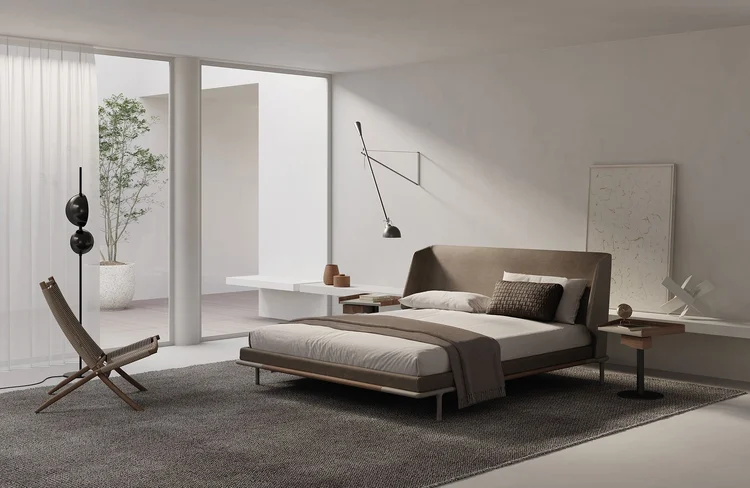
The living room is the space that works the hardest in any home. It welcomes visitors while absorbing the rhythms of daily life.
It must support reading, conversation, entertaining, and the quiet hours of an evening, all while maintaining a sense of order that resists the gradual disorder of use.
Bespoke living room furniture, designed around the exact dimensions of a room, its natural light, and the habits of the household, is the most direct way to achieve this coherence without compromising individuality.
Why Bespoke Speaks Where Off-the-Shelf Falls Silent
The argument for bespoke furniture is not about craftsmanship, although that matters. It is fundamentally about fit. Spatial fit, functional fit, and aesthetic fit can only be achieved when a piece is designed specifically for its setting.
A sofa proportioned for a large open-plan loft can overwhelm a more compact reception room. A shelving wall aligned precisely with a room’s ceiling height and architectural rhythm can transform the perception of space in a way that no freestanding unit can replicate. When furniture is resolved to the room’s geometry, it feels inevitable rather than imposed.
Bespoke living room furniture also allows for material decisions that standard production cannot accommodate.
A sectional upholstered in a high-performance wool blend chosen for durability and texture. A coffee table crafted in honed Pietra Serena rather than factory-polished marble. A media unit finished in a custom stain that responds to existing timber flooring.
These decisions produce interiors that cannot be duplicated elsewhere because they arise from a specific context.
Seating as the Room’s Spatial Logic
In most living rooms, seating defines the spatial order. The placement of sofas and chairs determines circulation routes, sightlines, and the tone of conversation. These are spatial questions before they are social ones.
Italian design houses such as Living Divani have long approached modular seating as a form of spatial architecture. Their systems allow configurations to be built from carefully proportioned modules, enabling seating arrangements that are calibrated to the room rather than forced into it. Even small dimensional adjustments can dramatically alter how balanced a space feels.
Designers such as Piero Lissoni treat the sofa not as a decorative object but as an architectural element. His seating designs rely on proportion, depth, and restraint instead of overt stylistic gestures.
The result is furniture that reads differently from a distance than it does up close. From across the room, the silhouette is disciplined and composed. At hand, the upholstery depth and construction reveal their comfort and technical refinement.
Seat depth, back height, and cushion composition are not trivial details. A seat depth of 600 millimeters supports upright conversation, while deeper formats of 900 millimeters or more encourage relaxed lounging.
High-resilience polyurethane foams wrapped in down offer softness but require maintenance, while advanced foam and fiber blends provide durability with reduced upkeep.
Bespoke living room furniture specifications allow these variables to be aligned with how the room is actually used.
The Role of the Centerpiece
A well-considered living room contains one object that anchors the space materially or visually. This centerpiece is not decorative in the superficial sense. It is structural in its influence.
The anchoring piece might be a substantial stone coffee table with enough mass to ground a seating arrangement. It might be a sculptural armchair in a contrasting material. It might be a low sideboard in oxidized metal that introduces tonal depth to a neutral interior.
When the centerpiece is correct, other decisions begin to align around it. Material tones calibrate themselves against it. Upholstery textures respond to their surface. The scale of surrounding pieces finds equilibrium. When it is wrong, the room struggles to settle.
Studios such as De Castelli create furniture that performs this anchoring role effectively. Working with steel, iron, and copper, the atelier produces pieces with nuanced finishes that shift subtly under light.
Introducing a metal console or side table into a room dominated by soft textiles creates contrast that clarifies both elements. The hardness of metal makes upholstery feel more inviting. The softness of textiles tempers the metal’s presence.
Joinery, Bookshelves, and the Architecture of Display
The living room is also the place where cultural life becomes visible. Books, art objects, ceramics, and collected pieces require thoughtful display. The way these objects are held influences whether a room feels curated or crowded.
Bespoke joinery offers a noteworthy advantage here. Shelves designed to the precise height and width of a wall can align with ceiling lines and architectural features, reading as part of the room rather than as an addition.
Integrated lighting, concealed cable management, and carefully proportioned vertical divisions create visual rhythm.
Shelf depth is a particularly important detail. Standard bookcases default to depths of 300 millimeters, which can be excessive for most books and create shadowed recesses behind objects.
Conversely, depths under 220 millimeters may not accommodate larger art books. A calibrated depth of 240 to 260 millimeters suits the majority of hardbacks while maintaining visual clarity.
Material continuity between joinery and other furniture strengthens cohesion. A shelving unit in lacquer that matches a media console, or in veneer that echoes a coffee table, reinforces compositional unity.
Acoustic considerations can also be addressed through bespoke joinery. Upholstered panels integrated within shelving walls gently improve sound absorption, particularly in large rooms with hard flooring and minimal soft furnishings.
Commissioning and Collaboration
Commissioning bespoke living room furniture is most successful when approached as a collaboration. The designer or gallery contributes technical knowledge, material expertise, and familiarity with makers. The client brings insight into daily routines, entertaining habits, and long-term aspirations for the space.
Graye’s residential design practice approaches this process through curation rather than simple sourcing. Working with established European brands such as Living Divani and De Castelli ensures consistency in design language and production quality. Each recommendation is grounded in experience with how these pieces perform in real interiors.
This curated approach reduces risk. Instead of exploring an open-ended marketplace, clients engage with a defined selection of makers whose craftsmanship, sustainability standards, and technical capabilities are well understood.
Living With What You Have Chosen
The ultimate measure of bespoke living room furniture is not its appearance in a photograph but its performance over time. Materials age, upholstery softens, metal develops patina, and timber deepens in tone.
High-quality hardwood frames, such as kiln-dried beech or ash, provide structural stability over decades. Eight-way hand-tied springs or advanced webbing systems affect how a sofa maintains its shape. Removable covers or professionally cleanable fabrics extend longevity.
Throughout the years, the pieces become embedded in the life of the home. Their presence feels earned and not temporary. This is the difference between furnishing and collecting with intention.
Customized design, at its best, creates rooms that do not look resolved on completion but continue to feel resolved as they are lived in.
FAQs
1. How do I determine the correct sofa size for my living room?
Allow at least 750 to 900 millimeters for main circulation paths. The sofa length should relate to the wall width, typically occupying two-thirds to three-quarters of the available span for visual balance.
2. Are modular sofas structurally weaker than fixed-frame sofas?
Not when engineered properly. High-quality modular systems use reinforced steel connectors and hardwood frames that maintain rigidity while allowing flexible configurations.
3. What is the ideal shelf depth for bookshelves in a living room?
Most hardback books fit comfortably within 240 to 260 millimeters. Deeper shelves can create visual shadowing unless designed for oversized art books or objects.
4. Which upholstery fabrics are best for high-use living rooms?
Wool blends and high-performance fabrics with Martindale ratings above 25,000 rubs are suitable for heavy domestic use while retaining texture and color stability.
5. Does bespoke living room furniture hold its value better than mass pieces?
Pieces from established European makers with documented provenance and high-quality materials tend to retain value more effectively, particularly limited editions or designer collaborations.
