
Built-In Storage Solutions: Integrating Function Seamlessly into Interior Architecture
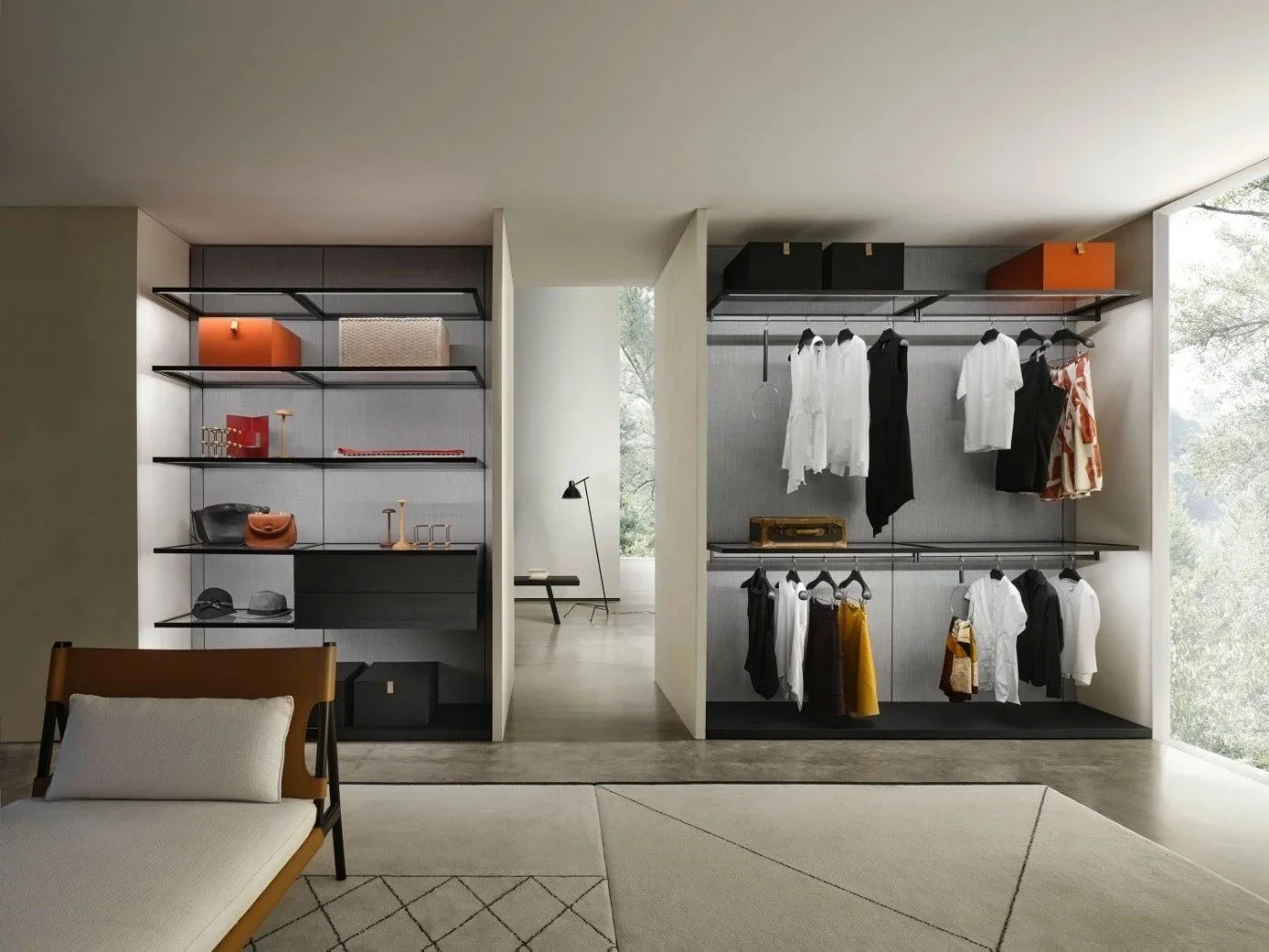
In modern interior architecture, the distinction between structure and utility has become increasingly refined. Storage is no longer treated as an accessory placed against a wall, but as a spatial instrument embedded within it. The most resolved residential environments are those in which storage participates in the architectural envelope, shaping volume, guiding movement, and establishing visual order.
Built-in storage solutions, when approached with extreme care, do not behave like furniture. They operate as planes, define boundaries, and absorb complexity so that the room itself can remain calm. This is not an aesthetic indulgence but a structural strategy.
Graye’s partnership with Porro reflects this philosophy. Under the art direction of Piero Lissoni, Porro has pursued the dissolution of cabinetry into architecture, creating systems that read as self-supporting volumes.
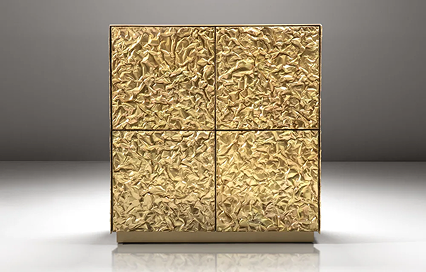
Froissé
Sculptural metal-clad cabinet featuring a textured DePiqué finish that evokes fabric-like folds, revealing a refined black walnut core for a striking, multi-sensory design statement.
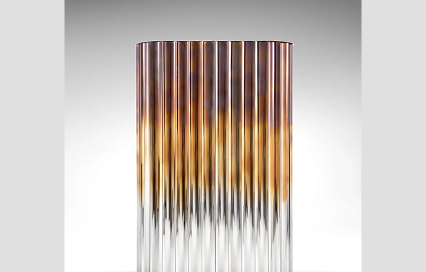
DORICA
Storage cabinet with fluted, Doric column-inspired concave slats and integrated lighting, featuring a drawer for functional storage and a sculptural architectural presence.
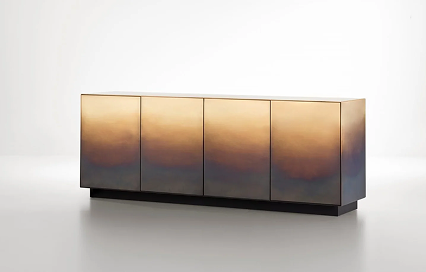
MAREA
Marea sideboard and dresser. Made in copper, stainless steel, or brass. The interior is finished in natural birch.
From Cabinetry to Architectural Volume
To understand the power of integrated storage, one must shift perspective. A cabinet attached to a wall is an object. A full-height system spanning floor to ceiling becomes a plane. When joints align precisely with ceiling grids and base conditions, the system reads as architecture.
Lissoni’s discipline lies in the mastery of the void. In minimalist interiors, the absence of clutter is not incidental but constructed. Storage is concealed within continuous volumes so that horizontal and vertical lines remain uninterrupted. The eye travels without obstruction, reinforcing spatial clarity.
Porro’s System collection exemplifies this transition. Its modular framework allows the structure to oscillate between opacity and openness. Closed volumes conceal necessity. Open shelves introduce rhythm. The system can function as a wall, divider, or gallery, depending on how transparency is modulated.
This ability to shift between concealment and display transforms storage from furniture into infrastructure.
Spatial Dynamics and Movement
Integrated storage influences circulation, whereas a freestanding bookcase interrupts movement. However, a built-in system can guide it.
In open-plan environments, storage volumes can function as room dividers without erecting solid walls. Dual-access modules allow a single system to serve both dining and living areas. Light continues to penetrate the floor plate, yet zones are defined.
The geometry must respond to the architecture; vertical uprights establish cadence, and horizontal shelves reinforce datum lines. Depth is calibrated to avoid visual heaviness.
When storage is aligned with spatial logic, it clarifies rather than crowds. Movement becomes intuitive.
Material Continuity and Architectural Language
Material selection determines whether a storage system reads as integrated or imposed. High-grade timbers such as eucalyptus or carbonized oak introduce density and warmth. Glass panels framed in slender metal preserve transparency while maintaining structure.
Metal uprights provide precision, and the Timber panels soften the volume. The contrast between organic grain and industrial detail produces equilibrium.
Low-profile consoles can be incorporated into larger storage runs, extending the horizontal line without fragmenting the wall. These elements emerge from the same structural logic as the surrounding system.
Continuity of finish is essential. When materials repeat subtly across millwork and adjacent surfaces, the architecture feels unified more than assembled.
Concealed Mechanisms and Invisible Technology
Luxury in built-in storage solutions is defined by what remains unseen. Porro’s patented integrated lighting system conducts electricity through structural supports, eliminating visible cables. Shelves can be repositioned without disrupting illumination. Light follows structure rather than competing with it.
The effect is diffused clarity. Objects are revealed without glare. Materials remain the focal point.
Opening mechanisms are similarly refined. Pivot hinges and sliding tracks are concealed within frames, allowing panels to appear as uninterrupted planes. In kitchens or multipurpose rooms, pocket doors enable entire work zones to disappear when not in use.
This ability to close the architecture is fundamental in contemporary interiors, where spaces oscillate between activity and stillness.
The Bedroom as Integrated Sanctuary
In private zones such as the bedroom, built-in storage solutions must balance function with restraint. The wardrobe should not dominate the sleeping volume but support it.
Systems like Boutique Mast introduce a linear framework of slender uprights, creating openness while maintaining structural clarity. Integrated nightstands can extend from headboard panels, preserving floor continuity and eliminating visual fragmentation.
Eco-leather drawer liners and soft-close glass doors introduce a tactile layer that enriches daily ritual. These micro-details are not ornamental but experiential.
When bedroom storage aligns with architectural principles, the room retains calm. The architecture absorbs complexity.
Adaptability and Permanence
Unlike freestanding furniture, integrated storage is conceived as permanent infrastructure. This demands longevity in both material and engineering.
Porro’s modular systems allow for reconfiguration over time. Shelves can shift, compartments can expand, and the structure remains intact even as needs evolve.
This adaptability is not casual flexibility. It is engineered resilience.
Investing in built-in storage reduces material waste and minimizes the cycle of replacement. Solid timber, precision metalwork, and durable finishes ensure that the architecture remains relevant for decades.
Architecture as Ordered Living
As the boundary between furniture and architecture continues to blur, built-in storage solutions become central to the shaping of contemporary interiors. They define not only where objects are placed, but how space is perceived.
When resolved with precision, storage systems become architectural planes that clarify volume and absorb visual noise. They allow the essential to remain visible and the necessary to remain concealed.
The beauty of such interiors lies not in ornamentation but in alignment. Through proportion, material integrity, and concealed mechanisms, built-in storage systems transform utility into structure, creating environments that are disciplined, enduring, and profoundly ordered.
FAQs
1. How does integrated LED lighting function without visible wiring?
Electrical current is conducted through concealed structural supports, allowing shelves to illuminate without exposed tracks or cables.
2. Can built-in storage solutions adapt to irregular ceiling heights?
Yes. Modular systems can be customized to span non-standard vertical dimensions, creating continuous architectural planes.
3. What advantages does eucalyptus wood offer in large storage installations?
Its density and tight grain provide structural stability and a deep tonal richness that anchors larger volumes.
4. How can media equipment be concealed within integrated storage?
Specialized compartments and hollow uprights allow discreet cable routing, preserving visual clarity.
5. What is the benefit of pocket doors in integrated cabinetry?
Pocket mechanisms allow doors to slide into side compartments, eliminating swing clearance and maintaining uninterrupted circulation.
