
How Designers Style Coffee Tables for Luxury Living Spaces
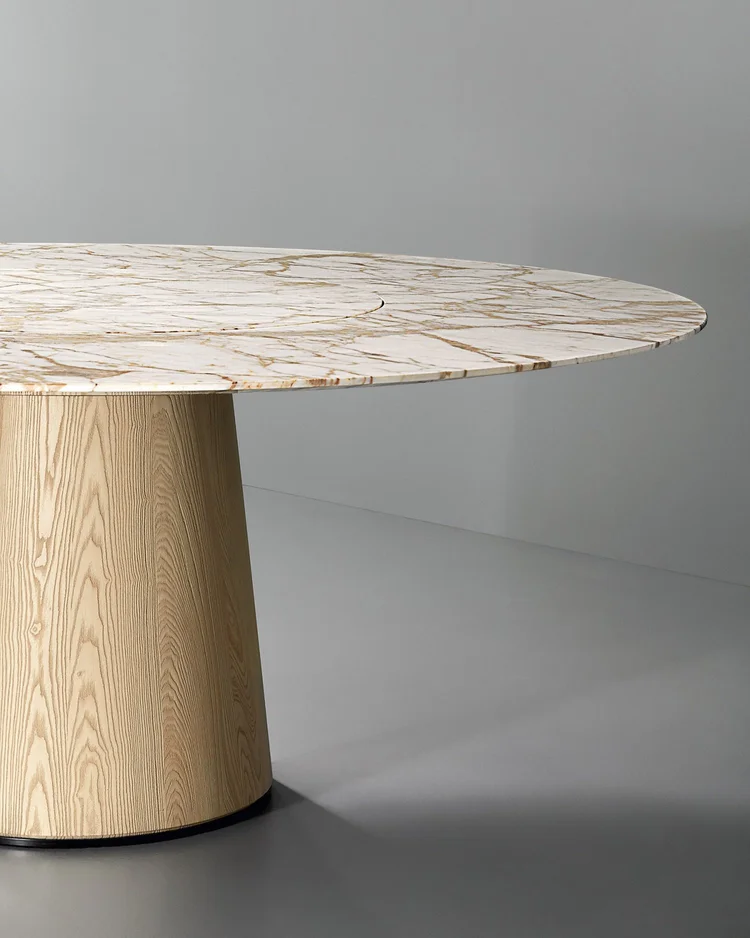
In refined interiors, coffee table styling is not a decorative afterthought but a compositional act. The coffee table sits at the center of the living room’s horizontal plane, mediating between seating, the rug, and circulation.
It is both object and stage. When styled with architectural awareness, it reinforces proportion, clarifies hierarchy, and introduces material dialogue. When treated casually, it fragments the room’s logic.
The most compelling coffee table design does not rely on abundance. It depends on restraint, balance, and the careful orchestration of scale. A coffee table must hold visual weight without competing with the surrounding architecture. Its surface becomes a field where texture, mass, and negative space coexist.
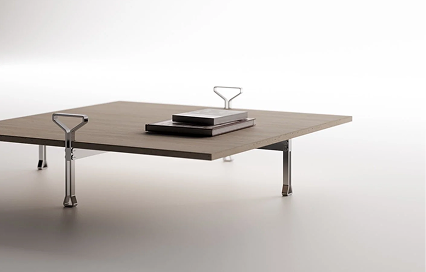
SCHWOB
A modular marble and aluminum table, originally designed in 1959 for Villa Schwob. Custom finishes available.
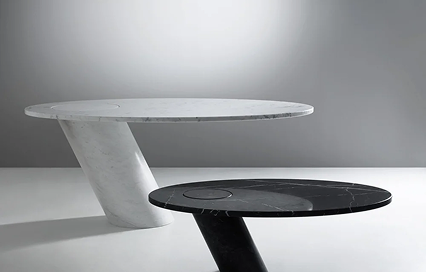
ECCENTRICO
All-marble table with an elliptical top fitted asymmetrically into an inclined cylindrical leg, using weight, friction, and eccentricity to lock the joint without fasteners. Custom sizes and finishes available.
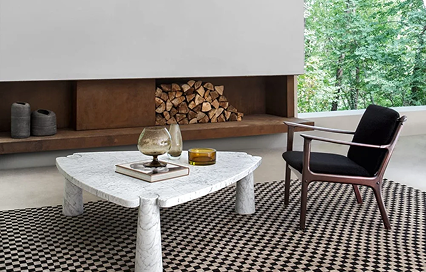
EROS
A modular table system available in various shapes and sizes, each with uniquely embedded joints. Eyelets at the rims and corners eliminate fragile zones, creating a refined, structurally smart design.
The Coffee Table as Horizontal Datum
Before any object is placed, the coffee table itself must be understood as a datum within the room. It anchors the seating composition and defines the central void between sofas and chairs. Designers begin by studying its geometry, whether rectangular, square, oval, or organic, and aligning styling decisions to that geometry.
On elongated tables, compositions follow a linear rhythm, distributed in measured intervals along the axis. On round or sculptural forms, objects are arranged to preserve curvature and maintain flow. The styling should reinforce the table’s shape rather than contradict it.
Material influences strategy. A honed marble slab requires minimal intervention, as its veining already acts as an ornament. A lacquered surface demands careful control of reflection. Timber tables benefit from objects that contrast in texture without obscuring the grain.
Coffee table styling begins with respect for the table itself.
Proportion and the Discipline of Scale
Luxury interiors are governed by proportion, and coffee table design must adhere to the same discipline. Objects placed on the table should vary in height and mass, but always in relation to the surrounding furniture. A tall sculptural vessel may interrupt sightlines if it exceeds the eye level of seated guests. Conversely, objects that are too small appear incidental.
Designers work in triads, combining a grounding element, a vertical accent, and a horizontal layer, such as a book. This is not a formula but calibration. The grouping should feel balanced from all angles, particularly in open-plan rooms where the table is visible from multiple vantage points.
Negative space is critical. An expanse of unoccupied surface allows the table’s material to register. Without this breathing room, even the most refined objects lose authority.
Coffee Table Styling and the Narrative of Objects
In an elevated coffee table design, objects are not decorative fillers but narrative elements. A monograph on architecture suggests intellectual engagement. A hand-thrown ceramic bowl introduces artisanal texture. A carved stone object anchors the composition with weight.
The selection should reflect the broader ethos of the room. In spaces defined by European modernism, objects may be restrained and sculptural. In interiors influenced by Californian minimalism, organic forms and muted palettes prevail.
Each piece should possess integrity. Mass-produced accessories dilute the composition. Designers gravitate toward items with provenance, sourced from galleries or ateliers aligned with the room’s sensibility. Within curated environments shaped by Graye, such selections carry cultural context instead of mere ornament.
Objects should converse quietly rather than attempting to compete.
The Architecture of Layering
Layering introduces depth without clutter. A stack of books creates a platform that elevates smaller objects, establishing vertical variation while maintaining cohesion. The top book may align tonally with upholstery or art, reinforcing continuity.
Trays serve both practical and aesthetic roles. They gather smaller pieces into a defined boundary, preventing visual dispersion. On larger tables, multiple trays can articulate separate zones within the surface.
Layering must remain disciplined. Excess stacking undermines elegance. Each additional element should justify its presence through proportion or contrast.
Coffee table designing is, at its core, an exercise in editing.
Material Contrast and Surface Dialogue
A successful composition relies on subtle material contrast. On a stone table, glass or metal objects introduce lightness. On timber, ceramics, and textiles soften density. Contrast should be tactile rather than chromatic, allowing surfaces to interact through texture and sheen.
Reflective objects require caution. Polished metal or mirrored surfaces amplify light but can disrupt calm if overused. Matte finishes typically align more comfortably with luxury interiors.
The exchange between object and table should feel intentional. When styling an intricate stone piece, designers may choose to leave the table largely bare, allowing the material to remain the primary focus.
Height Variation and Sightline Preservation
Coffee tables sit within primary sightlines of seated guests. Styling must preserve conversational openness. Objects should not obstruct views across the table, particularly in intimate seating arrangements.
Height variation should occur within a contained range. A low sculptural bowl, a modest stack of books, and a mid-height vessel create hierarchy without interference. Tall branches or florals may suit expansive rooms, but should remain restrained in scale.
Designers frequently assess compositions while seated, ensuring that the table supports interaction, not interrupts it.
Seasonal Shifts and Evolving Compositions
In luxury interiors, styling evolves gradually over time. Seasonal shifts in light or mood may prompt changes in object selection. In winter, heavier materials such as stone or dark ceramics may dominate. In summer, lighter glass or pale wood can introduce airiness.
These adjustments need not be dramatic. Small shifts maintain freshness while preserving the room’s identity. Coffee table styling is dynamic, yet anchored in a consistent material language. Instead of being static, the composition should feel lifelike.
The Role of Absence
Perhaps the most overlooked principle in coffee table design is absence. Not every table requires elaborate composition. In some interiors, a single sculptural object placed deliberately at the center can convey greater authority than multiple layers.
Absence allows architecture to breathe. It communicates confidence. Luxury is often found in what is withheld. The coffee table should never feel burdened.
FAQs
1. How many objects should be placed on a coffee table in a luxury living room?
Usually, three to five elements arranged in a balanced grouping are sufficient. Excess objects dilute clarity and disrupt proportion.
2. Should the coffee table design match the rest of the room exactly?
It should align in material language and tone, but subtle contrast in texture or form adds depth without fragmentation.
3. How do designers prevent coffee tables from feeling cluttered?
They prioritize negative space, limit object quantity, and use trays or book stacks to contain smaller items within defined zones.
4. Can tall floral arrangements work in coffee table styling?
In larger rooms, restrained arrangements may succeed, but they should not obstruct sightlines or dominate the composition.
