
Dining Table Centerpiece Ideas That Feel Effortlessly Curated
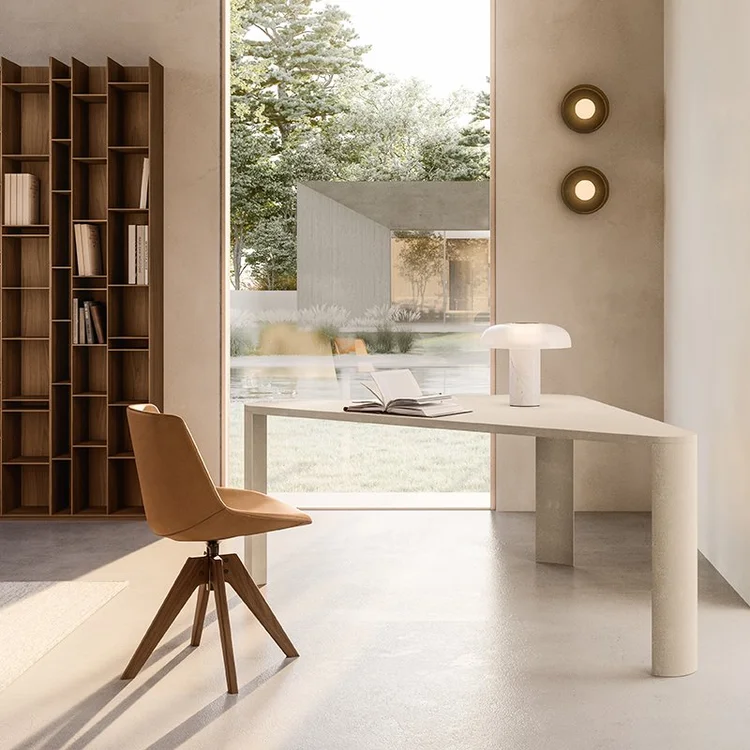
The dining table centerpiece is the element of the dining room most frequently treated as a decorative afterthought and most capable of transforming the room's daily character.
It is the surface at eye level across the table from every seated position, the plane that mediates between guests in conversation, and the horizontal field that receives and reflects the quality of light from above.
Dining table centerpiece ideas, at their most considered, are not about decoration but about composition: the deliberate placement of objects whose material character, scale, and relationship to one another produce a visual field that enriches the dining experience without competing with it.
The Centerpiece as Spatial Mediator
The dining table's centerpiece zone occupies the horizontal center of the social space that the table creates. It is simultaneously close enough to be examined in detail and distant enough from each seated position to read as a composed whole.
This dual scale is the condition that makes the dining table centerpiece a uniquely demanding design problem: the objects chosen must reward close inspection while holding their spatial authority from across the table.
Scale is the most critical parameter. An arrangement that is too tall interrupts sightlines between guests; one that is too low disappears beneath the table's perceptual horizon.
The generally accepted maximum height is 30 to 35 centimeters, which keeps the arrangement below the seated eye line while providing sufficient vertical presence to hold the table's spatial center. Objects below 15 centimeters risk losing their compositional authority. The most effective dining table centerpiece ideas use the quality of the objects themselves rather than their height to command attention.
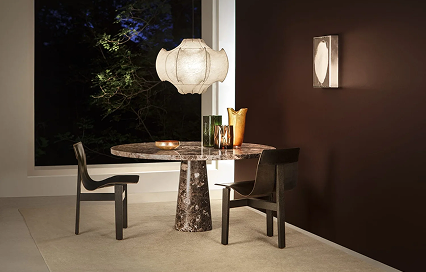
TRE 3
A chair with three legs connected by a sturdy T-shaped support, and a single piece of leather seat. Available in various finishes.
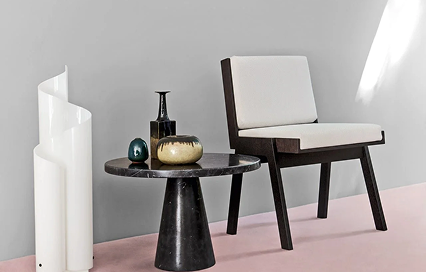
CLUB 44
A sculptural, architectural armchair defined by its inverted V-shaped leg that supports the armrest. Available in various finishes and with/without armrest.
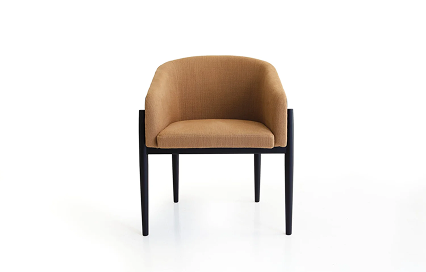
BREZZA
Wooden chair with a soft shell backrest and padded seat, featuring turned black-stained ash legs that reinterpret the Frank chair design with a more refined, elegant form.
Candlelight and the Atmosphere of the Table
Candlelight is among the most technically simple and spatially sophisticated tools available for the dining table. At the table level, a flame produces directional, warm light that animates surfaces around it in a way overhead fixtures cannot replicate. The flatware catches it differently than the glassware, which catches it differently than the faces across the table. This animation gives the dining room its particular social character.
Enzo Catellani's Luna is a candle holder with a rough iron magnetic base and a disc covered in gold, copper, or silver leaf. The magnetic base allows the disc to be positioned and repositioned, introducing an element of intentional adjustment to the centerpiece that makes the piece responsive to the specific table configuration and the lighting conditions of a given evening.
The rough iron base, unchanged and unpolished, introduces a material counterpoint to the reflective quality of the disc above it, producing a piece whose visual interest derives from the deliberate contrast of two material conditions rather than from decorative elaboration.
Gold, copper, and silver leaf each reflect candlelight differently. Gold produces the warmest, most diffuse reflection; copper introduces orange undertones that intensify the fire's warmth; silver reflects more coolly and directionally, reading like a small mirror held above the iron base. The choice among these is a decision about the desired quality of light at the table.
Objects and the Logic of Still Life Composition
The dining table centerpiece does not need to be a single piece. Some of the most resolved centerpiece compositions are assembled from multiple objects of varying heights and materials, arranged not in the symmetrical formality of conventional floral arrangements but in the considered asymmetry of a still life: objects grouped in odd numbers, at different heights, in a tonal range that connects them without uniformity.
Angelo Mangiarotti's Cap53 is a sculptural object produced through casting and polishing, whose simple yet sensual forms emerge from intuition and experimentation. The process highlights the color, shine, and texture of the material, producing a piece whose surface character shifts with the quality of light that falls on it. It functions as a material anchor for the dining table centerpiece composition, bringing its own formal completeness without asking the table to supply its context.
Enzo Catellani's Atman, an oval crystal glass lamp with a nickel base, introduces light itself as a material element. The oval crystal refracts the light source in a way that changes with viewing angle, reading differently from every seated position around the table. The nickel base grounds the floating crystal with a cool precision that contrasts productively with the warmth of candlelight or stone objects nearby.
Negative Space and Restraint in Dining Table Centerpiece Ideas
The most common failure in dining table centerpiece ideas is overcrowding: a centerpiece that fills every available centimeter with competing visual interests. The centerpiece should leave clear space at each end for service, at each side for relaxed elbow placement, and at the center for the objects to breathe.
Restraint is not absence. A single object of genuine material authority placed at the precise center of a cleared table is among the most powerful dining table centerpiece ideas available. It communicates confidence in the object itself.
Graye's objet collection provides exactly this kind of material authority, with pieces whose formal character rewards the singular placement as much as the layered arrangement.
FAQs About Dining Table Centerpiece Ideas
-
In rooms with higher ceilings, a centerpiece of greater vertical presence reads naturally without interrupting the room's spatial scale. In rooms with lower ceilings, compositions that stay below 25 centimeters preserve the openness of the space above the table.
-
A centerpiece that introduces material contrast to the table surface produces a more visually dynamic composition than one that echoes the table's existing material. A marble table benefits from a centerpiece in rough iron or dark ceramic; a timber table is enriched by the introduction of polished metal or crystal.
-
The most effective centerpieces are those that serve a purpose at the table. Candle holders provide light; vessels can hold wine; sculptural objects provide conversation. Purely decorative centerpieces, when they are also well-designed, contribute a quality of cultural intention that elevates the dining experience beyond the functional.
-
A permanent, low-maintenance object of genuine material quality serves everyday use without requiring adjustment. For formal occasions, the same object can be supplemented with additional candle holders, textiles, or seasonal organic elements to create a more layered composition without displacing the permanent centerpiece.
