
Forecast: Modern Living Room Trends for Refined Homes
Explore the Living Room Collection
Living rooms are becoming tactile, flexible, and deliberate. Modern living room trends are less about a sudden style and more about how furniture, material, comfort, and architecture work together. Curved seating, natural stone, warm wood, and richly textured upholstery are shaping interiors that feel contemporary without appearing tied to a season.
Curved Seating Is Softening Architectural Rooms
The strongest curves in contemporary furniture change how people move through and inhabit a room. Rounded sofas create conversational arrangements, soften architectural lines, and allow seating to be approached from multiple directions.
Sectionals Are Becoming More Adaptable
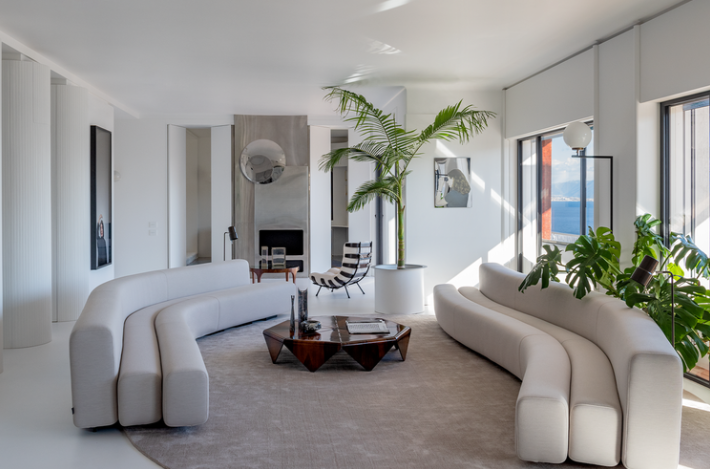
The Osaka sofa by Pierre Paulin offers a clear expression of this direction. Its curved form and removable fabric or leather covers give the piece a clear silhouette while allowing the material choice to shift with the interior. Modular systems can create the same softness across a generous footprint.
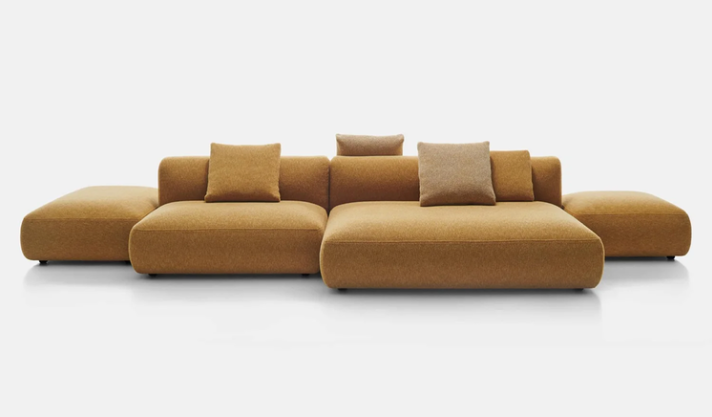
The Cosy Island sofa by Francesco Rota takes flexibility further. Its modular system can be combined into different configurations, allowing the seating plan to respond to the room instead of forcing the room around a fixed sofa.
These pieces show why modern living room trends increasingly concern flexibility. A refined room should support conversation, lounging, entertaining, and quiet use without losing clarity.
Tactile Upholstery Is Replacing Flat Visual Surfaces
Texture is becoming a defining element of contemporary comfort. Bouclé, brushed textiles, wool, and softly finished fabrics bring depth to restrained palettes. Their value lies in how they respond to light and touch.
A textured sofa can soften stone flooring or architectural concrete, while a richly upholstered chair can balance wood and polished surfaces.
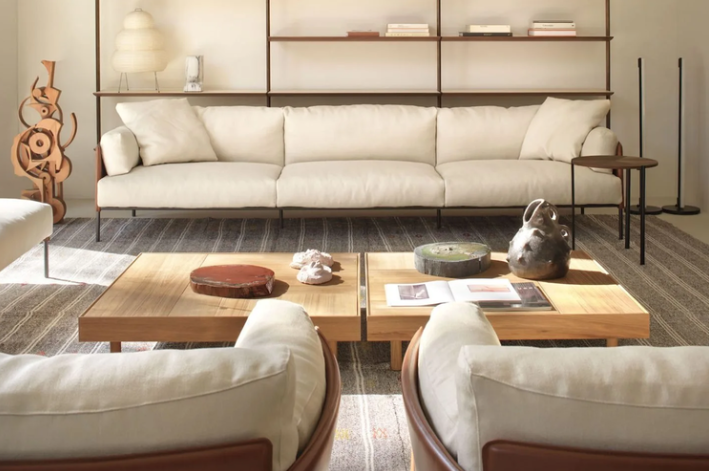
The Greene sofa by David Lopez Quincoces demonstrates another approach to material contrast. Its removable fabric covers are paired with a saddle leather shell, creating a meeting point between softness and structure. The combination gives the sofa tactile character while keeping its silhouette controlled.
Decorating a living room similarly places material selection after the anchor piece, allowing texture to build the room in layers.
Let Texture Remain Selective
A tactile room does not require every surface to be highly textured. One substantial upholstered piece, a wool rug, or a woven accent can be enough. Too many competing surfaces flatten the hierarchy between furniture and architecture.
Organic Stone Shapes Are Bringing Weight to the Room
Stone is moving beyond traditional rectangular surfaces. Rounded edges, irregular silhouettes, and substantial low forms give marble and travertine a more grounded presence.
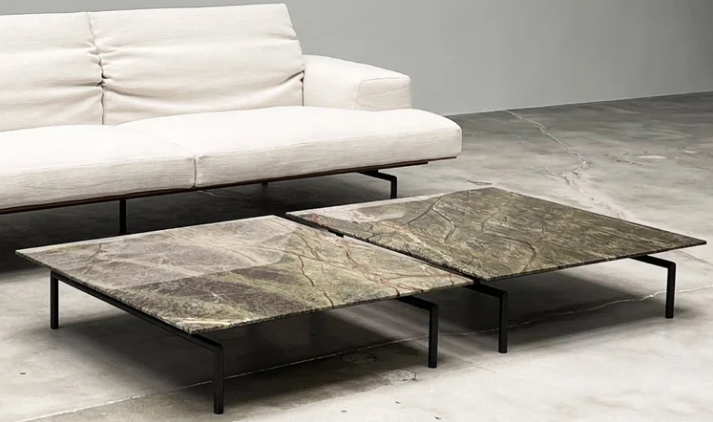
The Sumo table by Piero Lissoni demonstrates how this direction can remain refined. Its low profile combines gunmetal grey metal structures with walnut Canaletto, lacquer, or marble tops. Its structural base and substantial surface create strong horizontal presence without making the room feel heavy.
For a closer look at stone in living spaces, our marble coffee table guide examines how form, veining, finish, and scale affect a table within a seating arrangement.
Use Stone as a Visual Anchor
A stone table can become the room’s fixed point, especially when surrounding upholstery is softer. Choose the shape according to circulation. Rounded profiles work well where people move around the table, while longer forms reinforce a linear seating arrangement.
The objective is to give the room one substantial element around which lighter pieces can gather.
Warm Wood Is Redefining Contemporary Restraint
The return to wood is one of the most useful modern living room trends because it introduces warmth without requiring ornament. Walnut, oak, and other natural finishes bring visible grain and tonal variation into interiors dominated by stone, metal, and neutral upholstery.
Combine Wood With Cooler Materials
Warm wood becomes especially effective when paired with materials that provide contrast. A walnut base beside stone, a wood chair near a metal table, or wood cabinetry against a mineral wall creates a balanced material conversation.
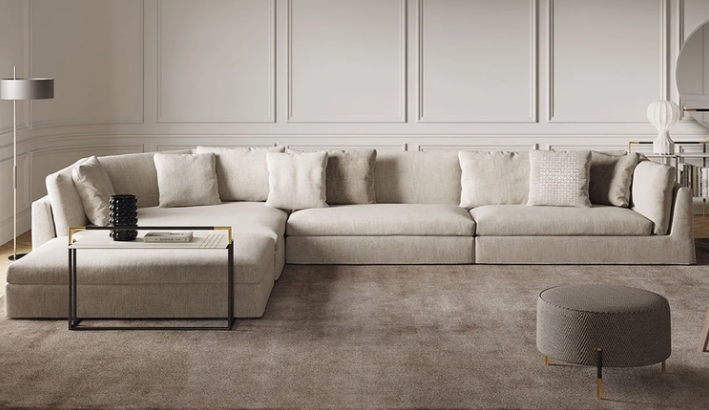
The Arne sofa by Gianfranco Frigerio provides one example. Its system is covered in fabric or leather and supported by a solid walnut base. The wood forms part of the structure and gives the upholstered volume a warmer foundation.
Plan a More Considered Living Room Interior
Lighting Is Becoming Part of the Furniture Composition
Lighting is moving toward sculptural restraint, another direction within modern living room trends. Floor lamps can introduce height beside a sectional, while marble or warm metal fixtures can echo materials elsewhere in the room. These relationships help an open-plan living room hold its identity while remaining connected to adjoining spaces.
Conclusion
The most relevant modern living room trends are grounded in material honesty, adaptable comfort, and stronger relationships between furniture and architecture. Curved sectionals create softer social spaces, tactile upholstery adds depth, stone introduces weight, and warm wood keeps contemporary interiors connected to natural materials.
At Graye, these principles guide a collection designed for rooms that feel current without depending on short-lived fashion.
FAQs
-
Yes. Their practicality depends on scale and configuration. A curved sofa can create natural conversation areas, but its radius should correspond to the room and preserve clear circulation.
-
Bouclé can work well in refined interiors when used selectively. Its raised texture adds softness and depth, particularly against smoother materials such as stone, glass, metal, or polished wood.
-
Choose contemporary silhouettes with visible but restrained wood. Pair walnut or oak with stone, metal, or tailored upholstery so the material contributes warmth without changing the room’s modern character.
-
The right stone depends on the desired tone and maintenance expectations. Marble offers pronounced veining and variation, while travertine tends to provide a softer, more matte character.
-
Materials and proportions generally have greater longevity than decorative motifs. Selecting well-made furniture with adaptable forms, natural materials, and considered scale allows a room to evolve without requiring a complete redesign.