
Creative Home Office Ideas for a Productive Luxury Environment
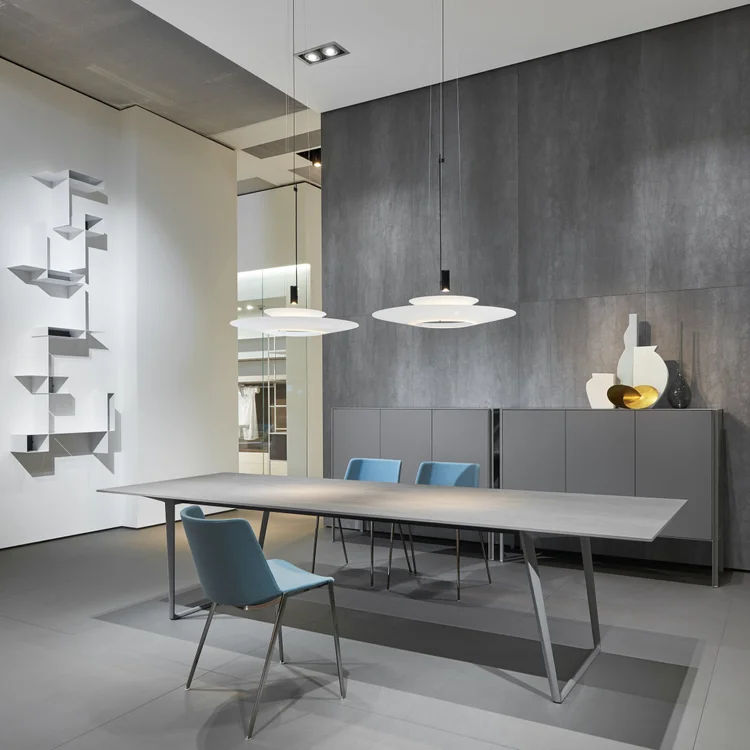
The home office is a room defined by a paradox: it must be deeply personal, shaped to the specific working habits and material needs of the individual who uses it, while also functioning as a disciplined spatial environment capable of sustaining the kind of concentration that professional work demands.
Home office ideas, at the level that Graye's collection speaks to, are not productivity hacks or decoration strategies. They are spatial propositions about what it means to inhabit a working room well, one in which the quality of every surface, the intelligence of every storage decision, and the quantity and character of every light source contribute to a daily experience that is genuinely supportive rather than merely adequate.
The Position of the Desk and the Room's Spatial Argument
The first and most consequential home office idea is the position of the desk within the room. This decision is not merely about personal preference or view. It is an architectural one, with implications for the quality of light on the working surface, the relationship between the desk and the storage behind or beside it, and the experience of the room for anyone entering it.
Positioning the desk perpendicular to the primary window avoids direct solar glare on the screen while maintaining access to peripheral natural light. Placing it against a wall with storage behind and to the sides creates a working alcove, a spatial condition of relative enclosure that supports concentration without isolation. Floating a desk in the room, away from all walls, produces a different spatial experience: one of exposure and centrality that suits collaborative or open working modes.
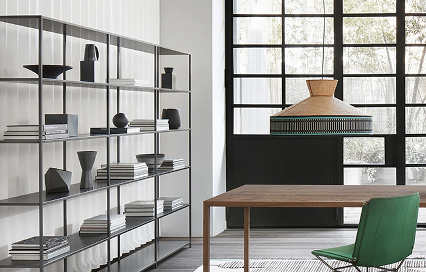
MINIMA
Hanging or floor standing storage system with recycled aluminum uprights, shelving, and lacquered or wooden elements.
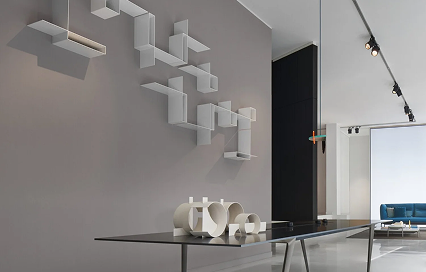
AXY
Metal table with porting options.
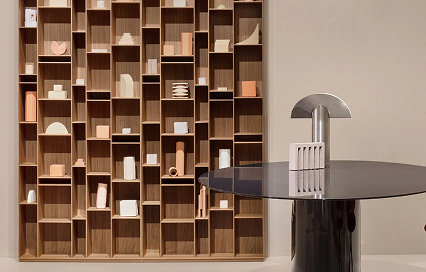
RANDOM
Series of lacquered or walnut Canaletto bookcases with open and closed sections.
Storage as Spatial Discipline
No home office idea is more practically transformative than the serious resolution of storage. A working environment in which the materials of professional life, documents, books, technology, and reference materials are held in a system that is both accessible and visually ordered allows concentration to flow without the constant interruption of visual clutter.
Bruno Fattorini's Minima storage system, with its recycled aluminum uprights and combination of open and enclosed elements, is configurable to the specific wall it occupies and to the specific working life it holds. The aluminum upright is a material decision with genuine formal intelligence: its precision reads as architecture rather than furniture, giving the storage wall an authority that painted timber shelving cannot achieve.
Open shelving for books and frequently accessed materials, combined with enclosed units for the things the eye should not have to manage, produces a wall that is both functional and spatially resolved.
The Role of Light in Concentration
Home office ideas that address only the furniture overlook the most fundamental environmental variable. The quality of artificial light at the working surface determines the quality of sustained focus more directly than the choice of desk material or chair.
A ceiling fixture alone, positioned overhead and uncorrected by task lighting at desk level, produces shadow zones on the working surface and over-illuminates the surrounding room relative to the screen, creating visual fatigue that compounds over a working day.
A dedicated task lamp at desk level, providing 500 to 750 lux of warm-white light directed at the working surface without producing screen glare, is the baseline specification for sustained professional use. David Lopez Quincoces's Graft desk, with its wooden veneer top and gunmetal grey legs, is a surface that responds well to directed task light: the veneer reflects it warmly without the glare that lacquer or glass surfaces produce.
The Chair and Sustained Physical Support
The chair at a home office desk is used for longer continuous periods than any other piece of furniture in the home, which makes its support as important as its form. Jean Marie Massaud's Flow chair, with its lacquered shell, upholstered seat, and choice of metal or wooden base, addresses sustained seating with formal clarity: the shell holds its precision as an object while the upholstered seat provides genuine contact comfort.
A seat height that positions the user's elbow below the desk surface forces the shoulder up and produces upper-back tension; the correct specification places the forearm parallel to the working surface.
The Home Office as a Complete Room
The most resolved home office ideas treat the working room as a complete spatial argument. The Graye office collection approaches it as a room in which every surface, every storage element, and every piece of furniture contributes to an environment of genuine quality.
FAQs About Home Office Ideas
-
An L-shaped layout against two walls maximizes surface area without occupying the center of the room. A single desk against the wall perpendicular to the window is the most common effective solution for compact rooms.
-
This depends entirely on the nature of the work, but the general principle is to provide more storage than you currently need. Configurable systems like Minima allow the balance between open and closed storage to be adjusted as working life evolves.
-
Where floor area allows, a dedicated room for work produces substantially better concentration conditions than a desk within a shared living space. A closing door is among the most effective environmental controls available.
-
Pale to mid-tone neutrals, particularly those with warm undertones, produce working environments that are stimulating without being fatiguing. Highly saturated colors, particularly red and orange, are generally counterproductive for sustained analytical work.
-
Proper placement reduces distractions, improves circulation, and allows the workspace to feel more intentional and psychologically comfortable.
