
How Wide is a Queen Bed? A Complete Mattress Size Guide
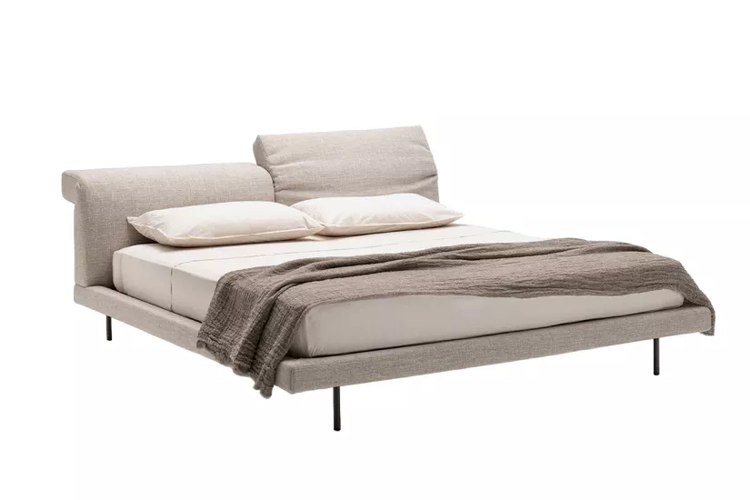
Choosing a bed size involves a more complex set of spatial decisions than the mattress dimensions alone suggest. How wide is a queen bed is a practical question with a specific answer, but it opens onto a broader set of spatial questions: How does this width relate to the room's floor area? What clearance does it leave on each side? How does its scale interact with the headboard, the nightstands, and the visual composition of the wall it occupies?
These are architectural questions, and they determine whether the bed you choose produces the room you intend.
Queen Size Bed Dimensions and the Room's Floor Plan
A standard queen mattress measures 153 centimeters wide and 203 centimeters long (approximately 60 by 80 inches). The bed frame will typically add 5 to 10 centimeters to each dimension, depending on the base design, making the overall footprint approximately 163 centimeters wide by 213 centimeters long as a working planning assumption.
How wide is a queen bed in relation to the room becomes the operative question once the dimension is known. The generally accepted minimum clearance on each side of a bed is 60 centimeters, which allows comfortable dressing movement and nightstand access. On both sides plus the foot of the bed, this means a queen bed configuration requires a room of at least 283 centimeters in width to function without compromise, and a room of at least 273 centimeters in length if the bed is placed against the primary wall with clearance at the foot.
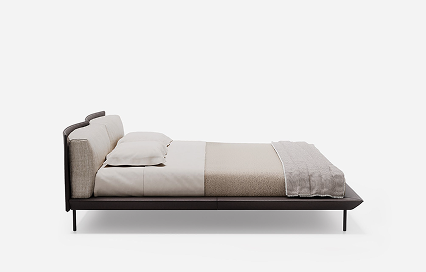
GREENE
Upholstered bed with padded steel-frame headboard, removable goose down cushions, and a two-part bed base with powder-coated steel feet.
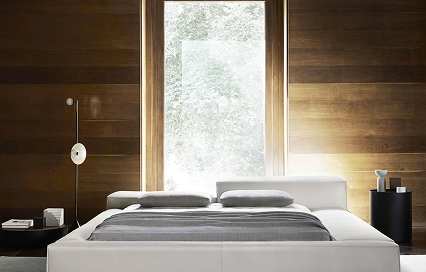
EXTRASOFT
Modular bed comprised of different size elements with fully removable fabric or leather covers and exposed seams.
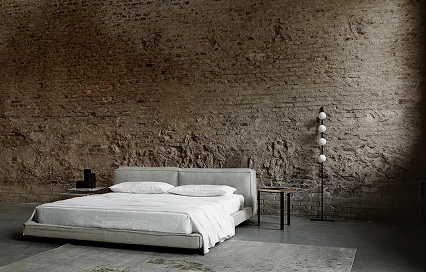
NEOWALL
Bed comprised of soft elements with fully removable fabric or leather covers.
Headboard Scale and the Queen Bed's Wall Relationship
The queen bed's width, 153 centimeters of sleeping surface, is a generous horizontal datum that creates specific demands of the headboard it is paired with. A headboard that is sized exactly the mattress width will read as undersized for the wall behind it, because the visual expectation is for the headboard to extend slightly beyond the mattress on each side, framing the sleeping surface rather than simply matching it.
David Lopez Quincoces's Greene bed, with its padded steel-frame headboard, removable goose down cushions, and two-part base on powder-coated steel feet, addresses the queen format's wall relationship with a headboard that carries sufficient visual weight for the width it occupies. The steel frame gives the headboard a precise perimeter that reads as architectural, while the goose down cushions introduce a softness that the structural frame alone would not provide.
The Queen Bed in the Context of a Composed Suite
The question of how wide is a queen bed becomes spatially productive when it is answered in relation to the entire bedroom suite rather than in isolation. The queen's width determines the nightstand positions, which in turn affect the symmetry or asymmetry of the lighting arrangement, which feeds into the room's overall spatial register.
Piero Lissoni's Rod bed, with its tufted headboard available in leather or fabric with optional button detailing, is a piece whose formal proposition works particularly well at the queen scale. The tufted surface introduces a shadow geometry across the headboard that varies with the quality of light at different hours, giving the wall a quality of visual interest that flat upholstered headboards cannot achieve.
Material Selection for the Bedroom Suite
The queen bed's upholstery establishes the primary textile presence in the room, and the material selected for it should be considered in relation to every other soft surface: the bedding, the floor covering, and the curtaining. Understanding details such as how wide is a queen bed can also influence how these materials interact spatially within the room.
A headboard in linen reads differently against cotton bedding than against silk; a leather headboard introduces a contrast with soft bedding that can be either productive or discordant depending on the room's overall register.
Piero Lissoni's Extrasoft bed, with its modular construction and fully removable fabric or leather covers, gives the queen bedroom a material flexibility that fixed upholstery cannot provide. The exposed seams are a detail that rewards close attention: they read as a formal commitment to constructional honesty, aging with the piece in a way that concealed seaming cannot.
The removable cover system is not merely practical; it is a structural position on the relationship between the upholstered surface and the life that will be lived around it. As the room evolves, as material preferences shift or the domestic context changes, the cover can be updated without replacing the bed's structural logic.
How Wide is a Queen Bed - FAQs
-
A standard queen size bed dimension is 153 centimeters wide. A standard king is 193 centimeters wide. The king is therefore 40 centimeters wider, a difference that is significant in rooms with limited floor area.
-
A room of at least 300 by 350 centimeters allows a queen bed with 60-centimeter clearances on all three accessible sides. Smaller rooms can accommodate a queen but will produce tighter circulation paths.
-
Yes. A headboard that extends 5 to 10 centimeters beyond the mattress on each side reads as architecturally resolved and proportionally appropriate. A headboard sized exactly to the mattress width tends to look undersized for the wall it occupies.
-
With 60 centimeters of clearance on each side, the nightstand should be no deeper than 40 to 45 centimeters to leave comfortable access space. Height should be within 5 centimeters of the finished mattress surface.
-
Yes. Queen beds provide flexibility for different sleeping arrangements while still leaving room for storage and movement in most guest spaces.
