
How to Buy Custom Furniture for a Home That Feels Truly Personal
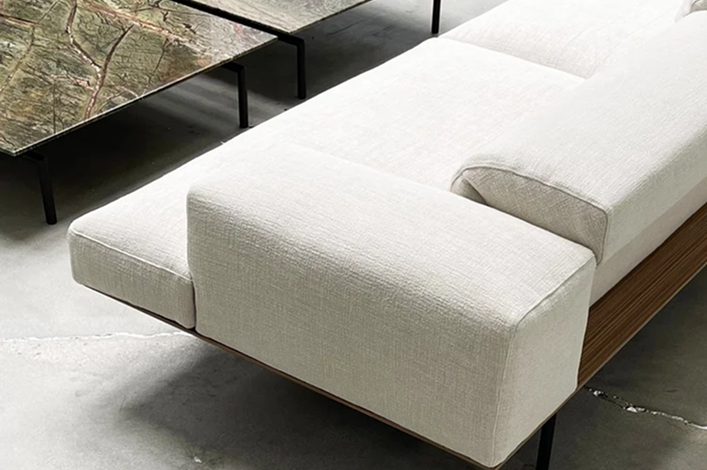
Understanding how to buy custom furniture is a process that begins long before a fabric is selected or a timber is chosen. It is an exercise in spatial resolution. Most successful high-end projects treat furniture not as an isolated purchase, but as an integral part of the room’s architecture.
By framing the decision around the specific needs of your environment, you move beyond mere acquisition toward a home that feels intentionally composed and deeply personal.
Learn What Can Truly Be Customized
Custom furniture offers varying levels of personalization depending on the manufacturer and collection.
Many luxury furniture brands allow clients to select from a wide range of fabrics, leathers, wood finishes, dimensions, and configurations. Modular seating systems may offer multiple layouts, while dining tables can often be specified in different sizes, finishes, or materials.
Understanding these options early in the process helps simplify decision-making and ensures that the final piece aligns with both practical needs and design goals.
When considering how to buy custom furniture, it is helpful to identify which aspects matter most to your project. For some clients, upholstery selection is the priority. For others, scale and configuration are the defining factors.
The Room as the Primary Brief
A custom piece exists to resolve the specific conditions of a room, its ceiling height, the direction of its light, and the flow of movement around it. When considering how to buy custom furniture, the dimensions of the space act as the non-negotiable brief.
A sofa whose depth is calibrated to the distance between a hearth and a terrace door belongs to its environment. Graye’s residential services prioritize this spatial reading, ensuring that every specification is a direct response to the home’s unique architectural language rather than a generic adjustment.
Prioritizing Spatial Logic Over Aesthetics
A common error in bespoke projects is attempting to resolve every variable simultaneously. A more disciplined approach involves a clear sequence: establish the spatial footprint first, then address materiality.
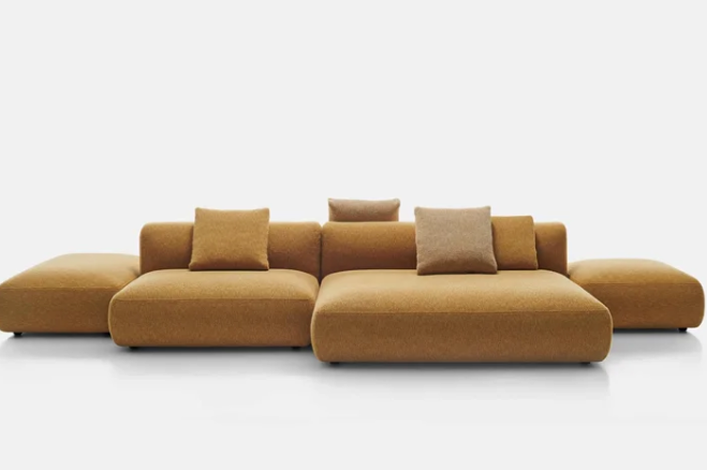
Knowing how to buy custom furniture requires the patience to settle the piece’s position and volume within the room before debating the nuances of a finish. Modular systems, such as the Cosy Island sofa by Francesco Rota, offer infinite possibilities, but that breadth is only valuable when the spatial logic of the room has been settled with precision.
Evaluating Material in Context
The selection of fabric and finish works best when conducted within the room’s existing material character rather than in the abstraction of a showroom. A textile that appears saturated on a swatch may read with a soft, quiet depth when placed against a light timber floor.
If you are learning how to buy custom furniture, evaluate your samples against the surfaces they will actually sit beside, the floor, the wall, and the surrounding furniture. This ensures the materiality feels coherent and honest, reflecting the light and shadow of your specific home throughout the day.
Architectural Integration from Seating to Storage
Bespoke specification at this level extends beyond individual seating to the very bones of the interior. A wardrobe system that is resolved into the architecture of a bedroom becomes part of the wall itself.
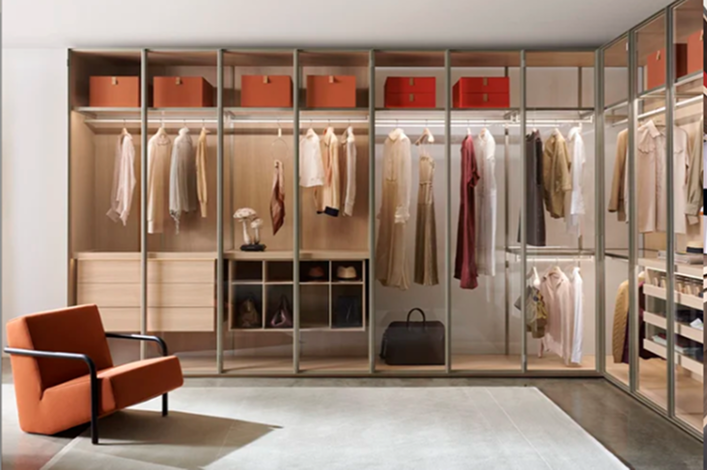
The Porro closet systems at Graye represent this standard, offering walk-in configurations and boiserie panels that are fully customizable in eco-leather, matte lacquers, and rich woods. Integrating storage as an architectural element, rather than an appended object, is a hallmark of how to buy custom furniture for an interior that feels unified and permanent.
The Enduring Value of Personal Specification
A home whose objects were designed specifically for its dimensions and light conditions possesses a quality of stillness that cannot be replicated. By approaching the custom process with professional guidance, you ensure that every decision, from the density of a cushion to the finish of a metal joint, is backed by design intelligence.
We invite you to explore the Graye collection and consult with our team to resolve your interior. Discover how a considered approach to how to buy custom furniture can produce a residence that is not only functional but a clear expression of your personal taste.
FAQs
-
The first decision is always spatial. Before selecting a piece or a textile, you must understand what the room requires in terms of scale and proportion. A process that begins with aesthetic preferences rather than spatial conditions almost always requires revision to ensure the piece fits the architectural volume of the room.
-
Our residential services include furniture plan consulting, allowing spatial decisions to be tested within a scaled floor plan or rendered environment. This ensures that clearances are respected and that the piece harmonizes with the surrounding architecture before the final specification is committed.
-
Not necessarily. Custom specification allows you to choose materials specifically for their resilience and aging characteristics. By selecting high-performance textiles or timbers with durable finishes, you can ensure your furniture remains beautiful through years of daily use without the maintenance challenges often associated with generic luxury goods.
-
Standard wardrobe systems are designed for the median room, meaning they often fail to address specific ceiling heights or architectural nuances. Custom storage is engineered for the exact geometry of your space, allowing for a flush, integrated appearance that reads as a permanent part of the room’s architecture.
-
Yes, and it is often the most resolved approach for creating a cohesive interior. Specifying a consistent fabric or leather across different seating elements produces a formal unity, allowing other architectural features or art pieces to carry the room's visual variation without the space appearing fragmented.
