
What Is the Best Furniture for a Bedroom? A Designer's Guide to Creating a Refined Retreat
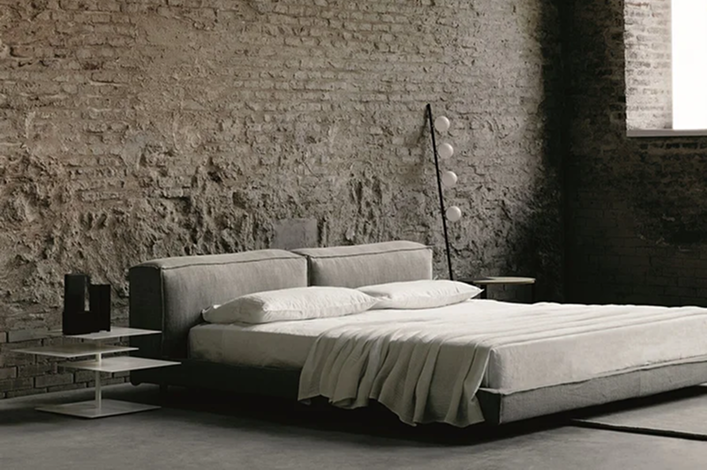
The bedroom is the most personal environment in a home, serving as the quiet transition between the waking world and rest. It is a space where attention settles, and the quality of every material is felt more acutely.
When considering “what is the best furniture for a bedroom,” we must look beyond mere comfort and examine how each piece contributes to a sense of stillness. Every object should be selected for its architectural presence and tactile honesty, ensuring the room feels like a refined retreat that supports your daily rituals and provides a sanctuary for genuine pause.
The Bed as the Architectural Anchor
The bed is the structural heart of the room, dictating the proportional logic of every other piece. Its headboard acts as the primary vertical surface, framing the space and setting a tonal register for the entire interior.
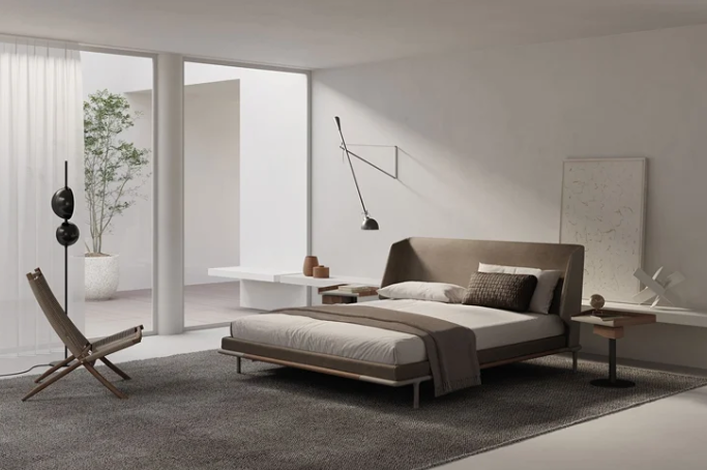
In evaluating what is the best furniture for a bedroom, the bed must possess a formal discipline that asserts authority without overwhelming the room’s volume. The Alfred bed by Umberto Asnago exemplifies this, offering an upholstered presence that feels both grounded and sophisticated. By choosing a frame with clear architectural lines, you establish a foundation that allows the rest of the interior to breathe.
Intimate Dialogue of the Nightstand
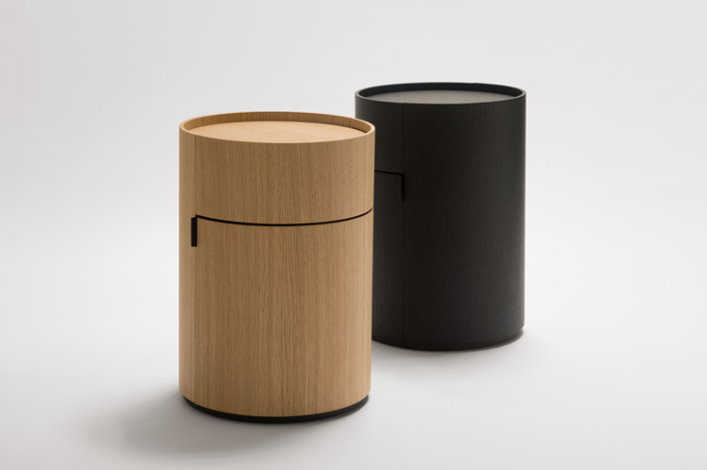
A nightstand is perhaps the most intimate object in the room, sitting at the exact height of the body and housing the items of personal ritual. It should exist in a quiet dialogue with the bed, sharing a similar material language while maintaining its own distinct character. The Moon nightstand by Mist-O, with its charcoal-dyed oak and concealed storage, resolves functional needs without introducing visual clutter.
When determining what the best furniture for a bedroom is, look for nightstands that offer tactile warmth and mechanical precision, ensuring the surface is as satisfying to use as it is to observe at close range.
The Role of Architectural Storage
A refined bedroom remains composed only when its storage is resolved with the same rigor as the sleeping zone. Clothes and personal items should be housed within structures that seem to recede into the architecture. When asking what is the best furniture for a bedroom, one must consider cabinets and wardrobes that act as extensions of the wall rather than separate, bulky additions.
Our curated cabinets collection features designs that prioritize clean lines and premium finishes, allowing for a space that remains uncluttered and conducive to rest, where the storage serves the room’s sense of order and quietness.
Spatial Logic and Layout Clearances
The quality of a bedroom is defined as much by the space around the furniture as the pieces themselves. A clearance of approximately thirty inches on both sides of the bed is essential for fluid movement and a sense of ease.
When exploring what is the best furniture for a bedroom, you must consider how each silhouette impacts the room’s circulation paths. A layout that respects the "negative space" allows the architecture to feel expansive. By prioritizing these spatial boundaries, you ensure that the furnishings do not crowd the floor plan, but rather highlight the room’s proportions and intended tranquility.
Curate Your Personal Luxury with Graye
Selecting the right pieces for a private retreat is a consultative process that involves balancing material integrity with spatial awareness. At Graye, we provide the curatorial expertise to help you resolve your interior with pieces that hold their value and beauty across years of use.
Explore our gallery to experience the tactile richness of our collection firsthand. Consult with our team to discover how a considered approach to what is the best furniture for a bedroom can help you curate an environment that reflects your personal taste and supports a life of refined, thoughtful rest.
FAQs
-
They do not need to match exactly, but they should share a similar material register to ensure visual harmony. An upholstered bed in a warm neutral pairs naturally with a nightstand in charcoal oak or walnut. The goal is to create a dialogue between textures rather than a uniform set, allowing the room to feel curated rather than assembled.
-
The surface of the nightstand should sit within five to eight centimeters of the top of the mattress. This ensures that the objects you need are within easy reach while lying down. Visually, this keeps the horizontal lines of the room consistent, preventing the nightstand from appearing spatially unresolved or disconnected from the bed.
-
In a bedroom of sufficient scale, a well-chosen chair introduces a secondary zone for reading or reflection. It changes how the room is inhabited during the day, making it more than just a place for sleep. It should be positioned away from primary circulation paths to ensure it doesn't interrupt the room’s flow.
-
Pushing one side of the bed against a wall to save floor space often compromises the room’s function and sophistication. A bed should have clear access from both sides to ensure a balanced architectural feel. Even in tighter spaces, maintaining symmetry around the bed provides a more considered and professional result.
-
The floor serves as the ground plane that interacts with every piece of furniture. A warm timber floor provides a soft foundation for upholstered frames, while stone or polished concrete may require furniture with more visual weight or a deep-pile rug to prevent the pieces from appearing to float within the room.
