
How to Choose a Dresser for Master Bedroom Suites
Explore Refined Storage Pieces
A dresser has a quiet authority in the bedroom. It holds the practical details of daily life while contributing to the room's larger composition through scale, material, and proportion. Understanding how to choose a dresser begins with looking beyond storage capacity.
The right piece should sit naturally within the architecture, relate to the bed and surrounding furnishings, and bring a sense of order without visual weight.
Begin With the Proportions of the Bedroom
A dresser should be selected in response to the room rather than treated as an independent object. Its width, depth, and height affect circulation, sightlines, and the balance between the bed, nightstands, seating, and dressing areas.
A substantial primary suite can accommodate a longer, lower dresser that reinforces the room's horizontal character. In a more intimate bedroom, a taller and narrower piece may provide storage without consuming valuable floor area.
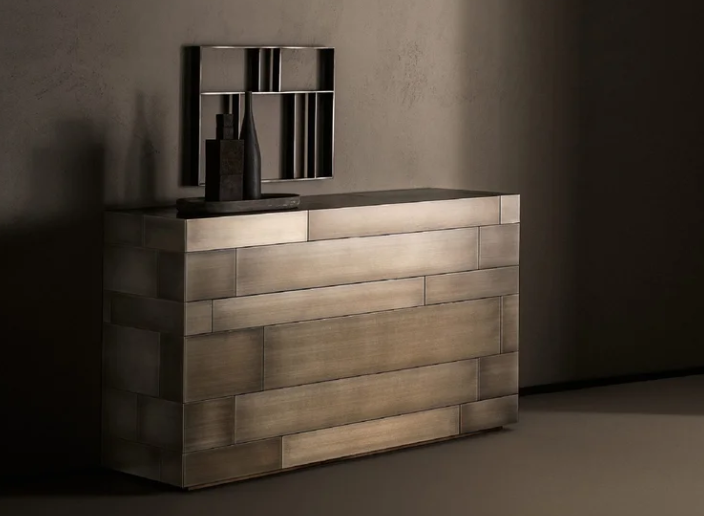
The Celato dresser by R&D De Castelli demonstrates how storage can become an architectural presence. Its birch structure is clad in stainless steel, brass, copper, or iridium, creating a precise exterior around an interior system of drawers in natural birch. The contrast gives the piece both visual clarity and material depth.
Let Material Establish the Dresser's Character
Material is one of the first things the eye registers. In a bedroom, where the atmosphere is generally softer than in entertaining spaces, the surface of a dresser can introduce warmth, precision, or contrast.
Natural wood brings grain and variation into the room. Walnut, oak, and birch can create a warmer visual temperature, particularly when paired with textiles and softly diffused light. Metal introduces another quality. It reflects light differently and can give a storage piece a sharper architectural presence.
This is why how to choose a dresser should include a consideration of the material language already established throughout the suite. A dresser does not need to match the bed or nightstands exactly. It needs to belong to the same conversation.
Use Contrast Without Creating Disconnection
A timber bed can sit comfortably beside a metal-clad dresser when the proportions are compatible. Similarly, a lacquered surface can provide a controlled contrast against natural stone or textured upholstery.
The objective is not uniformity. It is coherence.
Explore the Bedroom Collection
Look Closely at the Details You Use Every Day
The most considered storage pieces reveal their quality through interaction. If you are wondering how to choose a dresser, drawer movement, handles, internal organization, and the precision of the joints become increasingly important because these are details encountered every morning and evening.
Soft-close hardware is particularly valuable in a bedroom. Drawers should close with a controlled, almost silent movement rather than a hard stop. Handles should feel deliberate in the hand, whether they are integrated into the front or expressed as a separate design element.
Internal organization matters just as much. A dresser intended for folded clothing may require deeper drawers, while smaller compartments are better suited to accessories and personal items.
Luxury is often found in these quiet decisions. Nothing needs to announce itself.
Choose Storage That Supports the Rhythm of the Suite
A master bedroom suite rarely consists of a bed and a dresser alone. It may include a walk-in closet, dressing area, lounge chair, bench, desk, or integrated storage. The dresser should support this larger system rather than compete with it.
Graye's approach to luxury bedroom interior design considers the bedroom as an architectural volume shaped by proportion, material continuity, acoustic softness, and controlled light. Storage forms part of that environment rather than existing separately from it.
Balance Storage Capacity With Visual Lightness
More storage is not automatically better. A large dresser can become visually heavy when its mass is disproportionate to the room. Conversely, a beautifully scaled piece that cannot accommodate daily needs will quickly become frustrating.
This is where how to choose a dresser becomes a question of balance. Measure what needs to be stored before deciding how much furniture is required. Then consider how that volume can be distributed.
A taller cabinet may preserve floor space. A long, low dresser may strengthen a horizontal composition. A pair of smaller pieces can sometimes provide greater flexibility than one oversized unit. The best solution is the one that makes storage feel integrated rather than added.
Allow the Dresser to Participate in the Lighting
Light changes how materials are perceived throughout the day. A natural wood surface may reveal different tonal variations in morning light, while metal can introduce subtle reflections as the room changes from day to evening.
Positioning matters. Avoid placing a reflective dresser where direct sunlight creates excessive glare. At night, a carefully positioned lamp can bring out texture and soften harder surfaces.
A mirror above the dresser can extend the vertical composition, but it should be considered alongside the height of the furniture and the room's ceiling. Artwork can provide a quieter alternative when reflection is not desired.
Treat the Dresser as Part of the Architecture
The most successful master suites are not assembled from isolated furniture pieces. They are composed through relationships. The bed establishes the central horizon. Nightstands reinforce it. Storage provides necessary enclosure. Knowing how to choose a dresser also means considering how its proportion and material can bridge these elements.
For larger projects, Graye's residential design and planning services can bring furniture selection into the wider process of developing layouts, materials, and cohesive interiors. The result is a bedroom in which storage does not interrupt the atmosphere. It supports it.
FAQs
-
Not necessarily. Matching every piece can make a bedroom feel overly prescribed. Related materials, proportions, and finishes create a more collected and sophisticated result.
-
It depends on the room's architecture and storage requirements. A wide dresser emphasizes horizontal continuity, while a taller design can increase capacity where floor space is limited.
-
A mirror, artwork, or carefully selected object can work well. The choice should respond to the dresser's height and the surrounding architecture without making the wall feel crowded.
-
Pairing metal with natural timber, soft upholstery, wool, linen, or warm lighting introduces tactile contrast. The surrounding materials determine whether the metal feels cool or inviting.
-
It can be, particularly when the wall allows sufficient circulation. The arrangement creates a strong visual axis, but the dresser should remain proportionate to the bed and the room.