
How To Choose the Best Outdoor Patio Furniture
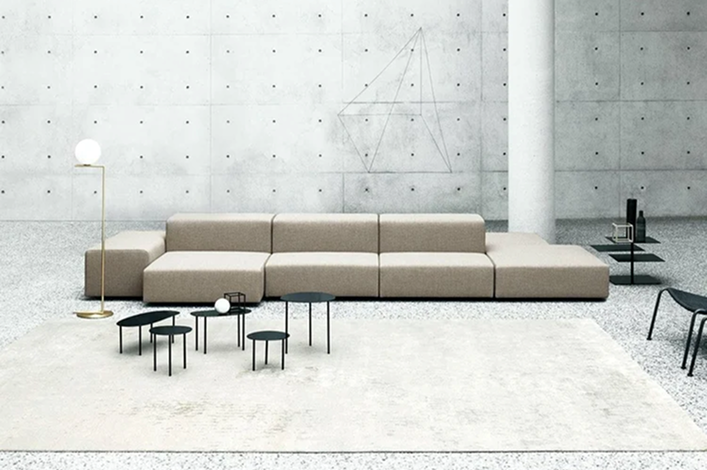
In a well-resolved residence, the terrace or garden is never a secondary environment. It is a primary space where the boundary between architecture and landscape begins to fade.
So, learning how to choose the best outdoor patio furniture involves treating the exterior with the same design rigor as any interior gallery. Because these pieces must withstand direct sunlight and varying air conditions, their quality is tested daily.
A thoughtful approach to outdoor living ensures that these areas feel as intentional and permanent as the house itself, providing a sanctuary that remains beautiful through every season.
Considering Scale and Furniture Placement
Arranging furniture on an open terrace presents a unique challenge compared to an enclosed room. Without walls to provide a sense of volume, each piece must possess enough formal weight to hold its own against the sky.
A common design strategy is the use of an outdoor rug to establish a ground plane, which anchors the arrangement and prevents seating groups from appearing to float. Maintaining clear circulation paths and a direct relationship with the home’s interior sightlines ensures the exterior feels like a composed room. This architectural perspective creates a sense of order and intimacy in any garden setting.
The Terrace as an Architectural Extension
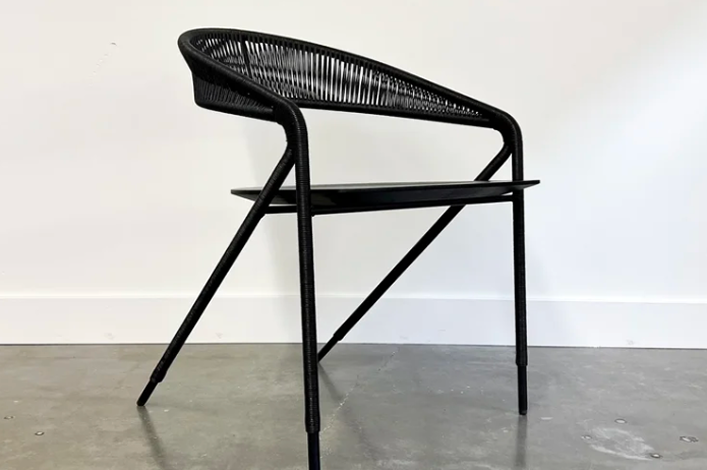
An outdoor chair carries a significant visual burden; because it is often viewed from every angle against an open horizon, its silhouette must be perfectly resolved. George’s outdoor chair exemplifies this kind of architectural clarity, combining a refined Italian profile with the durability required for a life lived outdoors.
A successful interior philosophy treats these pieces as essential design statements rather than temporary additions. When the furniture mirrors the formal rigor of the house, the terrace becomes a seamless extension of the home, offering a continuous aesthetic narrative that respects the landscape and the architecture in equal measure.
A Curated Perspective on Exterior Materiality
In an outdoor context, the integrity of a design is directly tied to its material specification. Most failures in exterior furniture are the result of choosing materials that cannot accommodate thermal expansion or moisture.
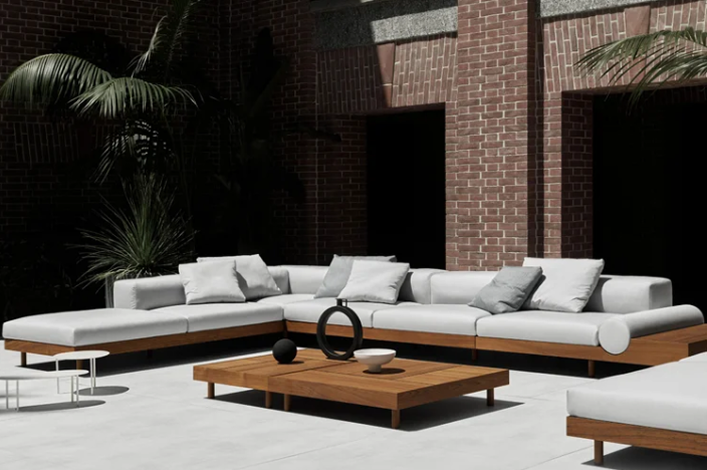
A designer who understands how to choose the best outdoor patio furniture as a long-term investment prioritizes substances that age with grace. Burma teak, for instance, is valued for a high natural oil content that silvers beautifully over time.
The Kasbah outdoor modular sofa by David Lopez Quincoces utilizes this solid teak foundation, offering a structural longevity that allows the piece to evolve alongside the architecture it inhabits.
Performance and Resilience for Distinctive Spaces
The durability of a piece is often found in the invisible details, such as the precision of powder-coated joints or the drainage capacity of a cushion. Understanding the engineering of the frame is fundamental to choosing the best outdoor patio furniture for a high-performance environment.
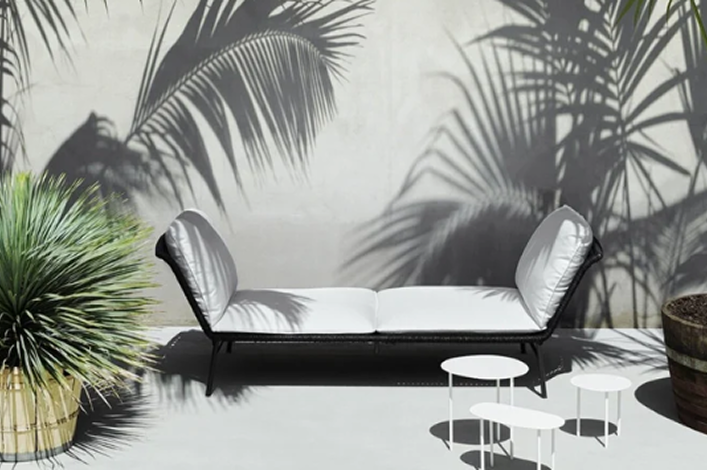
Metal frames, specifically marine-grade aluminum, provide a graphic lightness that suits modern homes. The true mark of luxury in outdoor seating is a removable cover system, as seen in the Daydream daybed. This adaptability ensures that high-end furniture remains a permanent fixture rather than a seasonal replacement, allowing upholstery to be refreshed as the home's material palette changes.
Explore Designer Outdoor Furniture at Graye
At Graye, we believe that the terrace is a reserve for the art of living. Our collection brings together European design intelligence and a deep respect for material honesty. We invite you to explore our West Hollywood showroom to experience the comfort and craftsmanship of our selection firsthand.
Consult with our team for professional insights on outdoor patio furniture selection that harmonizes with your home’s architectural language. Our design consultants are available to provide specific guidelines on how to choose the best outdoor patio furniture for your home, ensuring your selection provides a lasting foundation for refined living.
FAQs
-
Prolonged UV exposure is often the primary threat to exterior furniture, causing fabrics and frame finishes to degrade faster than rainfall. Solution-dyed fabrics, where the pigment is embedded in the fiber rather than applied to the surface, maintain their color under direct sun significantly longer than traditional alternatives.
-
Non-marking rubber or high-density glides protect the floor surface and reduce stress on the furniture joints by preventing shifting on smooth stone. For substantial pieces, specialized furniture cups can distribute weight more evenly across the pavers, preserving the integrity of the terrace floor.
-
While some fabrics are rated for both environments, the internal construction differs. Outdoor cushions require open-cell foam or specialized drainage systems that allow moisture to pass through rather than retaining it. A cushion intended for the interior will hold water and promote mildew, regardless of how weather-resistant the outer fabric may be.
-
Establishing a ground plane is essential for defining an outdoor seating area. Using a low table and a high-quality outdoor rug creates a visual boundary that gives the arrangement a sense of place. This prevents the furniture from appearing disconnected from the architecture of the house.
-
Cushions should be stored in a dry, breathable location to prevent moisture from becoming trapped. Airtight containers can promote mildew in treated fabrics by preventing air circulation. It is essential to ensure that all upholstery is completely dry before being put away for an extended period.
