
Selecting Upholstered Dining Chairs: A Designer’s Perspective
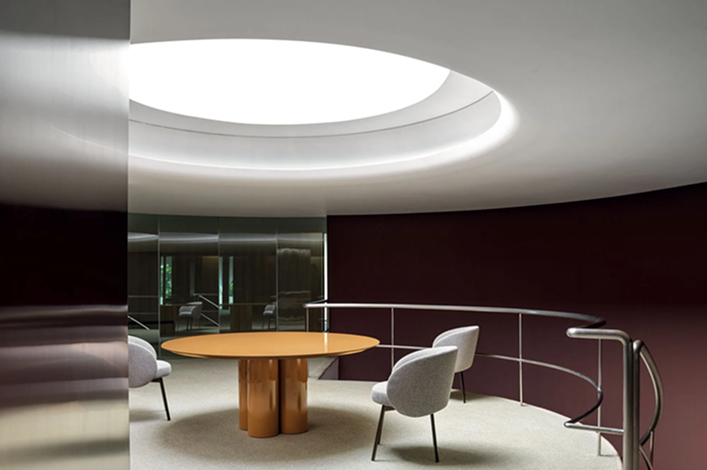
The presence of upholstered dining chairs within a dining room introduces a specific material warmth that no other seating typology can replicate. It is not merely a question of softness, but rather how a covered surface interacts with the visual composition of the table and the surrounding architecture.
Fabric and leather possess a tonal depth that timber and metal cannot achieve, as they absorb and diffuse light to create a sense of stillness. At its most considered, upholstered seating does not compromise the formality of the dining environment. Instead, it deepens the room’s atmosphere through tactile richness and physical ease.
The Upholstered Surface as a Room's Tonal Register
A dining room is essentially a landscape of horizontal surfaces and vertical figures. Because the back and seat of a dining chair sit at eye level, they occupy a proportionally greater visual weight than almost any other element in the room. This visibility demands a level of material rigor usually reserved for primary seating like sofas.
The quality of the weave and the depth of the dye carry long-term consequences for the room's palette. Selecting upholstered dining chairs requires an understanding of how a textile will age and perform under repeated use, ensuring the surface remains as resilient as it is refined.
What Fixed Upholstery Communicates Versus Removable Covers
Fixed upholstery offers a permanent material identity, where the leather or fabric becomes inseparable from the chair's silhouette. Over time, these surfaces develop a patina that records the history of the household, making fixed leather a choice of significant long-term design value.
Conversely, removable covers allow for a fluid material identity, providing the flexibility to update a room’s palette or maintain the piece as seasonal requirements shift. Both approaches are valid expressions of quality, and the choice rests on how one intends to inhabit the space and interact with the furnishings over the coming decades.
How the Armrest Shapes the Upholstered Dining Chairs Experience
The addition of an armrest alters the spatial proposition of the seat, moving from a simple chair to a more protective enclosure. During an extended meal, the contact surface of upholstered dining chairs provides a yielding warmth that hard materials cannot offer.
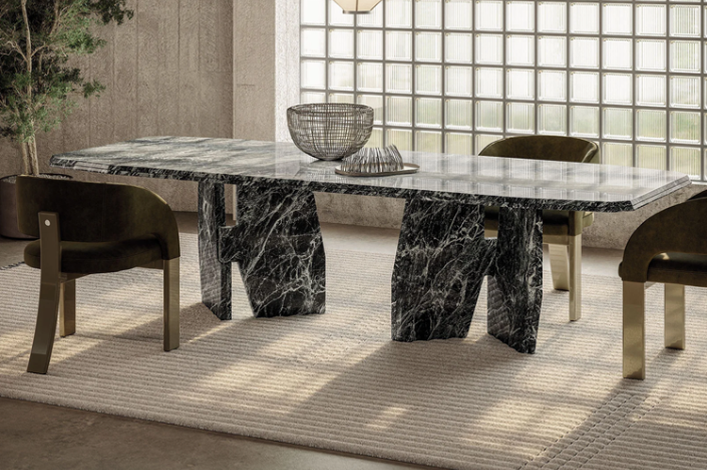
This detail is exemplified in the Fosca chair by Gordon Guillaumier, which features ribbon-shaped armrests that wrap around the body in a single, continuous gesture. This wrapping form provides a genuinely enveloping experience, turning the act of dining into a sustained moment of comfort where the physical support is as articulate as the architectural design itself.
Upholstery and the Social Dimension of Dining
Designs like the Hug chair by Gabriele E Oscar Buratti frame conviviality as a spatial intention. When upholstered dining chairs are engineered for extended seating, they naturally alter the quality of time spent at the table, encouraging guests to stay longer as the evening unfolds at a more measured pace.
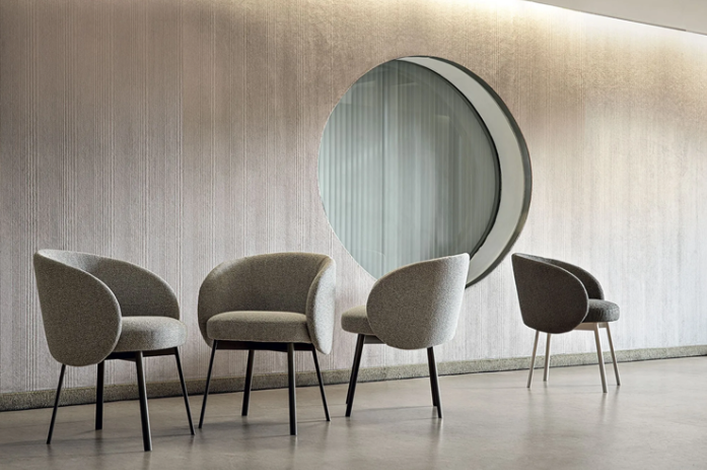
The integrity of this experience depends largely on the high-resilience foam hidden beneath the textile. Properly specified density ensures the chair maintains its architectural profile and supportive capacity across years of regular use, preventing the progressive flattening that often occurs with lower-specification alternatives found in less considered collections.
Weave, Texture, and the Upholstered Chair's Relationship with Light
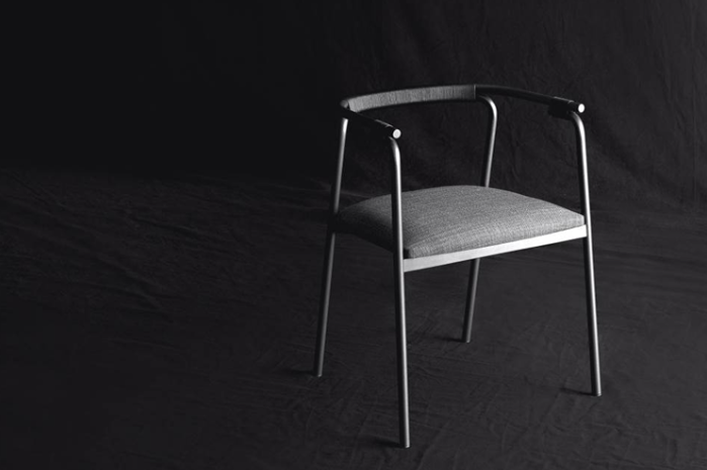
Not all sophisticated seating relies on traditional fabric surfaces. The Rivulet chair by Junpei & Iori Tamaki uses a decorative weave that sits at the intersection of structure and textile. This woven relief creates a series of micro-shadows that shift according to the angle of the light, producing a surface presence that smooth upholstery cannot achieve.
Within the Graye collection, these varied material vocabularies allow for a highly personalized dining environment. Each piece is selected for its ability to resolve the relationship between the human body and the surrounding architecture through a clear, honest, and formally intelligent design language.
FAQs
-
Upholstery acts as a primary acoustic dampener by absorbing sound waves rather than reflecting them off hard surfaces. In a room characterized by stone floors, large glass expanses, or plaster walls, a set of upholstered chairs can significantly reduce reverberation. This creates a more intimate and quiet environment, allowing for clearer conversation even during larger gatherings.
-
Both materials offer high durability when specified correctly. High-grade performance fabrics are engineered to resist staining and abrasion, making them ideal for active households. However, top-grain leather is often preferred for its longevity; it is naturally resilient, easy to maintain, and develops a rich patina that adds character to the chair as it ages over the years.
-
Standard upholstered chairs are not intended for exterior use, as the internal foam and standard textiles are susceptible to moisture and UV degradation. For outdoor environments, seating must be specifically engineered with open-cell foam and weather-resistant fabrics that allow for proper drainage and resist the fading effects of direct sunlight.
-
Creating a material counterpoint often yields the most sophisticated result. A rich cognac leather or a deeply textured forest green fabric can provide a beautiful contrast against a pale stone or light timber table. Alternatively, selecting upholstery in a tone that closely follows the table’s palette creates a more uniform and minimalist composition within the room.
-
Pull-tight or knife-edge upholstery techniques produce the most disciplined and streamlined surfaces. These methods require a high degree of precision during fabrication, as they leave little room for error in the underlying form. This results in a crisp, architectural silhouette that highlights the chair's structural integrity without unnecessary bulk.
