
Italian Furniture and the Art of Craftsmanship
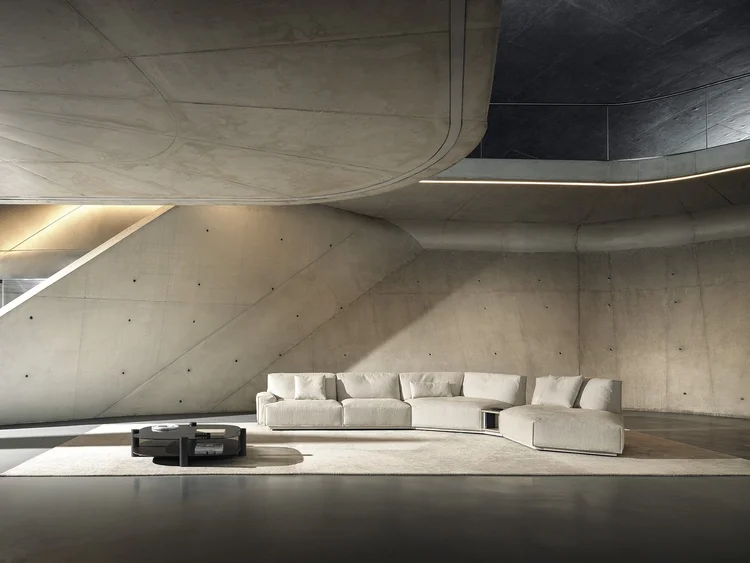
The authority of Italian furniture in the global design conversation is not a matter of marketing. It is the product of a specific cultural and industrial convergence: small family-owned production facilities in regions like Brianza, Marche, and the Veneto, operating within a tradition of craft knowledge that passes from generation to generation, combined with a design culture that has produced some of the most consequential thinkers in the history of the discipline.
Italian furniture, understood in this context, is not a style. It is a set of values about how objects should be made and what they should do in the spaces they inhabit. Precision, material intelligence, structural clarity, and respect for proportion define this approach.
Even highly contemporary pieces remain connected to traditions of woodworking, upholstery, metal fabrication, and stone craftsmanship that have evolved over decades. The result is furniture that balances technical refinement with a deep understanding of spatial experience and everyday living.
The Regional Craft Tradition and Its Contemporary Expression
The furniture districts of northern Italy, particularly the concentration of workshops in the Brianza region north of Milan, represent one of the most dense and technically sophisticated manufacturing environments in the world.
Within a relatively compact geographic area, the full chain of furniture production, from raw material processing through finished component fabrication to final assembly and finishing, is available at a standard that no other region consistently matches.
What this geographic concentration produces is not simply quality; it is a quality of dialogue between designers and makers that is essential to serious furniture production. When a designer's studio is a short drive from the workshop that will realize their work, the design process is shaped by an intimate knowledge of what the maker can do. The tolerances are known, the materials are familiar, and the formal proposals that emerge from this knowledge are proposals that can be executed with full material commitment and not design compromises.
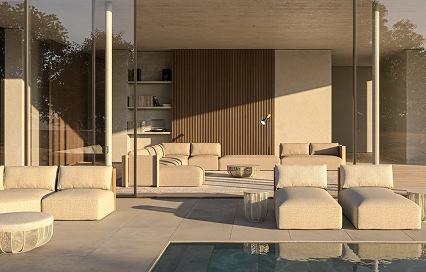
ARKADIUS
Modular seating system with architectural wooden backrests and armrests, pairing structured vertical slats with soft upholstered cushions.
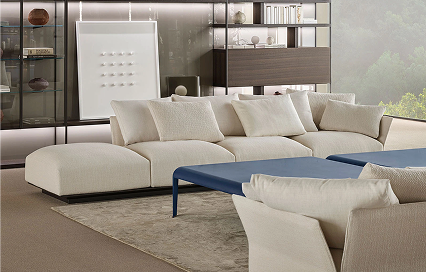
TOBU
Linear three- and four-seater configurations, as well as closed or open corner versions with armless central or end modules. complemented by a square armchair with one or two backrests.
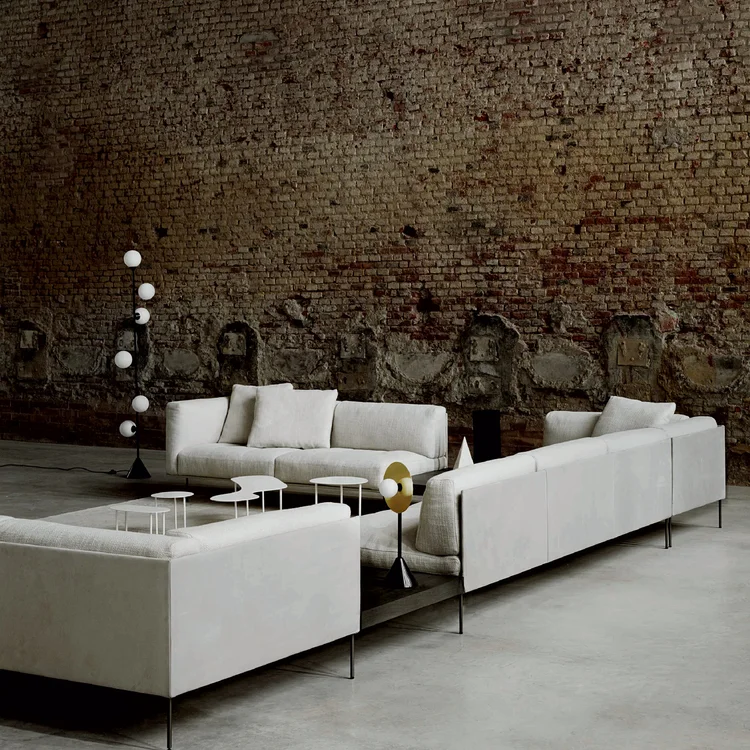
GOOM
A modular system comprising single units, corner units, chaise longue and poufs, with the option of adding one or more armrests
The Design Intelligence Behind the Objects
The Italian design tradition has produced a body of formal thinking about furniture that is without parallel in the contemporary world. The commitment to material honesty that characterizes the best Italian production, the refusal to apply surface decoration as a substitute for resolved form, and the disciplined exploration of proportion and scale are principles that were developed through decades of rigorous design culture and that remain the animating values of the most prestigious studios working today.
Nao Tamura's Ryo shelving system, produced in Italy, illustrates this intelligence applied to the bookcase form. Aluminum shelves and folded triangular supports create a storage system defined by lightness, structure, and shimmering materiality, a formal proposition that derives its authority from the precision of the aluminum fabrication process rather than from applied decoration.
The Geography of Italian Making and the Furniture It Produces
Different regions of Italy have developed distinct production specializations that are reflected in the character of the furniture they produce. The Brianza upholstery tradition produces seating of extraordinary surface refinement.
The Veneto's woodworking heritage produces table and cabinet forms of material specificity. The metalworking tradition of the Northeast produces objects in steel and brass whose surface character reflects centuries of smithing knowledge.
Claudio Bellini's Axy outdoor dining table, produced in Italy, operates within this metalworking tradition: a piece whose formal economy is matched by a material precision that reflects the production standards of Italian industrial craft at its best. The table's design does not draw attention to its making; it allows the quality of execution to speak without commentary.
Italian Furniture in Los Angeles
The presence of serious Italian-designed furniture is not incidental. The city's architecture, its culture of considered domestic life, and the quality of light in which these objects are experienced make it one of the most appropriate environments in the world for Italian-style furniture of this caliber.
Graye's Italian furniture collection brings the depth of the Italian design tradition to West Hollywood, presenting pieces within the curatorial context that gives them their full meaning.
FAQs About Italian Furniture
-
The combination of a deep regional craft tradition, the geographic concentration of specialist makers, and a design culture that values formal integrity over decorative complexity produces objects whose quality is evident both immediately and over decades of use.
-
Italian upholstered furniture is characterized by the precision of its cover construction, the quality of its internal structures, and the range and standard of its material specifications. The culture of removable covers is particularly Italian and reflects a commitment to the long-term quality of the piece.
-
Brianza's concentration of interdependent specialists, from foam fabricators to fabric mills to metal component suppliers, allows production to a standard and at a speed that isolated single-site production cannot match. The competitive density of the region also drives continuous quality improvement.
-
No. Many significant pieces produced in Italy are designed by international designers working in close collaboration with Italian makers. The production origin is the primary guarantor of material and constructional quality, regardless of the designer's nationality.
-
The showroom experience is irreplaceable for Italian-style furniture. Photographs communicate form but not material character, weight, or the quality of tactile surfaces. Visiting our gallery at 1117 N Formosa Avenue, West Hollywood, to have the full physical context of the pieces is the only way to fully understand what you are acquiring.
