
Luxury Dining Room Furniture: The Complete Buying Guide
View Luxury Dining Tables Designs
The dining room is where a home's design intelligence is tested under conditions of use. A table must hold its material quality across years of daily meals, formal gatherings, and the contact that the dining environment produces.
Luxury dining room furniture earns its designation not through price alone but through material rigor, construction discipline, and formal resolution. Understanding what those qualities look like in practice is the foundation of a sound buying decision.
The Dining Table as the Room's Structural Anchor
The table determines everything else in the dining room. Its dimensions define how many people the room can seat. Its surface material determines how the room reads at eye level. Its base establishes the visual center of gravity below the top plane, making it one of the most important pieces of luxury dining room furniture.
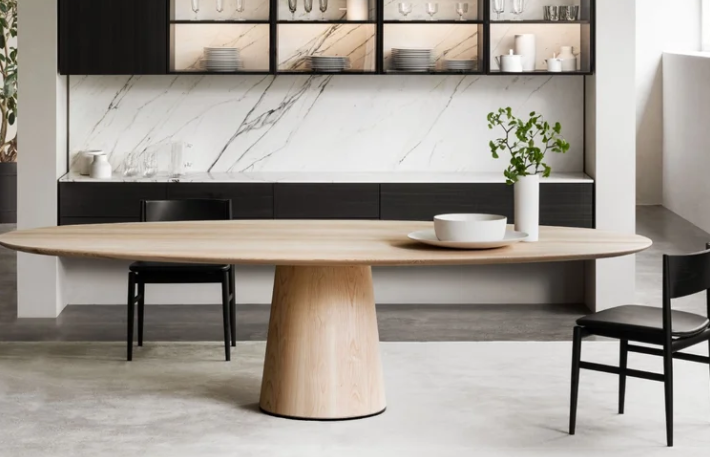
The Materic table, designed by Piero Lissoni, is a round or oval table with a marble or wooden top and a metal or wooden base, with an optional lazy susan. The round format reads equally well from all positions and supports conversation without a dominant head of table. Its range of material combinations makes it adaptable across dining rooms of different character.
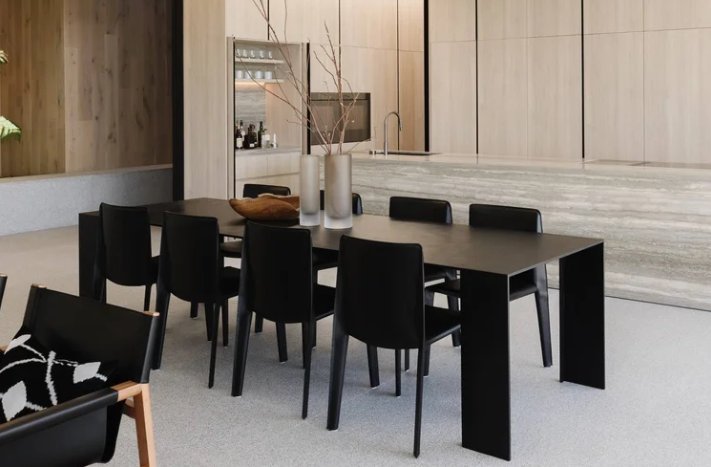
For rooms where the table must address a larger guest count, the Metallico table, also designed by Piero Lissoni, offers a solid metal construction that reads with an architectural gravity unlike any timber or stone alternative.
Find a Dining Table That Complements Your Interior
How to Select Designer Dining Chairs That Belong in the Room
The chair is the piece of luxury dining room furniture encountered most physically. It is sat in, pulled out, and seen from every angle. Construction quality, seat depth, back height, and upholstery must all be resolved for the conditions of dining. A chair too deep does not allow a comfortable upright posture. A back too high competes with the table's presence.
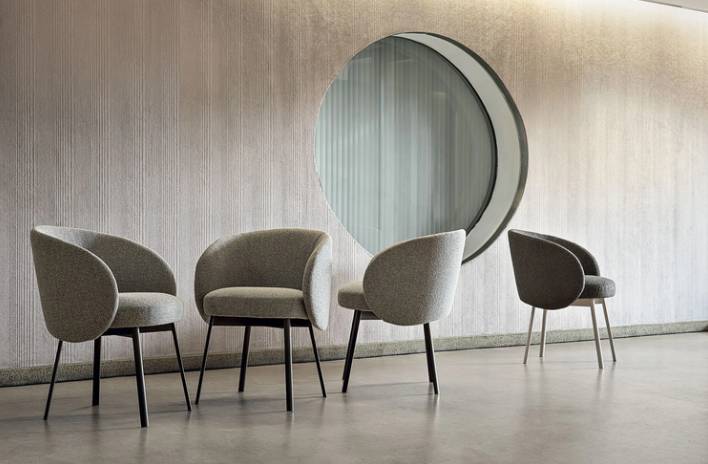
The Hug chair by Gabriele e Oscar Buratti, is defined by its softly curved backrest that wraps around the sitter to provide both comfort and support. Available in a selection of refined upholstery options, its sculpted silhouette balances generous proportions with a light visual presence. The chair is designed for extended dining, offering ergonomic comfort while maintaining the understated elegance expected in a contemporary luxury dining room.
As explored in our blog on pendant lighting ideas to elevate every room in your home, the dining zone is where the relationship between the ceiling plane and the seated occupant is most direct. Chair back height is, therefore, a factor not only in comfort but also in how the suspended fixture above the table reads.
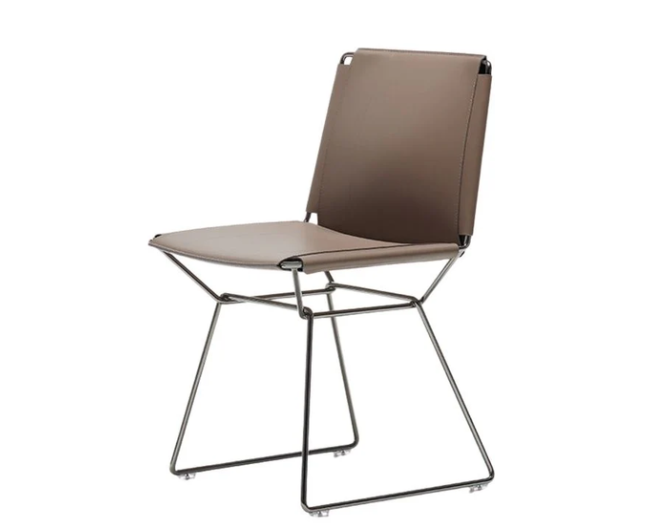
The Neil chair, designed by Jean Marie Massaud, combines a slender metal frame with a fully upholstered leather seat and backrest that create a refined balance between structure and comfort. Its clean profile complements stone, marble, or wood dining tables without competing for attention, making it well suited to contemporary dining spaces where material quality and proportion take precedence.
See Graye's High-End Dining Chairs
What Material Consistency Means in the Dining Room
A dining room approached as a composed interior holds its quality in the relationship between the table and the chairs. This does not require every piece to share the same material. It requires the materials chosen to speak to each other with intention.
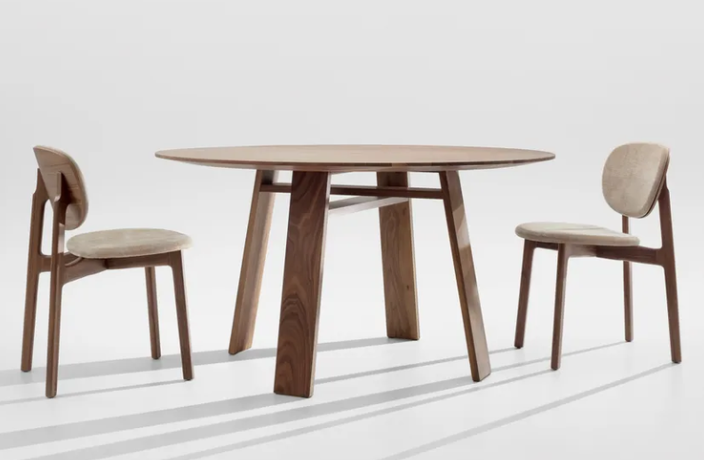
The Zenso chair, designed by Formstelle, is available in solid oak or walnut with a seat in leather or fabric. In a room where the table carries a wood top, it introduces the same timber species in the seating without duplicating the form. In a room where the table is stone or metal, the solid timber frame provides a material bridge that prevents the composition from reading as entirely hard.
Discover Luxury Dining Room Furniture at Graye
The decisions that produce a dining room of lasting quality are grounded in material selection, proportional resolution, and a considered relationship between each piece and the room it occupies.
At Graye, our collection of luxury dining room furniture brings together European designers who treat the dining environment as an architectural proposition. Contact our design specialists to explore tables, chairs, and configurations suited to your dining room.
FAQs
-
Allow a minimum of 90 centimeters between the table edge and any wall to permit comfortable seating and circulation. For a rectangular table, the room's usable area must exceed the table's footprint by at least 180 centimeters in both dimensions. A round table requires the same clearance on all sides.
-
Marble etches under acidic substances and requires periodic sealing against staining. In a formal dining room where placemats are standard, this is easily managed. A honed finish absorbs minor etching into its matte surface rather than displaying it against a reflective ground, making it more forgiving in daily use.
-
A standard dining chair requires between 55 and 65 centimeters of width at the table edge. Divide the available perimeter by the chair width to determine the maximum number. It is preferable to seat fewer people with comfortable elbow room than to compress additional chairs at the cost of comfort.
-
Standard dining tables sit between 74 and 76 centimeters in height, with chair seat heights between 44 and 48 centimeters. This produces a clearance of 27 to 30 centimeters between the seat and table underside, which is the most critical dimension for comfortable posture.
-
Upholstered seats suit a formal dining room where meals are extended. Hard seats in timber or woven materials better serve casual environments. For a room serving both functions, a chair with a removable cushion or thin upholstered panel offers a practical middle position.