
The Essential Luxury Furniture Buying Guide for Residences
Explore Graye's Luxurious Collection
A thoughtfully designed residence is not assembled through isolated purchases. It is shaped through decisions about proportion, material, authorship, and the way each object lives within the architecture.
A considered luxury furniture buying guide should therefore begin before a particular sofa, table, or cabinet is selected. For homeowners who approach design deliberately, the real question is not what looks luxurious today, but what will continue to feel right as the home evolves.
Begin With the Architecture Before Selecting the Furniture
The most successful interiors begin with the space itself. Study the volume of each room, the direction of natural light, circulation paths, ceiling height, and architectural elements that should remain visible. Furniture should clarify these conditions rather than compete with them.
A large living room may need substantial seating to establish intimacy, while a smaller room can benefit from pieces that preserve visual openness. In dining spaces, the table establishes a central plane around which everything else is calibrated. Bedrooms require a different sense of proportion, with the bed acting as a quieter architectural anchor.
Build the Collection Around Material Intelligence
Luxury is most convincing when it can be felt. In a luxury furniture buying guide, look for materials that reveal their quality through grain, texture, weight, finish, and the way they change with light.
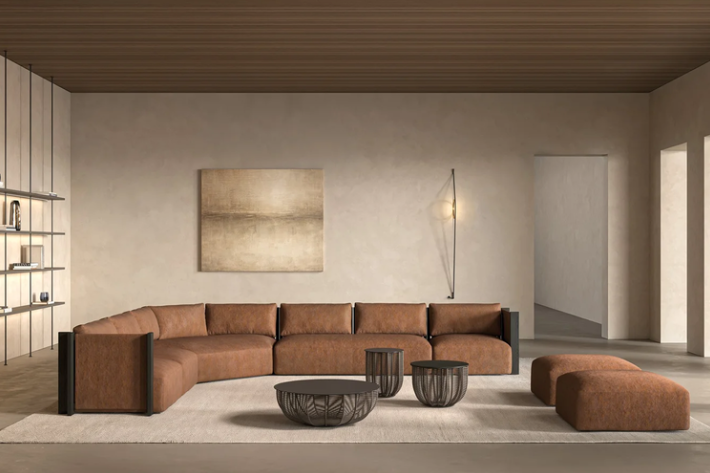
A sofa such as Arkadius combines architectural wooden backrests with upholstered cushions, demonstrating how structure and softness can coexist. Graye's collection spans seating, tables, storage, lighting, rugs, mirrors, and objects, allowing these material relationships to develop throughout a residence.
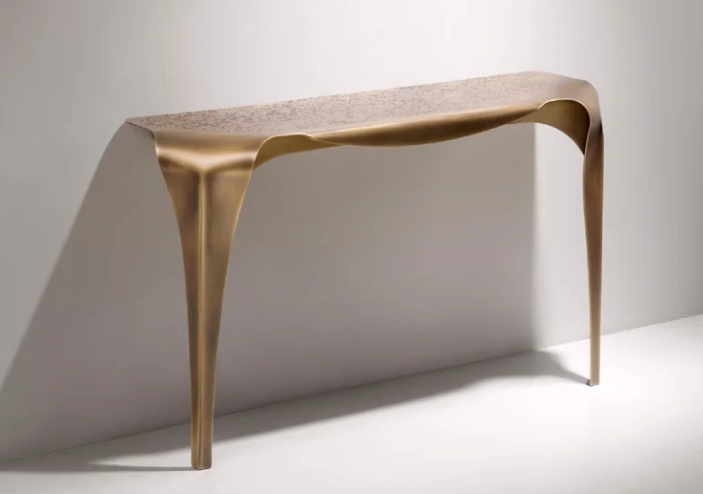
Metal offers another possibility. The Convivium console by Nikita Bettoni is made from solid brass and treats the material as a sculptural presence. Its appeal comes from the relationship between mass, surface, and form instead of decorative excess.
Look for Design That Rewards Attention Over Time
The best furniture reveals itself gradually. A seam becomes more precise when seen closely. A hand-finished surface changes subtly under different light. A structural detail explains why a piece feels balanced.
This is one reason Graye's collection moves across furniture, lighting, objects, rugs, and architectural systems without treating luxury as a single category. The pieces can be considered together without becoming a matching set.
Graye's Italian design brands shaping contemporary interiorsexplores the material discipline and design thinking behind several of the brands represented by Graye, including Living Divani, De Castelli, and Agapecasa.
Choose Pieces With a Clear Relationship to Their Purpose
Good design does not hide function, but neither does it allow function to overwhelm form. A sofa should support the way people gather. A dining table should establish the scale of conversation. Storage should resolve practical needs while preserving visual calm.
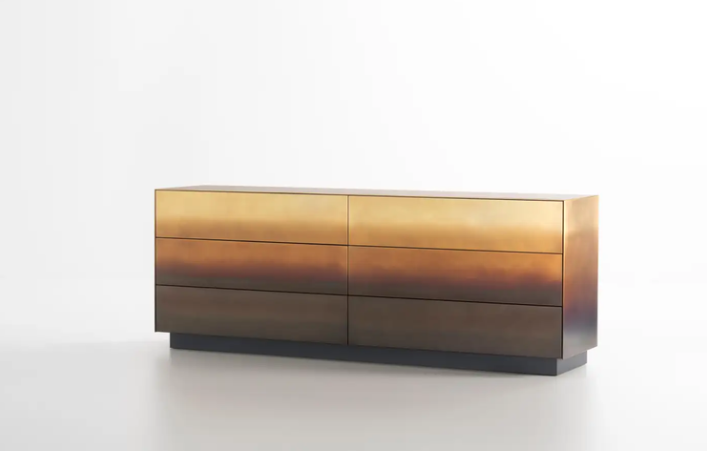
The Marea sideboard and dresser by Zanellato/Bortotto demonstrate how storage can become part of the material composition. Produced in copper, stainless steel, or brass with a natural birch interior, it balances practical capacity with architectural presence.
This distinction is central to a thoughtful luxury furniture buying guide: function is not separate from beauty. The two should reinforce each other.
Shape Your Residence With Modern Dressers
Consider Customization Before the Final Specification
For a residence designed with precision, standard dimensions are not always enough. Customization can address the relationship between furniture and architecture through dimensions, finishes, upholstery, configuration, or material selection.
A dining table may need to respond to a particular room length. A sofa may require a specific configuration to preserve circulation. A cabinet may need to align with existing architectural lines.
Graye's bespoke furniture perspective places these decisions within the design process, and not treating customization as an afterthought. The goal is specificity, so the final piece feels native to its setting.
Evaluate Craftsmanship as an Investment in Longevity
Price alone does not determine whether a piece represents lasting value. Examine how it is constructed, where it is made, what materials are used, and whether the design has enough integrity to remain relevant.
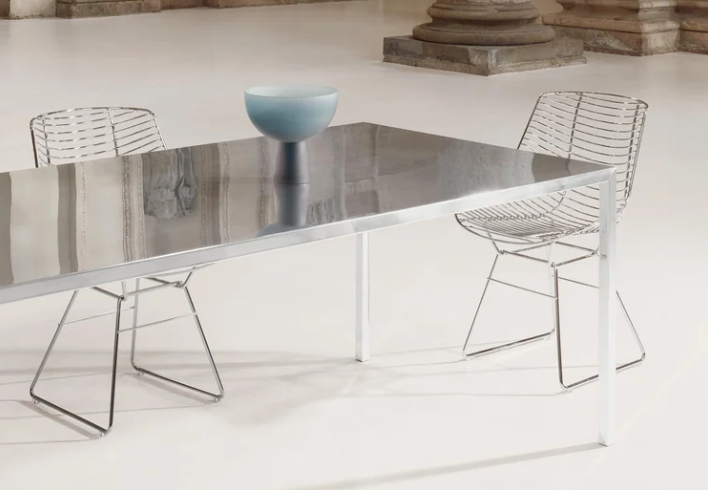
The Tense dining table by Piergiorgio Cazzaniga and Michele Cazzaniga exemplifies a restrained approach to structure and surface. Cazzaniga's work is defined by clean lines, technical innovation, and a balance between functionality and beauty.
Longevity also means considering maintenance. Natural leather may develop patina. Metal finishes can evolve. Wood changes subtly with light. These are not necessarily flaws. In a well-considered interior, the signs of time can become part of the object's character.
Edit the Room Until Every Piece Has a Reason
The final stage is not adding more. It is deciding what deserves to remain.
A residence can contain exceptional furniture and still feel unresolved if every object demands attention. Leave space between forms. Allow a sculptural chair to have its own silhouette. Let a console hold a single object rather than a collection of unrelated accessories.
This is where curation becomes more valuable than decoration. Every piece should answer a question: Does it improve the room? Does it contribute something distinct? Will it remain meaningful beyond the current moment?
Begin a Conversation With Graye
Conclusion
A considered home is built through decisions that are both precise and personal. The strongest furniture is not chosen because it is expensive or immediately recognizable, but because its material, proportion, craftsmanship, and purpose make sense within the life of the residence.
This is the real value of a luxury furniture buying guide. It offers a framework for looking beyond individual objects and toward a complete interior, where every selection has a place, every material has a reason, and the finished space feels entirely its own.
FAQs
-
Begin with architecture, scale, and how each room will be used. Once those fundamentals are established, material, upholstery, finish, and individual pieces can be evaluated with greater precision.
-
Consider how materials will interact with natural light, surrounding finishes, and daily use. Wood, stone, leather, textiles, and metal each bring different tactile and visual qualities to a composition.
-
Yes, particularly when dimensions, circulation, or architectural details require a precise response. Bespoke specifications can make furniture feel integrated instead of only being placed within a room.
-
Use shared principles rather than matching pieces. Related materials, restrained finishes, and consistent attention to proportion can connect rooms while allowing each space to retain its own character.