
Modern vs Contemporary Furniture: Understanding Key Styles
Explore Graye's Curated Seating Collection
A thoughtful interior begins with a question of language. What should the furniture say about the way a space is meant to be lived in? The distinction between modern and contemporary furniture is useful here, particularly for homeowners who are deliberate about proportion, material, and longevity.
Modern design refers to a defined historical movement, while contemporary describes work being created and interpreted in the present. Understanding the difference can make a furniture selection feel far more intentional.
Understand Where Modern Design Begins, and Contemporary Design Evolves
Modernism emerged in the early to mid-20th century as designers moved away from ornament and historical imitation. Function, structure, new materials, and clarity became central. The Bauhaus, International Style, and later mid-century designers each developed different expressions of this broader philosophy.
Contemporary design has no single historical period. It continually changes in response to technology, manufacturing, materials, and ways of living. At Graye, contemporary design is considered through enduring proportions, material intelligence, and the relationship between an object and its setting.
Graye's perspective is particularly relevant to thoughtful homeowners because it treats contemporary design as an ongoing conversation rather than a trend cycle. The emphasis is on resolution rather than novelty.
Read the Silhouette Through Its Proportions and Structure
Modern furniture often reveals its construction. Legs, frames, joints, and structural planes become part of the visual language. Contemporary furniture can share this clarity while introducing softer volumes, modular systems, experimental materials, or more fluid geometry. This contrast is central to understanding modern vs. contemporary furniture.
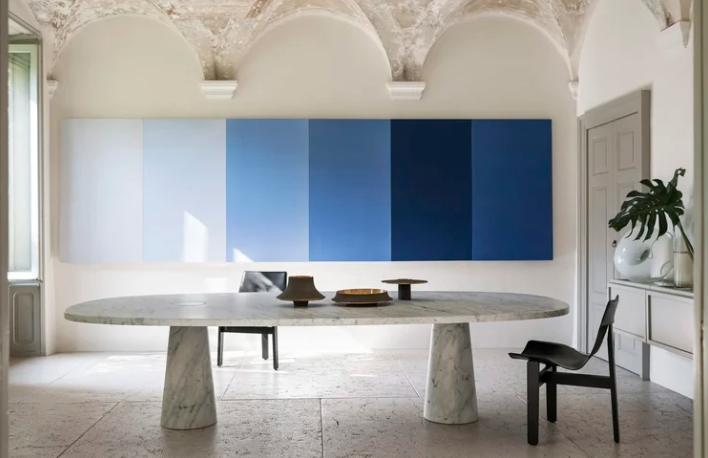
The Eros dining table by Angelo Mangiarotti is an especially clear example. Its design comes from Mangiarotti's belief that form should emerge from construction, with marble and stone treated as structural materials rather than surface decoration.
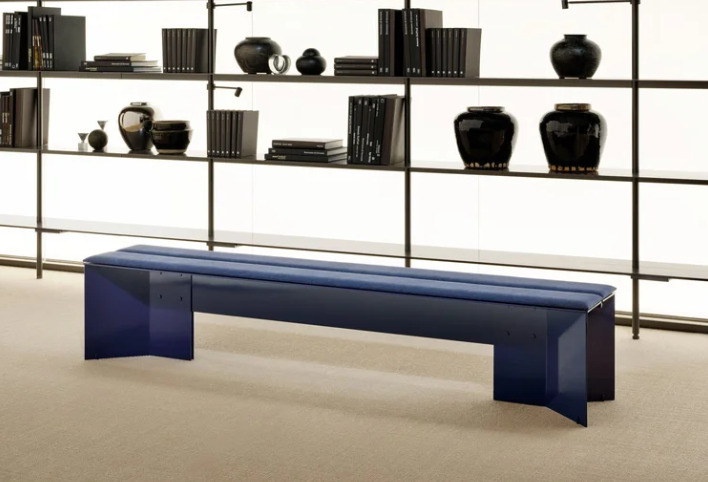
The Origata bench by Nao Tamura takes another direction. It is made from a 6 mm aluminum sheet that is cut, folded, and assembled through a specialized joint. Its minimalist geometry draws inspiration from Japanese culture and pop art, demonstrating how contemporary design can move across cultural references while remaining precise.
Let Materiality Reveal the Design Philosophy
Material is one of the clearest ways to understand a piece. Modernist design often embraced materials according to their structural and functional possibilities. Contemporary work may use familiar materials while exploring new finishes, fabrication methods, or combinations.
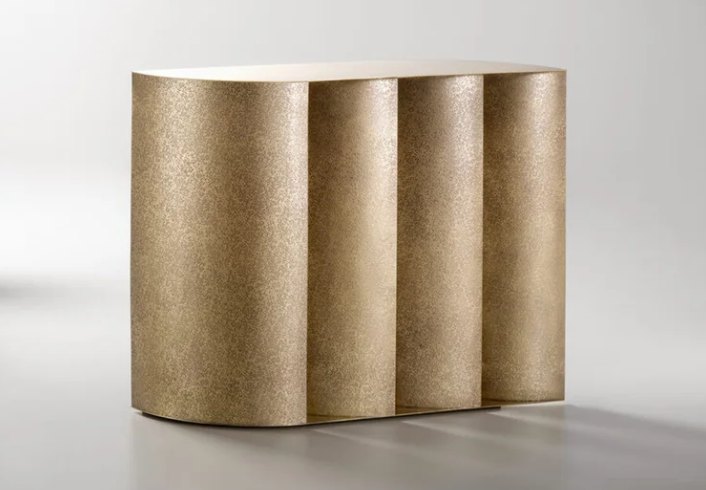
The Sinestesia console by TipsStudio introduces a more sculptural interpretation of contemporary furniture. Crafted in brass, the Italian design demonstrates how material and form can give a functional console an almost architectural presence.
Porroapproaches material differently, combining refined woods, metals, and glass with an emphasis on precision and restraint. Its work demonstrates how contemporary interpretation can remain connected to Italian furniture-making traditions.
Consider How Each Style Occupies Architectural Space
Furniture is experienced in relation to walls, windows, ceilings, circulation, and light. A modern piece may create clarity through disciplined geometry, while a contemporary design can introduce movement or adaptability without disturbing the room's underlying order.
This matters particularly in open-plan residences. A sofa can establish a boundary without creating a physical wall. A dining table can become the center of a shared volume. A console can create a transition between spaces.
Choose Based on the Architecture Rather Than the Era
The most considered interiors rarely feel like exercises in historical reconstruction. A modernist chair can sit comfortably beside a contemporary sofa when both possess similar discipline in material and proportion.
This is where modern vs. contemporary furniture becomes less about choosing one category and more about understanding compatibility. A mid-century silhouette can provide warmth and history, while a contemporary modular sofa can introduce flexibility. Together, they can create a layered interior without becoming visually confused.
Use Contrast With Intention
Contrast works when there is an underlying connection. Different periods can share a restrained palette, related material tones, or similar visual weight. The result feels collected rather than matched.
Shape Your Interior With a More Considered Selection
Pay Attention to Longevity Rather Than Immediate Recognition
A fashionable silhouette can create an immediate impression, but lasting design usually reveals itself more slowly. Regarding modern vs. contemporary furniture, consider how pieces will age, how materials will respond to use, and whether proportions will remain convincing as the room evolves.
Graye's recent discussion of furniture trends in 2026 emphasizes structural integrity, material intelligence, and pieces that become more themselves over time rather than simply reflecting a moment.
Customization can strengthen that longevity. Changes in upholstery, finish, configuration, or dimensions can make a piece more specific to its setting and more likely to remain useful as the home changes.
Build a Dialogue Between Modern and Contemporary Pieces
A residence does not need to declare allegiance to a single design vocabulary. The most compelling rooms often gain depth through carefully controlled dialogue between periods and approaches.
Start with the architecture, then establish a primary material palette. From there, introduce furniture according to scale and purpose. A sculptural modern chair might provide a counterpoint to a softer contemporary sofa. A restrained dining table can balance a more expressive light fixture.
The goal is not to demonstrate knowledge of design history. It is to create a room that feels coherent, personal, and quietly assured.
Begin Your Design Conversation With Graye
Final Remarks
Understanding modern vs. contemporary furniture is ultimately less about terminology than judgment. Modern design offers a defined historical foundation built around clarity, function, and structural honesty. Contemporary design continues that conversation through today's materials, technologies, and ways of living.
For a thoughtfully designed residence, either can be compelling. The strongest interiors allow them to coexist through proportion, material, and restraint, creating spaces that feel current without being tied to a particular moment.
FAQs
-
No. Modern furniture generally refers to a historical design movement, while contemporary furniture describes work connected to the present. The terms can overlap visually, but their origins and philosophies are different.
-
Yes. Contemporary pieces can complement modern architecture when their proportions, materials, and visual weight respect the existing structure. The contrast can also give the interior greater depth.
-
Common materials include wood, leather, steel, glass, and molded or engineered materials. Their use typically emphasizes structure, function, and clarity rather than surface ornament.
-
It can be, particularly when modularity, adaptable configurations, and customization are part of the design. Contemporary pieces often respond directly to how residential spaces are being used today.