
Iconic Italian Furniture Designers Shaping Modern Living
Explore Graye's Collection of Design Icons
The influence of Italian furniture designers extends far beyond a recognizable aesthetic. It is found in the discipline of proportion, the intelligence of materials, and the ability to make furniture feel inevitable within a room. For those who approach their residences thoughtfully, understanding the designers behind a piece adds another layer to the selection process.
Graye's current creator roster includes established voices such as Piero Lissoni, Angelo Mangiarotti, Jean Marie Massaud, David Lopez Quincoces, Marco Lavit, Piergiorgio Cazzaniga, and Gabriele e Oscar Buratti, among others.
Piero Lissoni Defines Luxury Through Restraint
Piero Lissoni's work is an exercise in reduction. His designs rarely rely on dramatic gestures. Instead, they depend on proportion, material, and the careful relationship between soft and architectural forms. Graye describes Lissoni as an Italian architect, designer, and creative director whose practice spans architecture, interiors, product, and graphic design.
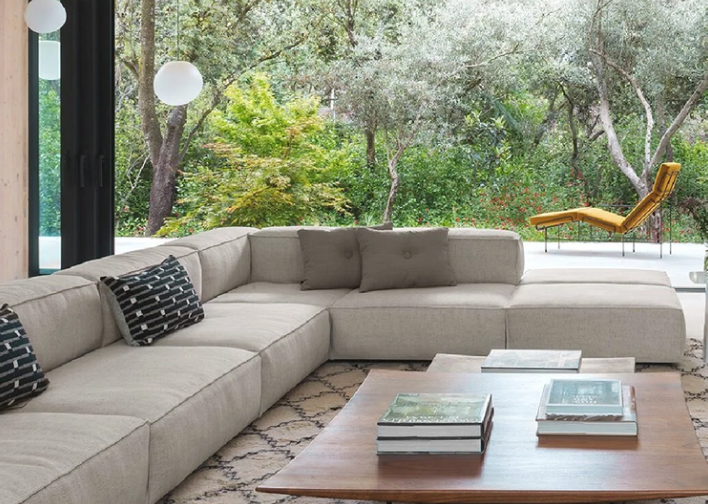
His work for Living Divani demonstrates this philosophy particularly well. The Neowall sofa is a modular system with fully removable fabric or leather covers. Its generous upholstery is contained within a disciplined silhouette, allowing comfort to exist without visual heaviness.
Living Divani has worked under Lissoni's creative direction since 1988, developing a language of clean lines and restrained proportions.
Angelo Mangiarotti Turns Structure Into Sculpture
Angelo Mangiarotti approached furniture almost as an architect approaches a building. Gravity, weight, material, and construction were not hidden. They became the design itself.
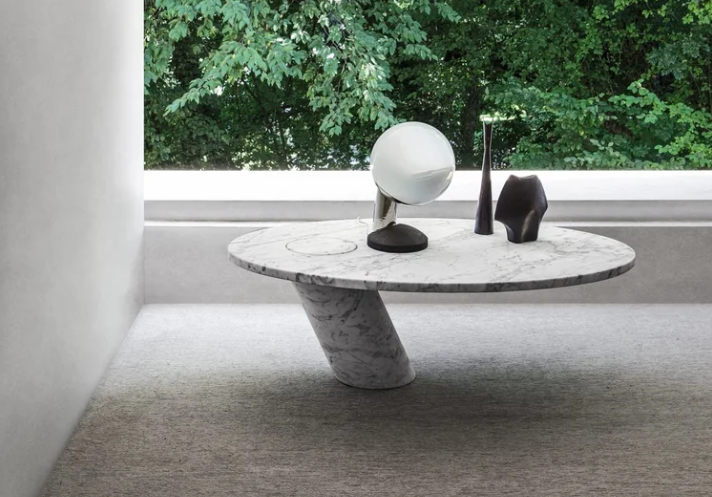
Graye continues this legacy through Agapecasa, whose collection preserves Mangiarotti's historically significant work. The Eccentrico tableis an all-marble design in which an elliptical top is fitted asymmetrically into an inclined cylindrical leg. The joint relies on weight, friction, and eccentricity rather than conventional fasteners.
The result is a piece that feels almost architectural. Its beauty comes from understanding exactly how the material behaves.
David Lopez Quincoces Brings Purity to Contemporary Form
David Lopez Quincoces represents a younger generation of European design thinking. Born in Madrid in 1980 and educated in architecture and interior design, his work is defined by functionality, minimalism, and a search for purity.
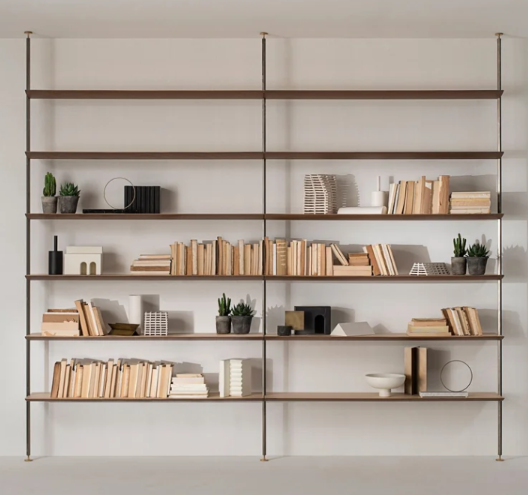
His Sailor shelving system takes the same clarity into storage, combining wood and metal in a system designed to organize the wall without overwhelming it.
For a carefully considered residence, this adaptability matters. The furniture can establish character while remaining responsive to the architecture.
Marco Lavit Explores the Meeting Point of Craft and Design
Marco Lavit's work introduces another perspective. An architect and designer, Lavit is known for combining contemporary design with close collaboration with artisans. His studio emphasizes material exploration and craftsmanship, with a particular interest in thoughtful structures and sustainable approaches.
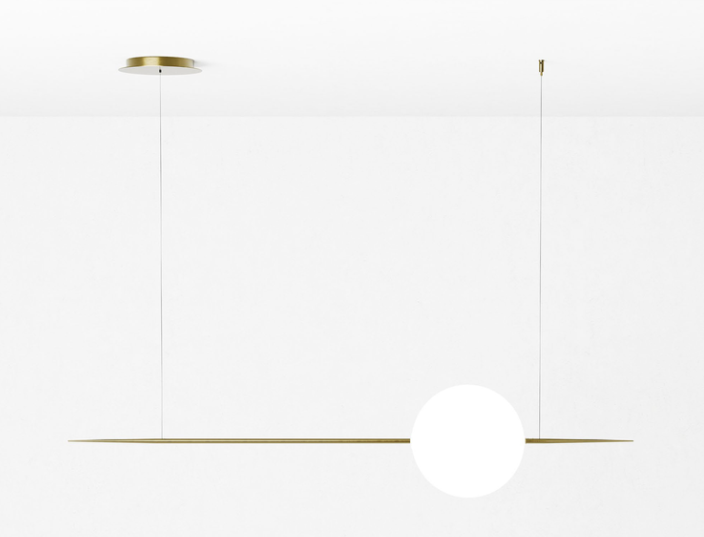
His Ad-Astra pendant uses polished brass frames, opaline blown glass diffusers, and warm LED illumination.
The piece demonstrates how a lighting fixture can function as architectural punctuation. Its material presence remains visible even when the light itself becomes the focus.
Piergiorgio Cazzaniga Balances Precision With Function
Piergiorgio Cazzaniga's design language is rooted in the relationship between technical innovation and functional beauty. Born in Lissone, he began his career in his father's carpentry workshop before developing an independent practice and collaborating with leading Italian manufacturers.
His work with MDF Italia and Porro reflects an interest in clean lines, advanced construction, and practical elegance. The result is furniture that does not separate engineering from aesthetics.
This balance is important when selecting Italian furniture designers for a residence. A beautiful silhouette has greater value when the construction behind it is equally considered. For a closer look at how personalized craftsmanship can shape an interior, see our bespoke furniture guide.
Gabriele e Oscar Buratti Refine Material and Proportion
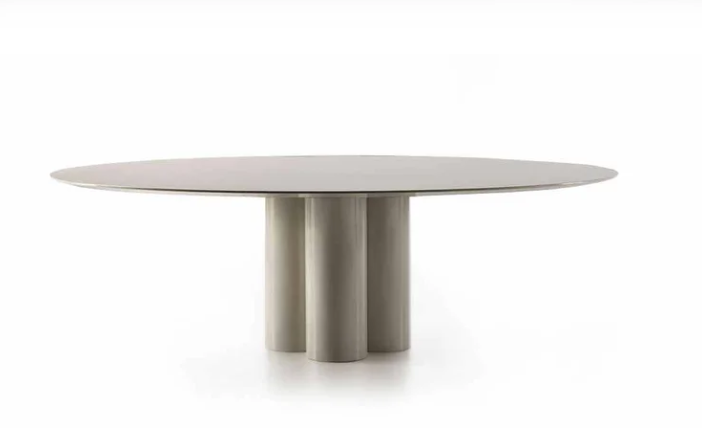
The work of Gabriele e Oscar Buratti demonstrates how contemporary Italian design can remain expressive while retaining discipline. Their Elly dining table features a rounded base with a top available in marble, glossy lacquer, or wooden veneer.
The combination of rounded geometry and varied materials allows the table to respond to different interiors without losing its identity.
Explore Thoughtful Dining Table Designs
Jean Marie Massaud Brings Ergonomic Intelligence to Elegance
Jean Marie Massaud's work often connects ergonomics, architecture, and understated luxury. Rather than treating comfort as something separate from appearance, his designs allow the two to inform one another.
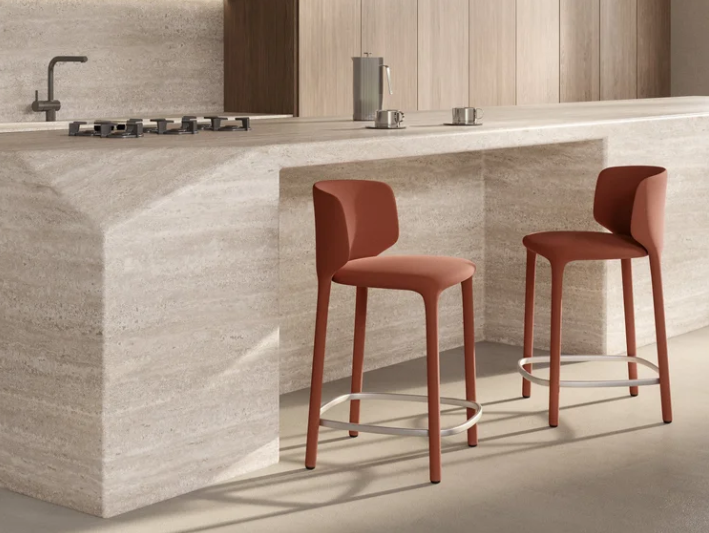
The Pat stool, for example, combines slender tapered legs with an ergonomic moving backrest and fully upholstered fabric or leather construction.
The design illustrates an important quality shared by many of the Italian furniture designers represented at Graye: functionality can be sophisticated without becoming visually obvious.
Choose the Designer as Carefully as the Object
A designer's name should never be the sole reason for choosing a piece. What matters is how that designer thinks about material, structure, proportion, and the life of an object.
Graye's creator roster brings together different generations and approaches while maintaining a shared commitment to design integrity. This diversity allows a residence to develop a layered identity rather than following a single visual formula.
A Lissoni sofa can coexist with a Mangiarotti table. A Lavit light can introduce contrast above a Buratti dining piece. The relationship between them creates the interior's character.
End Note
The most compelling Italian furniture designers do more than create beautiful objects. They establish ways of thinking about how furniture occupies space, how materials age, and how comfort can coexist with architectural clarity. For a thoughtfully designed residence, knowing the designer behind each piece makes selection more meaningful.
Graye's curated roster offers precisely this opportunity, bringing together distinct voices whose work can be composed into interiors that feel personal, considered, and enduring.
Begin a Conversation With Graye
FAQs
-
Their approaches vary considerably. Some focus on upholstery and proportion, others on structural engineering, material experimentation, architectural systems, or artisanal production. This diversity is part of Italian design's strength.
-
Lissoni's practice spans architecture, interiors, product design, and creative direction. His work is particularly recognized for restraint, refined proportions, and the ability to integrate furniture naturally into architectural settings.
-
Craftsmanship transforms a concept into a lasting object. Joinery, upholstery, metal finishing, stone fabrication, and surface treatment all influence how a piece looks, feels, and ages.
-
Yes. In fact, combining distinct voices can create greater depth. The key is to connect pieces through proportion, material, scale, and a consistent approach to visual restraint rather than matching every item.