
Luxury Outdoor Living Design With Durable Materials for Elevated Exterior Spaces
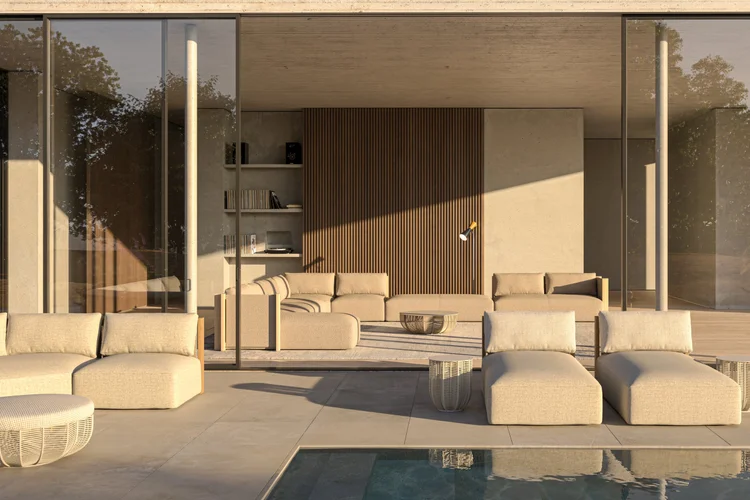
The boundary between interior architecture and landscape has steadily dissolved, replaced by a more disciplined continuity between built form and open air. In refined projects, luxury outdoor living design is not an afterthought appended to the rear façade, but an architectural extension of the home’s spatial logic. The terrace is treated with the same proportional rigor as the salon. Floor levels align, sightlines extend, and material palettes continue outward without rupture.
A successful outdoor living design is not defined by decorative abundance but by calibration. Scale must respond to horizon and sky. Materials must withstand exposure without appearing utilitarian. Light must articulate volume rather than overwhelm it. When these conditions are met, the exterior becomes an inhabited room, structured yet open, grounded yet expansive.
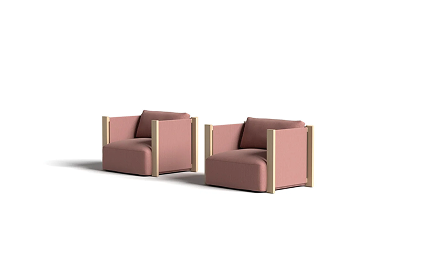
ARKADIUS
Modular seating system with architectural wooden backrests and armrests, pairing structured vertical slats with soft upholstered cushions.
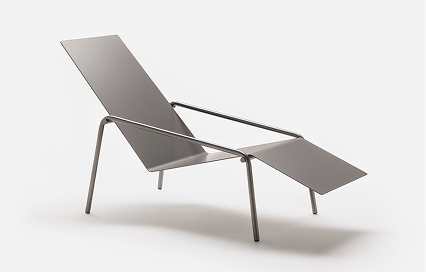
FILLET
Chaise longue with powder-coated stainless steel and aluminum frame, available with removable cushions and finishes suited for both indoor and outdoor use.
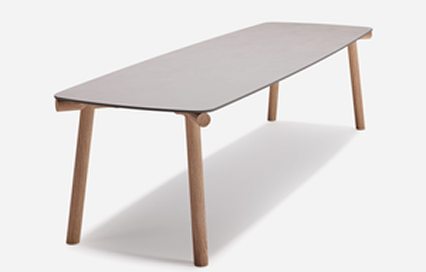
KASUMI TABLE
Dining table with solid teak legs, black stainless steel frame, and porcelain stoneware or black granite top with plastic floor supports.
The Architectural Dialogue Between Interior Volume and Landscape
To design exterior space with authority, one must first regard it as a series of rooms without ceilings. Walls are replaced by low retaining planes, hedges, or shifts in elevation. Ceilings are suggested through pergolas or cantilevered slabs that cast measured shadows across the ground plane.
The continuity of horizontal lines is critical. Long seating modules echo interior sofas. Plinth-like benches align with architectural datum lines. Flooring materials extend visually beyond glazing, dissolving threshold conditions. When the language of proportion remains consistent, the eye travels outward without interruption.
Designers such as Piero Lissoni for Living Divani exemplify this approach. His outdoor collections translate the formal clarity of interior seating into weather-resistant forms that retain architectural composure. The result is not garden furniture, but exterior architecture articulated through furniture scale.
Material Permanence and the Ethics of Exposure
Luxury outdoors is inseparable from durability. Materials must not merely endure exposure but respond to it with dignity. In luxury outdoor living design, teak and iroko are favored for their density and high oil content. Left untreated, they weather into a restrained silver-grey that records time rather than resisting it.
Metal elements demand similar consideration. AISI 316 stainless steel, with its enhanced resistance to salt and moisture, maintains structural integrity in coastal or poolside conditions. Powder-coated aluminum introduces precision without excessive weight. Corten steel develops a controlled oxide layer that deepens in tone, transforming corrosion into aesthetic evolution.
The dialogue between organic timber and refined metal establishes balance. One absorbs light. The other reflects it subtly. Together they form an exterior composition that feels intentional rather than seasonal.
Modular Systems and Topographic Intelligence
At the center of many elevated terraces lies a modular seating system calibrated to the site’s specific geometry. In disciplined luxury outdoor living design, modularity is not convenience but spatial intelligence.
The Kasbah system by David Lopez Quincoces, constructed in solid teak, demonstrates how a low horizontal base can anchor a terrace visually. Its modules allow linear or L-shaped arrangements that define conversational zones without interrupting circulation. The weight of the timber frame ensures that the composition reads as fixed rather than temporary.
By contrast, the Agra collection introduces transparency through slender steel frames and woven surfaces. In smaller courtyards or elevated balconies, this visual lightness preserves openness. The surrounding landscape remains legible through the furniture rather than concealed by it.
Modularity allows the layout to adapt to gathering size while maintaining editorial coherence. The structure remains stable even as configuration shifts.
Textile Performance and the Sensory Layer
Exterior textiles must perform technically while retaining tactile depth. High-tenacity polyester cords and PVC-coated yarns are woven to mimic interior softness while resisting UV degradation and moisture retention.
The woven skin of Piero Lissoni’s Frog chair, for instance, introduces tension and elasticity within a minimal silhouette. Light passes through the weave, casting shifting shadows across stone or timber decking. The furniture becomes a filter for the environment rather than an obstacle within it.
In a refined luxury outdoor living design, textiles are selected not for color novelty but for longevity. Neutral mineral tones allow the surrounding landscape to provide chromatic variation. The objective is harmony instead of a statement.
Integrated Lighting and Nocturnal Architecture
An exterior must function after sunset with the same composure it holds at midday. Thoughtfully integrated outdoor lighting articulates geometry without glare. Low-voltage path lights trace circulation. Subtle wall washing reveals the texture of stone or metal. Concealed uplighting within planting beds introduces vertical depth.
Warm color temperatures preserve intimacy and prevent harsh contrast against the dark sky. Furniture silhouettes become sculptural at night, defined by light grazing across edges.
The evening environment should feel atmospheric rather than theatrical. Illumination must reveal structure without overpowering it.
The Exterior as Architectural Legacy
Over time, the exterior space records use and climate. Timber softens in tone. Metal acquires a subtle patina. The stone darkens slightly in the rain. These shifts are not deterioration but narrative.
When proportion and material are resolved with rigor, the exterior remains relevant regardless of seasonal trends. It anchors the landscape with quiet authority. It supports gathering without spectacle.
Luxury outdoor living design ultimately succeeds when it feels inevitable, when the terrace and architecture appear conceived as one continuous gesture. Through disciplined material selection, calibrated modular systems, and environmental intelligence, outdoor living design transforms the open air into a lasting architectural extension of the home.
FAQs
1. How does AISI 316 stainless steel perform in coastal environments?
AISI 316 contains molybdenum, which enhances resistance to salt corrosion and pitting, making it ideal for poolside and oceanfront applications.
2. What is the best way to maintain weathered teak?
If you prefer the natural silver-grey patina, clean the teak periodically with mild soap and water. Avoid oil treatments that preserve the original golden tone.
3. Can modular outdoor seating withstand high winds?
Yes, when constructed with solid frames and weighted bases. High-quality systems are engineered for stability in exposed conditions.
4. How long do UV-stabilized woven cords retain their color?
UV stabilization protects the fibers from molecular breakdown, allowing them to maintain tensile strength and color for years of direct sun exposure.
5. Is outdoor lighting necessary for luxury exterior design?
Integrated lighting enhances safety and atmosphere, revealing texture and form after dark without compromising architectural restraint.
