
Modular Sectional Couches: Curated Comfort for Luxurious Interiors
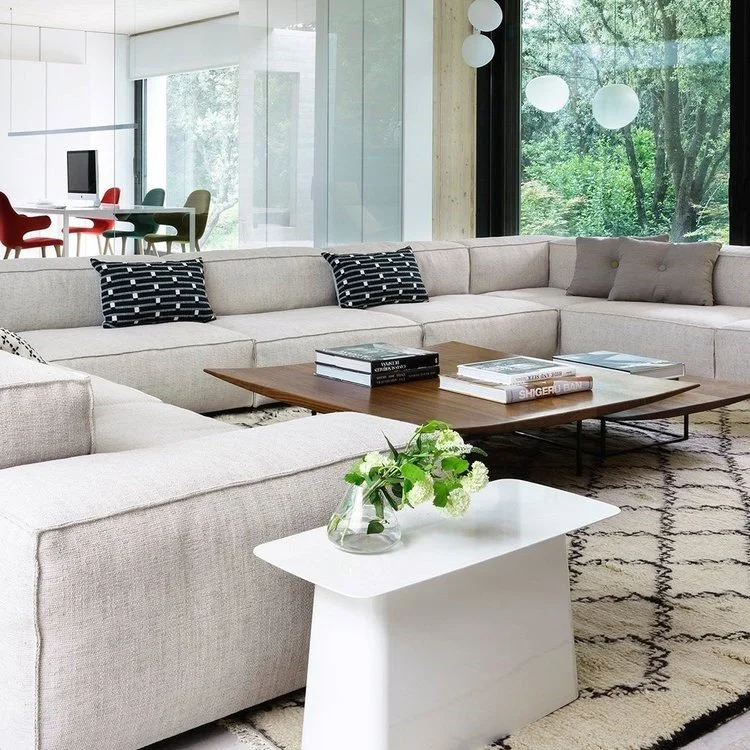
A modular sectional couch is not simply a piece of furniture. It is a spatial system. Within contemporary interiors, it represents a shift from fixed arrangements toward adaptable living. Rooms today are expected to evolve throughout the day, accommodating conversation, solitude, entertainment, and rest without losing composure. The modular sectional answers that expectation with quiet precision.
What distinguishes modular seating in refined homes is not its scale or its softness, but its intelligence. Each component participates in the architecture of the room. Lines align with circulation paths. Corners respond to sightlines. Upholstery becomes part of the visual language rather than a decorative afterthought.
To select a modular sectional couch is to acknowledge that comfort and structure are not opposing forces. When thoughtfully composed, they reinforce one another, creating interiors that feel both generous and disciplined.
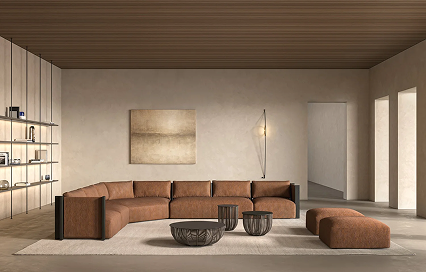
ARKADIUS
Modular seating system with architectural wooden backrests and armrests, pairing structured vertical slats with soft upholstered cushions.
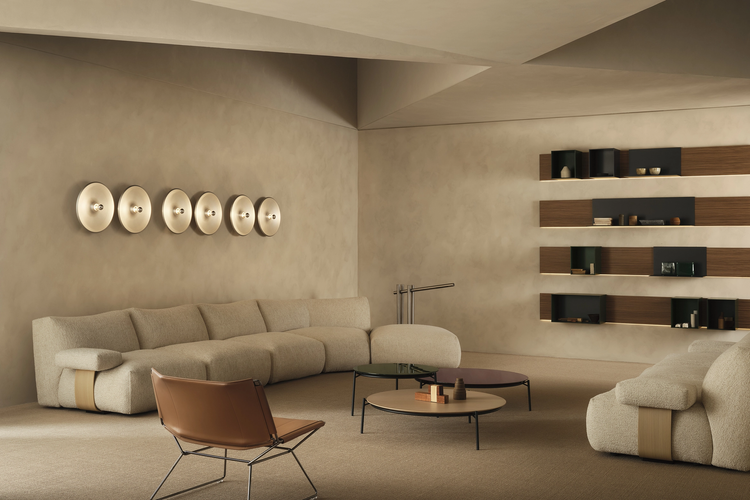
GOOM
A modular system comprising single units, corner units, chaise longue and poufs, with the option of adding one or more armrests.
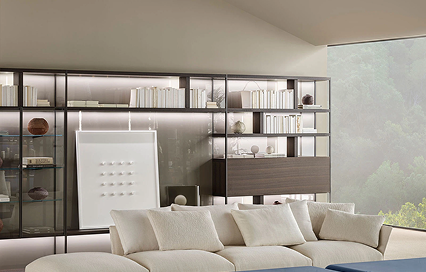
TOBU
Linear three- and four-seater configurations, as well as closed or open corner versions with armless central or end modules. complemented by a square armchair with one or two backrests.
The Spatial Logic Behind Modular Seating
In traditional living rooms, furniture often dictated the layout. A large sofa anchored the wall, chairs filled the remaining perimeter, and the arrangement remained static for years. Modular design challenges that rigidity by treating seating as a flexible framework rather than a fixed object.
This approach reflects broader architectural thinking. Open plans, expansive glazing, and multifunctional rooms have changed the way people inhabit their homes. Spaces are no longer defined by single uses. They operate as fluid environments where movement and interaction shape the experience of the interior.
A modular sectional couch responds to this reality by allowing the composition to shift without compromising visual balance. Modules can expand to welcome guests or contract to create intimacy. The room retains its coherence because the system is designed to adapt from the beginning.
Designers often describe this adaptability as spatial resilience. It ensures that the furniture remains relevant even as lifestyles change.
Form as Architecture, Not Decoration
In well-composed interiors, furniture behaves like architecture. It defines zones, frames movement, and establishes rhythm within the room. A modular sectional sofa like Dao performs this role with particular clarity because its geometry can be adjusted to reinforce the underlying structure of the space.
Consider a long, low configuration placed parallel to a wall of windows. The horizontal line echoes the architecture, extending the visual horizon and emphasizing openness. In another setting, a curved arrangement may soften rigid angles and introduce a sense of movement across the floor plan.
These decisions are not stylistic gestures. They are responses to proportion and scale. When furniture aligns with architectural logic, the room feels inevitable, as though every element belongs exactly where it rests.
Material Integrity and the Sensory Experience of Comfort
Luxury is often misunderstood as ornament. In practice, it is defined by material integrity. The tactile qualities of upholstery, the resilience of the frame, and the precision of joinery determine how a modular sectional couch performs over time.
Upholstery as Surface and Structure
Fabric selection shapes the emotional tone of the room. Bouclé introduces softness and texture, encouraging relaxation. Fine wool conveys quiet warmth. Linen offers a breathable, natural character that evolves gracefully with use.
Performance textiles have also matured significantly in recent years. They maintain color stability, resist wear, and preserve their structure under daily use. For households that balance elegance with practicality, these materials provide reassurance without compromising refinement.
The Hidden Framework
Beneath the upholstery lies the structural core of the sectional. Kiln-dried hardwood frames and reinforced suspension systems ensure stability. Precision craftsmanship prevents sagging and maintains alignment between modules.
This invisible engineering is what allows the sectional to retain its composure after years of use. Comfort becomes consistent rather than temporary.
The Role of Proportion in Creating Visual Calm
One of the most overlooked aspects of interior design is proportion. A modular sectional couch can transform a room when its dimensions correspond thoughtfully to the architecture around it.
Low-profile seating often enhances ceiling height by preserving vertical openness. Deep cushions encourage relaxation while maintaining a grounded presence. Balanced spacing between modules allows light and movement to circulate naturally.
Designers frequently speak about negative space as an essential component of composition. It is the area around the furniture that allows the form to breathe. Without sufficient breathing room, even the most beautiful sectional can feel heavy.
When proportion is respected, the room achieves a sense of calm that is immediately perceptible.
Adaptability as a Measure of Modern Luxury
Modern luxury is defined by longevity and flexibility rather than excess. A modular sectional couch embodies this principle by accommodating change without requiring replacement.
Families grow, routines shift, and homes evolve. A seating system that can be reconfigured supports these transitions with ease. Additional modules can be introduced when entertaining becomes more frequent. Pieces can be rearranged to create new zones within an open plan.
This adaptability protects both the financial investment and the design integrity of the interior. Instead of discarding furniture, homeowners refine the composition to meet new needs.
Such continuity reflects a deeper understanding of sustainability. Quality design endures because it remains useful.
The Emotional Dimension of Seating
Comfort is not only physical. It is emotional. A well-designed modular sectional couch creates a sense of belonging within the home. It becomes the place where conversations unfold, where evenings slow down, and where daily rituals find their rhythm.
The arrangement of seating influences how people interact. A U-shaped configuration encourages dialogue by bringing individuals closer together. A linear arrangement supports quiet reflection and unobstructed views. Each configuration shapes the atmosphere of the room in subtle ways.
Designers often consider these emotional responses when selecting furniture. The goal is not merely to fill space, but to cultivate experience.
Integrating a Modular Sectional Couch into a Cohesive Interior
A sectional achieves its full potential when it participates in a broader design narrative. Surrounding elements should reinforce the same language of restraint and clarity.
Lighting plays a particularly important role. Soft illumination highlights the texture of upholstery and creates depth across the seating surface. A carefully positioned floor lamp can define the edge of the arrangement while preserving visual continuity.
Rugs anchor the composition by establishing boundaries beneath the modules. Artwork introduces vertical interest and connects the seating area to the architecture of the room. Each component contributes to a balanced and harmonious environment.
The result is an interior that feels curated rather than assembled.
Longevity and the Discipline of Craft
A modular sectional couch represents a long-term commitment to quality. Unlike disposable furnishings, it is designed to remain relevant across decades. Its durability stems from disciplined craftsmanship and thoughtful material selection.
Seams must align precisely. Cushions must retain their shape. Frames must withstand repeated movement and reconfiguration. These details require expertise and patience during production.
When executed correctly, the sectional becomes part of the home’s identity. It carries memories of gatherings, celebrations, and quiet moments. Over time, it acquires character without losing structure.
This continuity is what distinguishes true luxury from temporary indulgence.
The Future of Living Room Design
As homes continue to evolve, flexibility will remain a defining principle of interior design. Spaces must respond to changing routines while preserving visual coherence. The modular sectional couch stands at the center of this evolution.
Its strength lies in its ability to balance comfort with discipline. It offers freedom without chaos, softness without excess, and adaptability without compromise. In thoughtfully designed interiors, it becomes more than seating. It becomes a framework for living.
When chosen with intention and placed with care, a modular sectional couch changes the living room to make it a space that feels composed, welcoming, and enduring.
FAQs
1. What makes a modular sectional couch different from a traditional sofa?
A modular sectional couch is composed of individual units that can be arranged in multiple configurations. This flexibility allows homeowners to adapt the layout to suit different room sizes and lifestyles.
2. Are modular sectional couches suitable for luxury interiors?
Yes. Their customizable design and high-quality materials make them ideal for refined spaces where comfort and visual harmony are equally important.
3. How long should a high-quality modular sectional couch last?
With proper craftsmanship and maintenance, a well-constructed modular sectional can remain functional and visually appealing for fifteen years or longer.
4. Can modular sectionals work in smaller living rooms?
They can. Selecting fewer modules or compact dimensions allows the sectional to fit comfortably within limited space while preserving flexibility.
5. What should I consider before purchasing a modular sectional couch?
Evaluate room dimensions, daily usage patterns, material durability, and how the sectional aligns with the architectural style of the home.
