
Sculptural Italian Dining Tables That Define the Home
An exceptional dining table does more than provide a surface for meals. It establishes scale, directs movement, and gives the room a point of focus. Italian dining tables have long approached this role through a careful balance of material, proportion, and structure. At Graye, the collection brings together designs where marble, wood, glass, and metal become part of the architecture of the home.
Let Sculptural Form Establish the Dining Room
A sculptural table can define a dining area without relying on ornament. The relationship between its top and base creates the visual character, while the materials determine how it interacts with natural and artificial light.
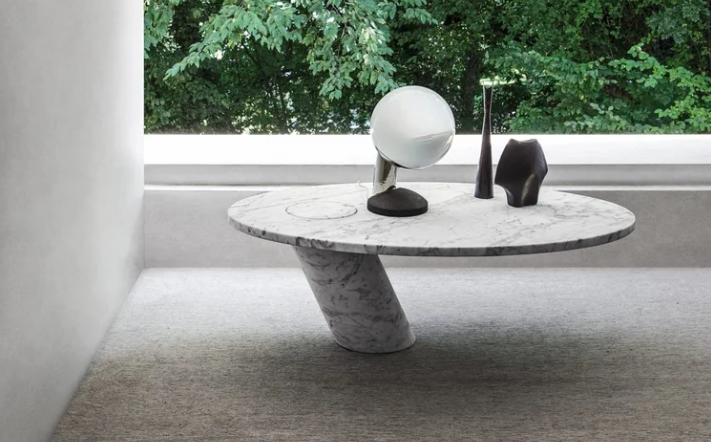
The Eccentrico table by Angelo Mangiarotti is a particularly clear expression of this philosophy. Made entirely from marble, its elliptical top is fitted asymmetrically into an inclined cylindrical leg. The connection relies on weight, friction, and eccentricity rather than visible fasteners, allowing the construction itself to become the design.
This approach reflects Mangiarotti’s broader understanding of furniture as a form of structural thinking. His work treats marble and other materials as essential elements of construction, not surfaces applied for decoration. Graye’s guide to modern dining table design explores this relationship between material, scale, and craft in greater depth.
Marble Brings Depth and Permanence to the Composition
Marble changes how a dining room responds to light. Its veining creates a surface that is naturally individual, while its density gives the table a grounded quality. In a room with restrained architecture, this can provide enough visual interest without requiring additional decoration.
When selecting a marble table, consider the surrounding palette. Pale stone can reinforce an airy interior, while darker veining can introduce definition against lighter walls and flooring. The finish also affects how the surface is experienced. A polished treatment reflects light more distinctly, while a honed surface creates a quieter, softer appearance.
The character of marble also works particularly well with sculptural bases. Instead of hiding the supporting structure, designs such as Eccentrico make the relationship between weight, balance, and geometry central to the experience.
Explore Wood as a Warmer Architectural Material
Wood brings warmth and natural variation to sculptural tables, offering an alternative to stone.
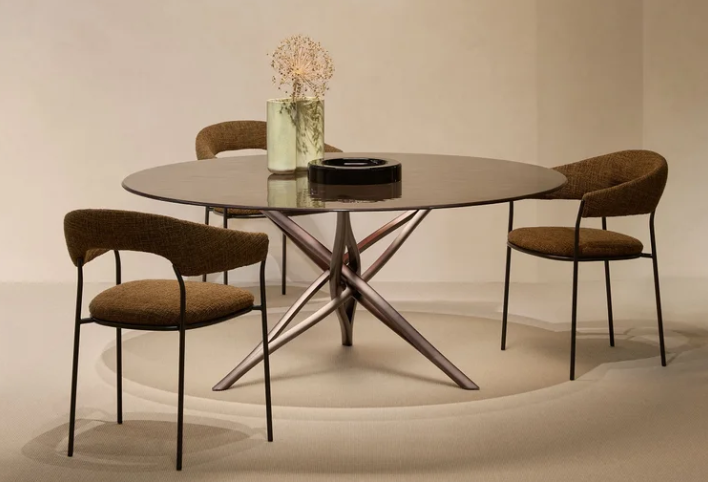
The SK Table by Studio Klass offers a lightweight take on Italian dining design. Its aluminum arch base supports round or rectangular tops in wood, marble, or glass, making it a versatile choice among Italian dining tables.
A wooden top adds warmth, marble creates a more formal presence, and glass keeps the composition light. For more on material relationships, read the guide to modern Italian interior design.
Use Transparency to Preserve Visual Flow
Glass can transform the presence of a dining table. Instead of creating a solid visual plane, a transparent surface allows the eye to move through the structure, making it useful in rooms where openness is an important part of the architecture.
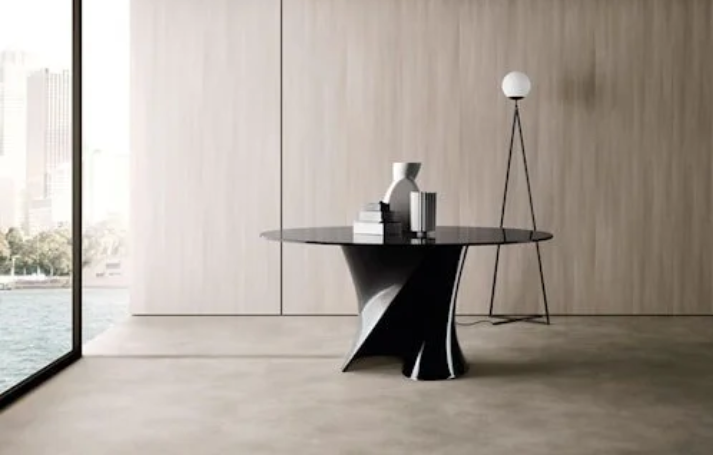
The S Table by Xavier Lust approaches this idea through a distinctive S-shaped twisted base. Available in round or oval configurations, the base is molded in Cristalplant or Ceramilux and offered in a variety of finishes.
Its sculptural foundation gives the table a strong identity even when the overall composition remains visually open. This makes transparency more than a practical choice. It becomes a way to expose the relationship between structure, negative space, and the surrounding room.
Bring Sculptural Italian Dining Table Home
Choose Scale According to the Architecture
The right table should feel proportionate to the room before chairs or accessories are introduced. A large dining area can support an expansive surface with a substantial base, while a more intimate room may benefit from a round or oval design that preserves circulation.
Consider the ceiling height as well. A table with a strong sculptural base can hold its presence beneath generous architectural volume, while a lighter design may work better where the surrounding space already has substantial visual weight.
The position of the table matters too. In an open-plan home, it can establish a transition between kitchen and living areas. In a dedicated dining room, it may sit more centrally, allowing its geometry to become the defining element.
Build the Room Around the Table Without Competing With It
Once the table is selected, the surrounding furniture should support its presence. Chairs can introduce softness through upholstery or warmth through wood, while lighting can reinforce the table’s geometry from above.
Accessories should remain measured. A sculptural table already provides a strong visual statement, so a small arrangement of objects can be more effective than a crowded centerpiece. Storage pieces positioned nearby can echo the table’s material palette without copying its form.
This restrained approach gives Italian dining tables room to remain the architectural focus. Their strength comes from proportion and material integrity, so the surrounding interior should create space for those qualities to register.
Let the Dining Table Become Part of the Home’s Architecture
The most compelling dining tables do not feel like additions placed into a room. They establish a relationship with the architecture through scale, material, structure, and movement.
Italian dining tables offer an especially rich expression of this principle, from Mangiarotti’s gravity-led marble construction to Studio Klass’s adaptable architectural framework and Xavier Lust’s sculptural base. At Graye, these designs provide a considered foundation for dining spaces shaped by material intelligence and lasting form.
FAQs
-
A sculptural table gives equal importance to its structure and function. Distinctive geometry, carefully resolved joints, unusual proportions, or expressive materials can make the table read as an object of design within the room.
-
Yes. Marble can provide natural variation and material depth within a contemporary setting. Its effect depends on the stone, finish, surrounding palette, and geometry of the table.
-
Round and oval tables can soften rooms dominated by straight architectural lines. They also create a more continuous relationship between diners and can make circulation around the table feel less restrictive.
-
Use the table to establish a visual boundary between dining and adjacent areas. Its shape, base, and material can define the dining zone while maintaining continuity with the kitchen and living spaces.