
Selecting a Contemporary Dining Table and Chairs Set
A dining room comes together through relationships between form, material, scale, and comfort. Choosing a contemporary dining table and chairs set is therefore less about finding pieces that look identical and more about creating a considered dialogue between them.
At Graye, the collection brings together European designs that balance architectural clarity with the tactile qualities needed for everyday dining.
Start With the Table as the Room’s Defining Element
The dining table establishes the room’s horizontal plane. Its dimensions determine how people move around it, while the shape and construction influence how the entire setting is perceived. Begin by considering the architecture around the table, then select a design that reinforces those proportions.
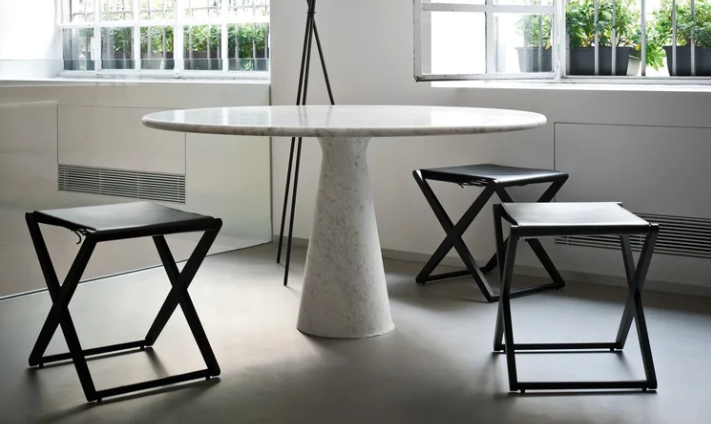
For a sculptural approach, the M Table by Angelo Mangiarotti offers a strong example of material-led design. Its circular top is supported by a turned central base with a hyperboloid form, creating a composed silhouette without decorative excess. The result is a table that holds attention through geometry and construction.
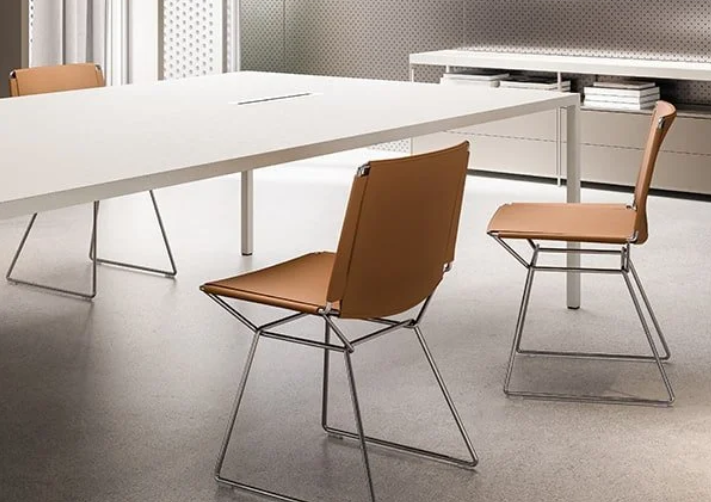
A rectangular or elongated room may call for a more linear expression. The Tense table by Piergiorgio Cazzaniga and Michele Cazzaniga uses a continuous surface and an exceptionally restrained structure, allowing its long plane to sit quietly within the architecture. This type of proportion works particularly well where the dining area needs to feel connected to an open living or kitchen space.
Match Proportions Before Matching Finishes
When selecting a contemporary dining table and chairs arrangement, proportion should come before color or finish. A substantial table can support chairs with a lighter visual profile, while a slender table may benefit from seating with more volume.
Chair height is equally important. The seat should allow comfortable clearance beneath the tabletop, while the back should relate to the height and visual weight of the table. A tall chair can introduce enclosure around a relatively low table, while a low-backed design maintains a continuous sightline across the room.
The number of chairs also affects the composition. Crowding the perimeter can make an otherwise generous table feel restricted. Allowing each chair sufficient room preserves both physical comfort and the rhythm created by repeated forms.
Graye’s guide to selecting dining chairs considers these relationships in greater depth, from spacing and ergonomics to how a chair’s silhouette contributes to the surrounding architecture.
Use Material Contrast to Create a More Layered Setting
A successful contemporary dining table and chair pairing does not require identical finishes. In fact, carefully chosen contrast can give the room greater depth.
A stone or marble table introduces visual weight and permanence. Seating in wood, leather, or fabric can soften that presence through warmth and texture. Conversely, a wood table can be paired with a darker upholstered chair or refined metal structure to create definition without disrupting the room’s restraint.
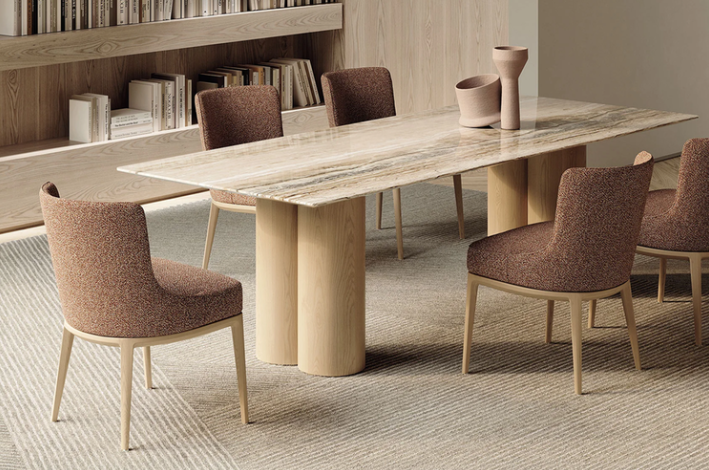
The Althea chair by Umberto Asnago demonstrates how upholstery and structure can work together. Its solid ash wood legs provide a grounded architectural base, while the upholstered seat introduces softness and visual continuity. The restrained proportions allow the chair to complement a substantial dining table without competing with its presence.
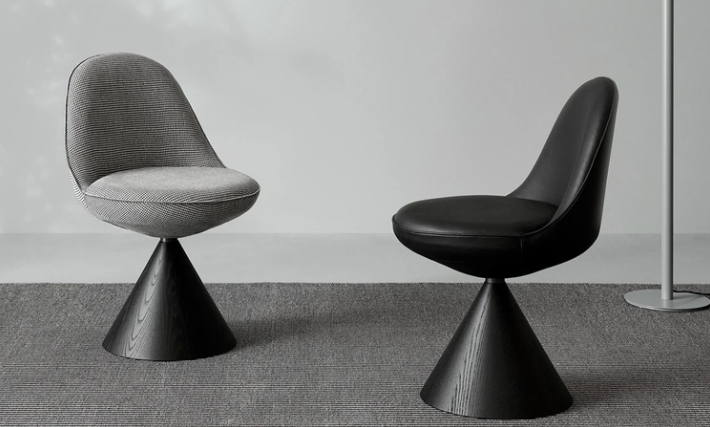
For a different material language, the Romby chair by GamFratesi combines fabric or leather upholstery with a rotating solid ash base. The upholstered form brings softness and tactile richness, while the wood base introduces warmth and a clear structural element. This balance makes it well suited to dining interiors where contrasting materials need to feel cohesive rather than matched.
Let Comfort Shape the Final Chair Selection
A dining chair is experienced physically for much longer than many other furniture pieces. Seat depth, back support, upholstery, and overall posture can determine whether a gathering lasts another hour or ends after the meal.
For extended dining, upholstered seating can introduce a softer tactile quality. Leather brings durability and develops character through use, while fabric can introduce tonal variation and a more enveloping feel. A sculpted back can provide support without adding excessive visual mass.
The chair should also be considered from behind. In a dining setting, multiple chairs create a repeated vertical rhythm, so their rear profile becomes part of the room’s composition. This matters particularly in open-plan interiors where the dining area is visible from the living room or kitchen.
For more insight into the role of upholstered seating, Graye’s designer’s perspective on upholstered dining chairs explores how fabric, leather, armrests, and cushioning influence both atmosphere and comfort.
Create Your Dining Composition
Consider the Complete Room Before Making the Final Choice
The strongest contemporary dining table and chair arrangements respond to more than the furniture itself. Lighting, flooring, wall finishes, cabinetry, and surrounding circulation all affect how the pieces will read.
A sculptural table may need quieter seating and restrained lighting to retain its presence. A minimal table can accommodate a chair with more pronounced texture or curvature. In each case, the goal is balance rather than uniformity.
Scale should also extend beyond the table and chairs. A pendant should sit comfortably within the table’s footprint, while a nearby credenza or cabinet should support the composition without creating a competing focal point. Leave enough negative space for each major element to retain its identity.
Choose a Dining Pairing With Lasting Design Value
A dining table and its chairs become part of the daily rhythm of a home. They host meals, conversations, celebrations, and quieter moments, so their design needs to withstand both practical use and changing surroundings.
The right contemporary dining table and chair combination brings together proportion, material integrity, ergonomic comfort, and a clear visual relationship. Graye’s collection offers a considered selection of European designs that allow those qualities to work together, creating dining environments that feel resolved without becoming overly formal.
FAQs
-
Not necessarily. Different designers can create a more layered interior when their proportions, materials, and visual language complement one another.
-
Look for chairs with a lighter frame, open structure, or slimmer silhouette. This creates contrast and prevents the dining area from feeling visually dense.
-
Yes. A round table can create a more equal relationship between diners while introducing a softer counterpoint to rooms dominated by linear architectural elements.
-
Upholstery adds tactile depth, softens harder materials, and can improve comfort during extended meals. Fabric and leather also introduce tonal variation that can connect the chairs with other elements in the room.