
Principles of Modern Italian Interior Design and Curation
Refine Your Furniture Selection With Graye
The most compelling modern Italian interior design is not defined by a checklist of Italian furniture, marble surfaces, or minimalist forms. It is defined by judgment. Proportion, rhythm, negative space, material temperature, and light are considered together until a room feels composed rather than decorated.
For homeowners who think carefully about how their spaces should look and live, this approach offers something more valuable than a recognizable style. It offers a way of editing.
Start With the Architecture and Resist the Urge to Fill It
Italian interiors often gain strength from restraint. Before selecting furniture, consider the room's geometry, natural light, circulation, and architectural details.
A generous wall may need only a carefully positioned object, while a long room may benefit from furniture that establishes rhythm. Graye's approach brings furniture, lighting, objects, rugs, mirrors, and architectural systems together as part of a cohesive interior language.
Build Rhythm Through Repetition Without Creating Uniformity
One of the quieter principles of modern Italian interior design is repetition. A finish may appear in several rooms without being used identically. A warm metal can echo through lighting and furniture hardware. A particular wood tone can reappear in cabinetry, shelving, or a single sculptural piece.
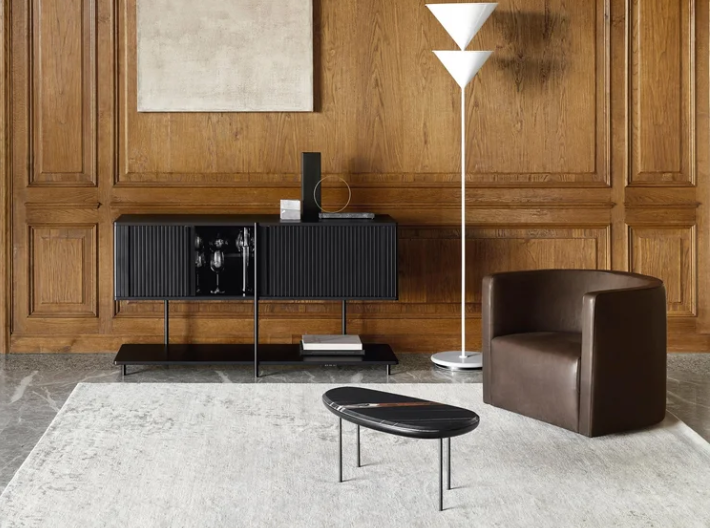
The Pebble accent table by Lanzavecchia and Wai demonstrates how a relatively compact object can contribute to this rhythm. Available in various finishes, its organic form provides contrast to more architectural furniture without disrupting the overall composition.
The intention is not to make every finish identical. It is to allow certain relationships to recur naturally.
Use Texture to Keep Minimalism From Feeling Cold
Minimalism becomes sophisticated when it has tactile depth. Smooth stone beside brushed metal feels different from stone beside polished lacquer. A textured rug can soften a room dominated by architectural surfaces. Upholstery can introduce warmth without adding visual complexity.
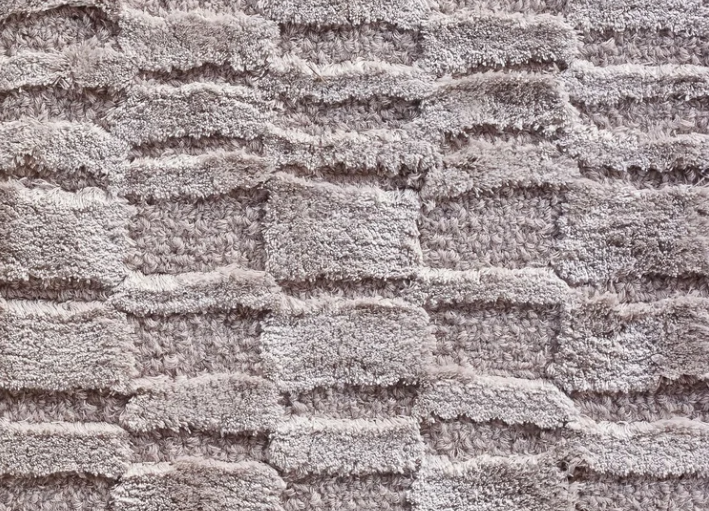
The Fendley rug by JOV combines Tencel Lyocell and New Zealand wool and can be customized in color, quality, size, and shape. Its flexibility makes it possible to introduce softness according to the dimensions and palette of the room rather than forcing the architecture to accommodate a predetermined format.
This is where material becomes more than decoration. It changes how the room feels underfoot, in daylight, and at night.
Shape Your Interior With Luxury Rugs
Create Visual Hierarchy Through Furniture Placement
Furniture should establish a sequence of attention. Not everything can be the focal point.
A sculptural table may anchor the dining area, while shelving establishes a quieter vertical plane elsewhere. Seating can define the center of a room without closing it off. The objective is to create movement for the eye.
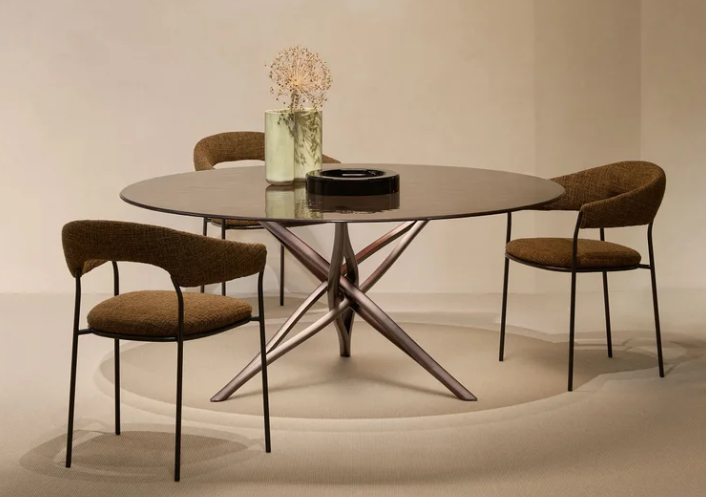
The SK Table by Studio Klass uses a lightweight aluminum arch base with concealed joints and offers round or rectangular tops in wood, marble, or glass. The structure gives the table a sense of lightness, while the choice of top changes its material character.
Its design illustrates an important principle: visual weight can be controlled through structure, not merely reduced through size.
Let Storage Become Part of the Architecture
Storage is often where otherwise refined interiors become visually fragmented. Modern Italian planning treats cabinetry and shelving as architectural components.
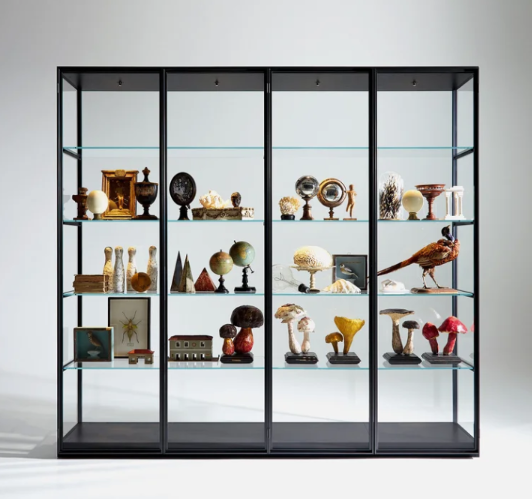
The Ex-libris bookshelf by Piero Lissoni combines a black base with metal and glass doors, creating a structured composition that can accommodate books and objects while keeping the overall effect refined. Optional locking and LED lighting add another layer of functionality without compromising its clean architectural character.
Rather than filling every shelf, consider leaving areas open. The resulting composition allows selected books, ceramics, artwork, and objects to breathe.
Graye's closet systems take the same architectural approach further, with made-to-measure systems designed to integrate with surrounding spaces.
Use Lighting to Change the Character of Materials
Lighting should not simply make a room visible. It should reveal what the room is made of.
Warm illumination can bring depth to timber and upholstery. Directional light can emphasize a textured surface. Diffused light can soften stone and architectural edges.
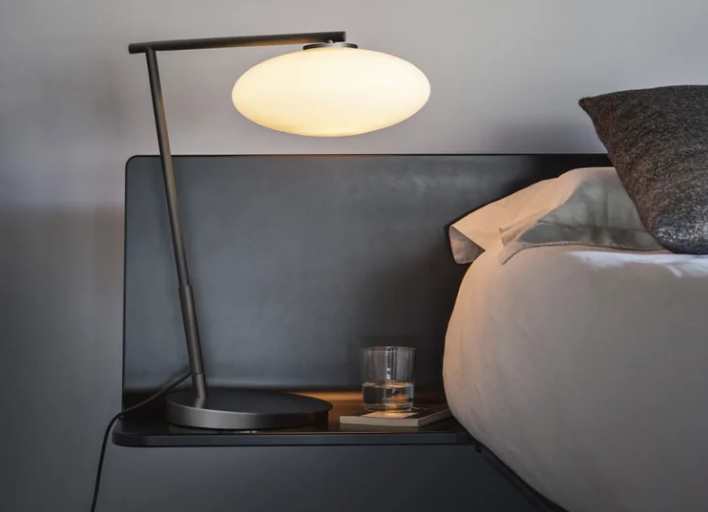
The Mami da Tavolo by Umberto Asnago uses a structure in matt black varnished metal or brushed bronze, providing a more intimate layer of illumination.
Graye's approach to lighting recognizes that the quality, direction, and intensity of illumination determine how every other material in a room is perceived.
Curate Objects as Moments Rather Than Collections
Objects are most effective when they have room to register. A single sculptural piece can create more impact than a crowded arrangement of decorative accessories.
Think about scale. A substantial object may hold a console or open shelf, while smaller pieces can create a quieter composition. Varying heights and materials introduces rhythm without requiring visual clutter.
This approach also makes the interior more personal. Objects can carry memories, references, or artistic interests that furniture alone cannot express.
Allow the Interior to Evolve Instead of Completing It at Once
A sophisticated home does not need to feel finished immediately. Begin with the architecture and major furniture, then layer in lighting, rugs, objects, and artwork as the space develops.
This gradual approach reflects modern Italian interior design, where coherence matters more than completion. Graye similarly treats curation as an ongoing process of editing and refinement.
To Conclude
The essence of modern Italian interior design lies in restraint guided by intention. Architecture establishes the foundation. Furniture creates hierarchy. Texture introduces warmth, lighting reveals material, and carefully chosen objects give the residence its individual voice.
The result should never feel like a collection assembled to demonstrate a style. It should feel deeply considered, with enough space for every material, object, and gesture to have meaning.
FAQs
-
Warm neutrals, mineral tones, muted earth colors, and restrained monochromatic palettes provide a strong foundation. Deeper shades can then be introduced through selected furniture, art, or objects.
-
Not necessarily. A consistent material palette and approach to proportion can connect the rooms while allowing each space to have its own atmosphere and purpose.
-
Rugs help establish visual zones, soften architectural surfaces, and introduce texture. Customizable designs are particularly useful when the rug needs to respond precisely to a room's dimensions.
-
Yes. A sculptural piece can become a focal point without creating clutter when the surrounding composition remains restrained. Its shape, scale, and relationship to negative space are what make the difference.