
Leather vs Fabric Sofa: Choosing the Ultimate Seating
Explore Graye's Sofa Collection
A sofa does more than establish the seating in a room. Its upholstery influences how the space feels, how light moves across its surface, and how the piece changes through years of use. When considering a leather vs. fabric sofa, the decision is therefore not about maintenance or personal preference. It is about tactile character, material depth, durability, and the atmosphere you want the room to hold.
Let the Material Shape the Character of the Room
Upholstery is one of the largest continuous surfaces in a living room, which makes its material impossible to treat as an afterthought. The same sofa can possess an entirely different presence when rendered in a soft textile, not leather.
Fabric tends to bring softness and visual depth. Wool, linen, bouclé, and other woven textiles absorb and diffuse light, giving generous sofa forms a quieter, more tactile quality. Leather responds differently. Its surface catches light, reveals subtle variations in tone, and often becomes more expressive with use.
Consider the Light as Much as the Color
A fabric's character can become particularly apparent in natural light, where its weave and texture create subtle shifts across the surface. Leather has a more reflective quality, making a leather vs. fabric sofa a consideration when allowing highlights to trace the contours of cushions and arms.
This distinction matters in rooms with expansive windows or strong architectural lighting. The material should complement the way light already moves through the interior.
Understand How Each Material Ages Over Time
One of the most compelling qualities of fine leather is its capacity to acquire a patina. Instead of remaining visually unchanged, the surface can acquire greater depth through contact, movement, and everyday use. Small variations become part of its character.
Fabric follows a different path. Its appeal lies in texture, softness, and the breadth of colors and weaves available. A beautifully selected textile can remain remarkably sophisticated without needing to change dramatically over time.
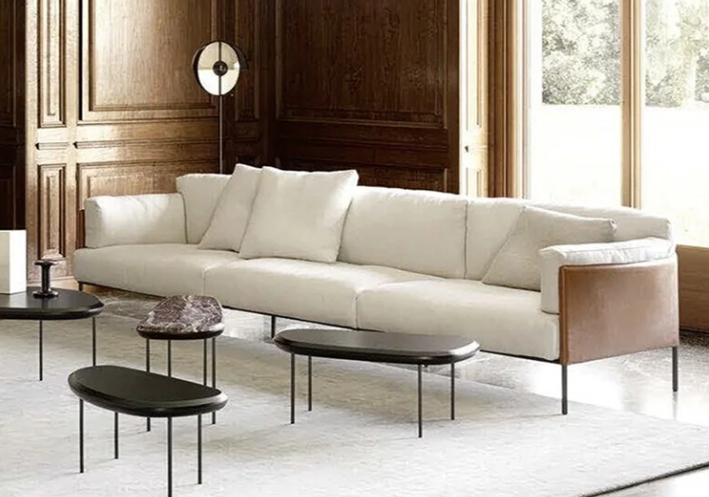
The Greene sofa by David Lopez Quincoces brings this distinction into sharper focus. It features removable fabric covers alongside a saddle leather shell, while its leather covers are non-removable. The combination creates a layered material expression rather than treating upholstery as a single uniform surface.
A material that develops character naturally can become more meaningful as the interior matures. This is one reason the choice between a leather vs. fabric sofa deserves consideration beyond initial appearance.
Compare Comfort Through Texture and Touch
Comfort is described through dimensions and cushioning, but the surface against the body contributes just as much to the experience.
Fabric has an immediate softness. Depending on the weave, it can feel warm, tactile, and inviting, particularly in a room designed around relaxed living. Leather can feel cooler initially, then respond to body temperature as it is used. Its smoothness creates a different sensory experience, one that can feel more tailored and architectural.
Neither is inherently more luxurious. Luxury comes from the quality of the material, the precision of its construction, and how convincingly it belongs to the room.
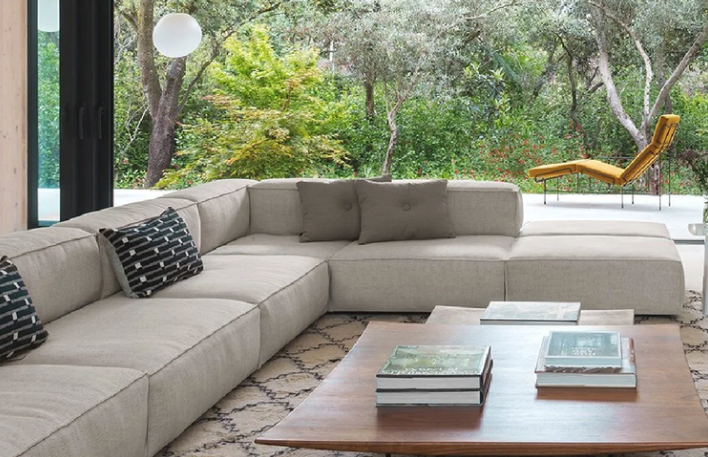
Piero Lissoni's Neowall sofa offers fully removable fabric or leather covers, allowing its modular form to take on different material personalities.
Plan Your Space With Our Design Specialists
Consider Maintenance Without Letting It Dictate the Design
Practicality matters when a sofa is designed for everyday living, but maintenance should complement aesthetics rather than dictate the choice. When considering leather vs. fabric sofa options, fabric varies in durability and care, with removable covers offering added convenience while preserving tactile comfort.
Leather is generally easy to clean, although finishes differ in their response to sunlight, conditioning, and everyday use. Natural variation can also enhance its character over time.
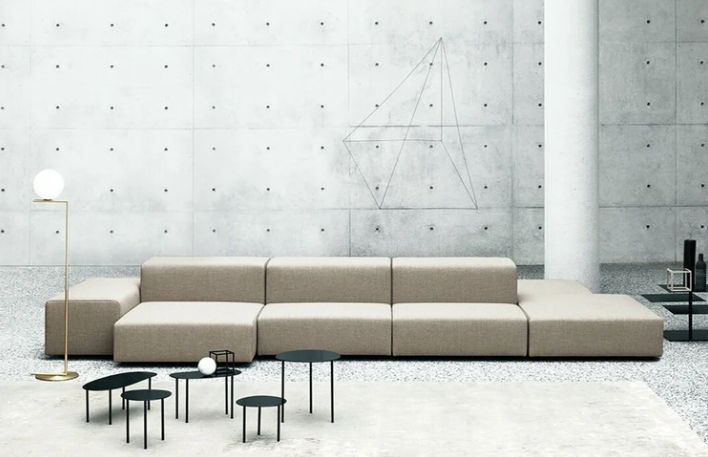
The Extra Wall sofa by Piero Lissoni features removable fabric covers and non-removable leather covers, demonstrating why upholstery specifications deserve careful consideration when selecting a sofa.
Match the Upholstery to the Interior's Material Language
The best upholstery choice is usually not made in isolation. Consider the materials already surrounding the sofa.
A richly textured fabric can soften polished stone, dark timber, or metal. Leather can introduce a more precise counterpoint to softer rugs and textiles. In a neutral room, a tonal fabric can create depth without adding obvious contrast. In a more expressive interior, leather can provide a visual anchor.
Graye's editorial perspective on modular sofas in modern interiors considers upholstery as part of the sofa's wider material and spatial character, from refined textiles to hand-finished leather.
Look at Construction as Closely as the Upholstery
Material is only one part of a sofa's quality. The construction beneath it determines how convincingly the piece will perform over time.
Look at the precision of the seams, the relationship between upholstery and frame, the quality of the cushioning, and whether covers can be removed or replaced. These details are easy to overlook because they are not always visible at first glance, yet they influence the experience of living with the piece.
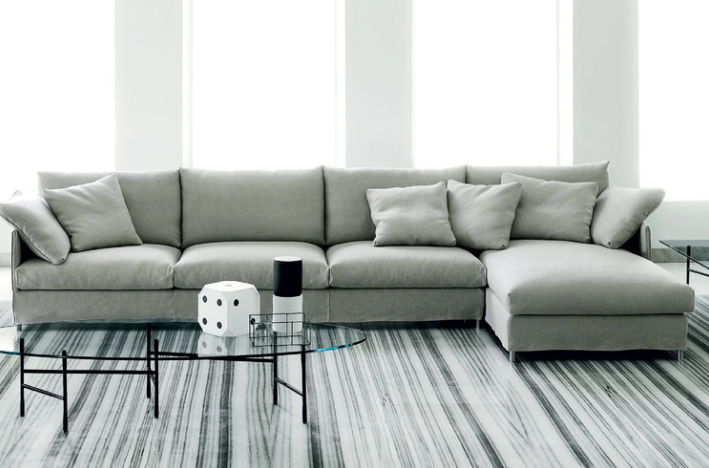
Piero Lissoni's Chemise sofa has fully removable fabric or leather covers and pillows, giving the sofa a particularly adaptable approach to upholstery.
Choose the Material That Can Last for Years
There is no universal winner in the leather vs. fabric sofa debate. Fabric may be the more compelling choice when tactile softness, color, and textile richness are central to the room. Leather may be preferable when surface character, durability, and evolving patina matter more.
The most successful decision considers the way the sofa will actually be used, the atmosphere of the interior, and the materials already present.
Design Your Living Room With Graye’s Sofas
FAQs
-
Not necessarily. The design of the sofa, its proportions, and the specific leather finish all influence its character. Soft, generously proportioned forms can make leather feel relaxed and inviting.
-
Absolutely. Fine textiles can introduce remarkable depth through weave, texture, and tone. In many interiors, a richly tactile fabric creates a softer and more atmospheric sense of luxury than leather.
-
Quality leather can develop a distinctive patina through use. Changes in tone and surface character are considered part of its appeal without imperfections.
-
It can be particularly valuable for frequently used seating. Removable covers simplify maintenance and may make it possible to refresh the appearance of a sofa without replacing its underlying structure.