
Modular Sofas in Modern Interiors: Flexibility Scale and Living Room Design
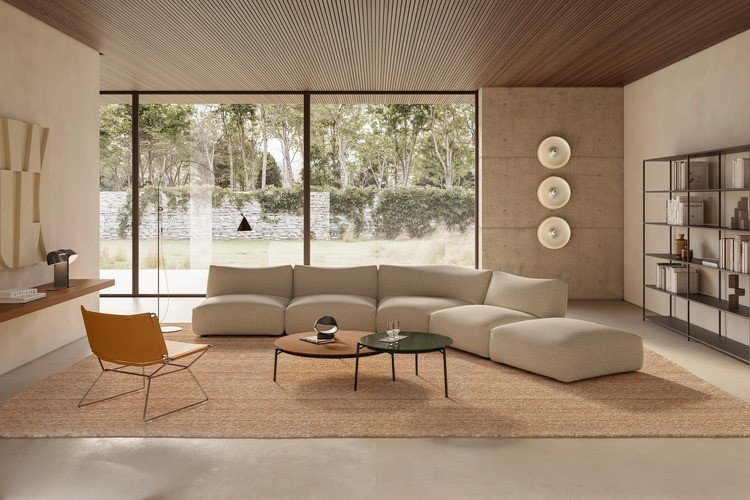
In the framework of contemporary living spaces, the living room is no longer a static enclosure but a fluid environment that must respond to the changing rhythms of daily life. The architecture of the home has shifted toward an open-plan logic, requiring a furniture typology that can occupy large volumes without obstructing the visual flow.
The integration of modular sofas serves as the primary instrument for this domestic choreography. These systems represent a departure from the rigid three-seater archetypes of the past, offering instead a kit of parts that allows the inhabitant to sculpt the seating landscape.
When an object is designed as a series of independent yet cohesive modules, it ceases to be a mere piece of furniture and becomes a structural element of the interior architecture.
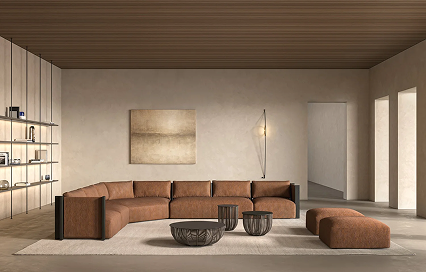
ARKADIUS
Modular seating system with architectural wooden backrests and armrests, pairing structured vertical slats with soft upholstered cushions.
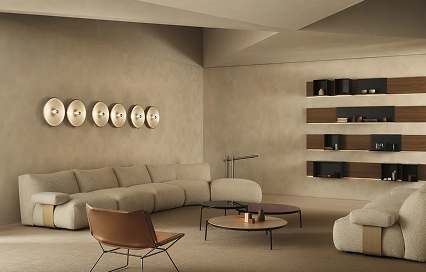
GOOM
A modular system comprising single units, corner units, chaise longue and poufs, with the option of adding one or more armrests
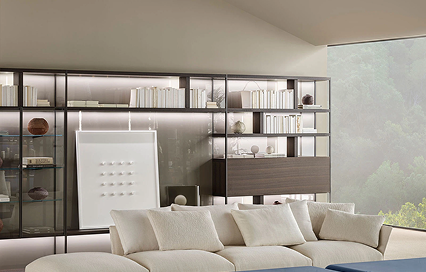
TOBU
Linear three- and four-seater configurations, as well as closed or open corner versions with armless central or end modules. complemented by a square armchair with one or two backrests.
The Evolution of Seating as a Structural Element
To curate a space with authoritative intent, one must view the floor plan as a site of potential energy. The traditional sofa forces a singular direction of engagement, usually centered around a fireplace or a screen. However, the logic of modular seating is rooted in the concept of the 360-degree view.
In many high-end Los Angeles homes, where the interior transitions seamlessly into the landscape, a seating system must look as considered from the back as it does from the front. This architectural flexibility allows for a dual-facing arrangement, where one module may overlook the garden while its counterpart serves the interior conversation pit.
By breaking the sofa down into its constituent parts, the designer is able to negotiate the scale of a room with surgical precision, ensuring that the furniture feels proportionate to the architectural void it occupies.
The Geometry of Modular Sofas in Modern Living
Achieving spatial harmony requires a fundamental understanding of geometry and the weight of an object within a room. The geometry of modular sofas allows for the creation of islands, peninsulas, and elongated horizons that mirror the lines of the building itself. When selecting these systems, the focus is on the elevation of the backrest and the depth of the seat.
A low-profile silhouette is frequently preferred in modern curation because it maintains an unobstructed line of sight across the room, emphasizing the volume of the architecture instead of the bulk of the furniture. This approach is exemplified by the work of Piero Lissoni for Living Divani, where the modular form is reduced to its most essential expression. The result is a piece that feels monolithic yet light, a paradox that is central to the quiet luxury aesthetic.
Proportional Weight and the Ethics of Material Selection
The materiality of a seating system dictates the psychological temperature of the room. In a gallery-like environment, the choice of upholstery is an exercise in restraint and tactile depth. Whether working with a heavyweight bouclé, a refined linen, or a hand-finished leather, the fabric must serve to highlight the form of the modules.
For many of the creators represented at Graye, the manufacturing process is an ethical decision as much as an aesthetic one. Italian manufacturing at this level involves a commitment to high-density foams and internal frames that are built for generational longevity.
This hidden architecture of the sofa ensures that the comfort is as permanent as the visual appeal. The tactile quality of a well-chosen textile rewards the inhabitant for living with the piece, as the surface develops a unique patina through use, much like a piece of sculptural art.
The Sensory Impact of the Low-Profile Silhouette
There is a certain quiet confidence in furniture that does not shout for attention. The low-profile modular sofa achieves this by hugging the ground, creating a horizontal emphasis that makes the ceilings of a home feel more expansive. This architectural trick is particularly useful in residences with large floor-to-ceiling glass spans.
When the seating is kept low, the horizon of the furniture remains below the window line, effectively pulling the exterior landscape into the room. This creates a sense of indoor-outdoor synergy that is a hallmark of Mediterranean modernism.
The lack of traditional legs or the use of recessed plinth bases contributes to this feeling of weightlessness, as if the modules are floating just above the stone or wood floor. It is a highly considered way to occupy space, prioritizing the inhabitant’s relationship with the surrounding environment.
The Enduring Relevance of Modular Systems in the Design Canon
The movement toward modularity is not a transient trend but a reflection of the evolving nature of the home. As our spaces become more multi-functional, our furniture must follow suit.
A modular system can be expanded, reduced, or reconfigured as the needs of the household change, representing a more sustainable and intentional way of living. This adaptability ensures that the piece remains relevant regardless of architectural shifts.
The designers who partner with Graye understand that a sofa is a significant investment in the design canon. It is the center of the domestic world. By choosing a system that prioritizes modular sofas, you are investing in a future-proof foundation for your interior. The result is a space that feels curated rather than decorated, where every module is a deliberate choice in the pursuit of spatial harmony.
FAQs
1. How does internal suspension affect seat recovery in modular seating?
Elastic webbing and pocket springs help the seat return to form. This prevents sagging and preserves architectural lines.
2. What is the purpose of a hidden plinth base?
A recessed base creates a shadow gap, making the sofa appear lighter. It reduces visual weight within the room.
3. What distinguishes residential from contract-grade foam?
Contract foam is denser and fire-rated for heavy use. High-density cold-cured foam suits residential longevity and comfort.
4. Why choose modular seating with removable covers?
Removable covers allow material updates without replacing the frame. The structural core remains intact.
5. How does asymmetry influence a minimalist interior?
Asymmetry introduces subtle movement and prevents rigidity. It creates a more dynamic focal point.
